Murder of Henry Nowak sparks fresh debate on knives
"People should not be able to walk openly through the streets of Britain carrying a 21cm blade."
Those were the words of Mark Nowak, spoken outside Southampton Crown Court, after his son was stabbed to death by a man who claimed he was carrying the murder weapon for religious reasons.
The killing of 18-year-old Henry - and the way he was treated by police as he lay dying - has reignited the debate about knife laws in the UK.
But who has the right to carry a blade and are the current rules fit for purpose?
What the law says

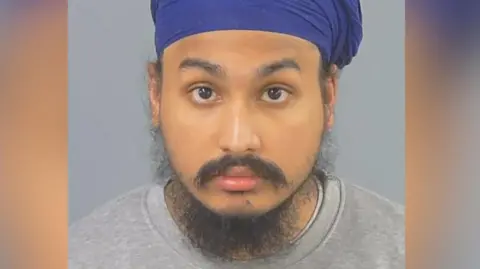 Hampshire Police
Under UK law, it is illegal to carry most knives in public without a good reason.
The maximum penalty is four years in prison, an unlimited fine, or both.
But the law does provide exemptions. Carrying a knife for work, as part of national costume or for religious reasons are all listed as potential lawful defences under Section 139 of the Criminal Justice Act 1988.
The Offensive Weapons Act 2019 further protects the right of Sikhs to possess and supply kirpans - a ceremonial sword or dagger that is one of religion's five articles of faith.
In his sentencing remarks, Judge William Mousley was explicit about how the law applies in practice.
He said those carrying a nine-inch blade in a public place for religious reasons would typically not be prosecuted for possessing a dangerous weapon due to existing exemptions.
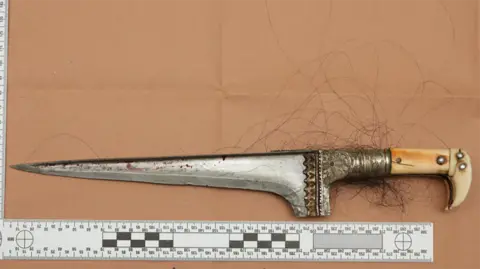
The knife Digwa used to kill Nowak was eight inches long, and was therefore within that limit.
The judge was equally clear, however, that the privilege of carrying such a weapon "brings with it huge responsibility" - and that a kirpan should only ever be used offensively as a last resort, such as in an act of legal self-defence.
Digwa was carrying the large dagger in a sheath around his neck, in addition to a small traditional kirpan worn under his clothing - the standard article of faith.
While the larger blade was within the legal limit, the Sikh Federation said it was not a kirpan.
Calls for change
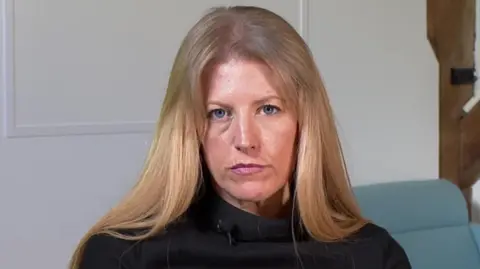
Henry Nowak's father Mark said he wanted his son's story "to make our streets safer for everyone".
He continued: "That is why we are calling on the government to treat knife crime as the national emergency that it is.
"We need real solutions. We need investment in prevention. We need stronger action on the sale, the ownership and carrying of all knives."
He called for "common sense" to be applied to the law, and said nobody should be allowed to walk openly through the streets of Britain carrying a knife of that size.
Hampshire and Isle of Wight Police and Crime Commissioner Donna Jones has been among the most vocal in backing calls for a review of the law.
The PCC has urged the government to examine the length of legally permitted knives.
"If that knife was not legal on the 3rd of December 2025, I am certain that Henry Nowak would still be alive today," she told the BBC.
Jones was careful to separate that call from any criticism of the kirpan itself.
"It is possible to carry a small kirpan dagger around the neck without infringing on someone's right as a member of the Sikh community," she said.
The view from the Sikh community
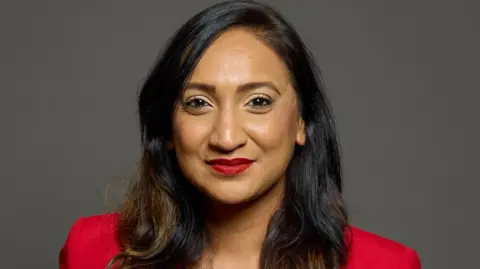 House of Commons
Satvir Kaur, the MP for Southampton Test - the constituency where Henry was killed - has a particular perspective on the case.
As the first female Sikh leader of a local authority in Britain, she was unequivocal that this was not a case about faith.
"It is absolutely right that a single person's evil act is not representative of an entire community," she said.
She added that guidance around religious exemptions and knives needed to be looked at and strengthened, but stopped short of backing Jones's call for a full review of the law.
"What I'm calling for, which is what Henry's father has called for as well, is to ensure that this investigation is thorough and properly resourced and it's open and transparent," she said.
The wider Sikh community has also condemned both the killing and any attempt to use it to demonise the faith.
The judge noted in his sentencing remarks that Digwa was a member of the Nihang - a Sikh order with a tradition of carrying a second, visible blade - though he was clear it was not a strict requirement, noting that neither Digwa's brother nor father were carrying one when they arrived at the scene.
The Sikh Federation said the weapon used by Digwa was not a kirpan.
The Sikh Press Association said steps were already under way to address every initiated Sikh in the UK directly about kirpan rules and responsibility.
What happens next?
 Crown Prosecution Service
The attorney general's office is considering whether to refer Digwa's sentence to the Court of Appeal under the unduly lenient sentence scheme, after receiving multiple requests to do so.
The Independent Office for Police Conduct is continuing its investigation into the actions of the officers who attended the scene that night.
And Mark Nowak has made clear he will not stop until something changes.
"We want to use Henry's heartbreaking story to make change for the better," he said. "No other family should experience the heartbreak and horror of losing a child to knife crime."
