Call to protect Atlantic salmon in Manx waters

 Reuters
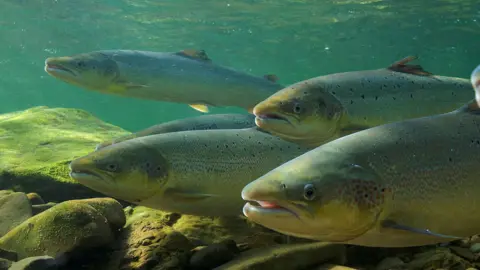
There are calls to protect Atlantic salmon in Manx waters as they face an increasingly uncertain future, with officials warning that populations are continuing to decline
The Department of Environment, Food and Agriculture (DEFA) has launched a public consultation on plans to help protect the species.
DEFA had already introduced voluntary conservation measures for this fishing season, including catch-and-release fishing and the use of barbless hooks, as Atlantic Salmon are now classified as "near threatened" following a 23% global population decline between 2006 and 2020.
Latest monitoring suggests the same trend is being seen in the Isle of Man, with numbers expected to continue falling.
DEFA's Inland Fisheries Policy Manager, John Ward, said there was no single cause behind the decline.
"There's a whole range of reasons," he said.
"Climate change is altering river conditions through more frequent flooding and droughts, affecting spawning populations. While changing sea temperatures could be affecting where salmon find food during the years they spend in the North Atlantic."
Historical river barriers, including Victorian weirs, which are prevalent on the island, can also prevent fish from reaching their spawning grounds.
Predators such as seals and cormorants all add further pressure
Ward said seals often wait at river mouths, where salmon pause for several days to adjust from saltwater to freshwater before swimming upstream.
"They can't just go straight from salt to fresh; they need to acclimatise, and unfortunately it makes them very easy prey for seals," Ward said.
One of nature's great migrations
 PA
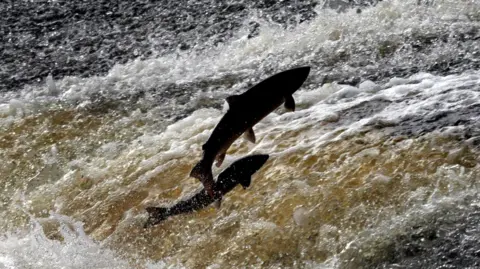
PAAtlantic salmon undertake one of the natural world's most remarkable migrations.
Young fish hatch in freshwater rivers before travelling to feeding grounds around the Norwegian Sea, where they can spend between one and three years.
Adults then return to the very river where they were born, navigating using the Earth's magnetic field and then "tasting" the unique chemical signature of their home waters, Ward said.
They begin arriving back in the Isle of Man's rivers around August through to December, spawning over the winter before returning to sea the following spring.
Unlike some Pacific salmon species, Atlantic salmon can survive spawning and return to the Island to repeat the journey several times during their lives.
'Best chance possible'
Ward said improving river habitats offered one of the best opportunities to help the species recover.
He said removing obstacles that block migration would allow salmon access to more spawning habitat, giving populations a better chance of rebuilding naturally.
"We're hoping to run a long-term management plan and involve all stakeholders in how we deal with the issues that they are facing as a collective," he said.
"We want to make their populations increase while they're here and give them the best chance possible."
Alongside habitat improvements, DEFA continues to operate a salmon restocking programme at Cornaa Fish Farm, where between 20,000 and 40,000 juvenile salmon, known as fry, are reared each year before being released into Manx rivers.
DEFA Minister Clare Barber said Atlantic salmon were "an important species and part of our natural heritage".
She said: "These measures reflect our commitment to taking responsible, evidence-based action to protect them for future generations."
Read more stories from the Isle of Man on the BBC, watch BBC North West Tonight on BBC iPlayer and follow BBC Isle of Man on Facebook and X.
