Blue plaque for woman who secured theatre's future

 Morley Von Sternberg
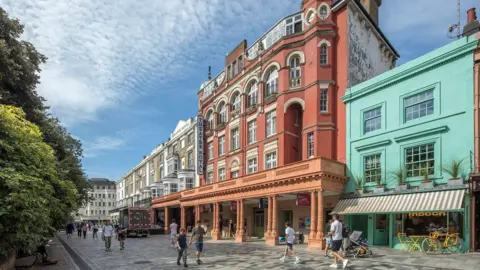
A blue plaque will be unveiled to honour a 19th Century woman who secured the future of the Theatre Royal Brighton.
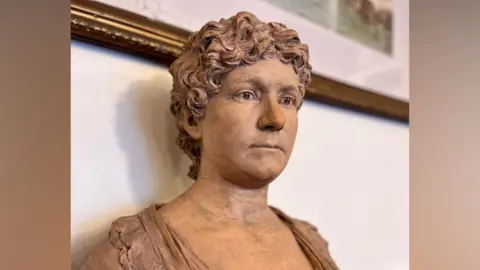
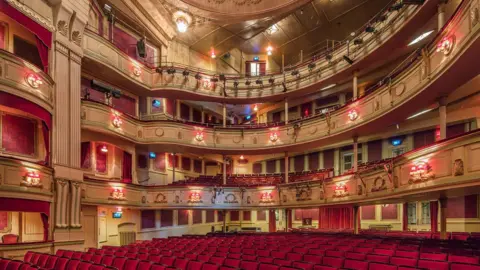
Ellen Nye Chart managed the theatre from 1876 to 1892 and is credited with transforming it into a venue of national standing.
The plaque is due to be unveiled on Friday to mark the 150th anniversary of the start of her leadership, as well as the theatre's 219th birthday.
It was arranged by Theatre Royal Brighton in partnership with Brighton and Hove Women's History Group, which works to raise awareness of women's contributions to history in Sussex, particularly Brighton and Hove.
 Theatre Royal Brighton
Sophie Denney, director of Theatre Royal Brighton, said Nye Chart's legacy was "nothing short of extraordinary".
She said: "At a time when women were rarely given the opportunity to lead - let alone transform - cultural institutions, Ellen not only secured our theatre's future but elevated it."
She added: "We are so grateful to Brighton and Hove Women's History Group for their collaboration in securing a blue plaque.
"Ellen is an incredibly important figure in Brighton's history; it's brilliant to see her receive the recognition she deserves."
 Morley Von Sternberg
Nye Chart took over the running of the theatre after the death of her husband, Henry Nye Chart, in 1876.
Born in Islington in 1839, she had been working as an actor before she became a theatre manager.
During her time in charge, she introduced a year-round programme of performances instead of a summer-only season, and established pantomimes that were both profitable and modelled on the elaborate productions seen at the Drury Lane Theatre in London.
She also pioneered the "flying matinee", bringing London productions with full casts and sets to Brighton for afternoon performances before they returned to the capital for evening shows.
Follow BBC Sussex on Facebook, X, and Instagram and listen to BBC Radio Sussex on Sounds. Send your story ideas to southeasttoday@bbc.co.uk or WhatsApp us on 08081 002250.
