Estate faces hay shortage due to drought conditions

 PA Media
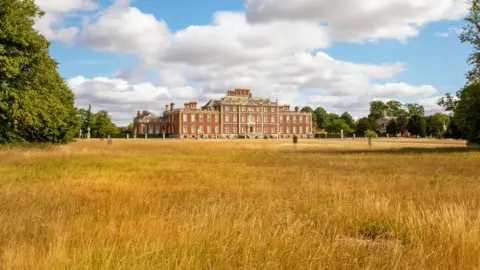
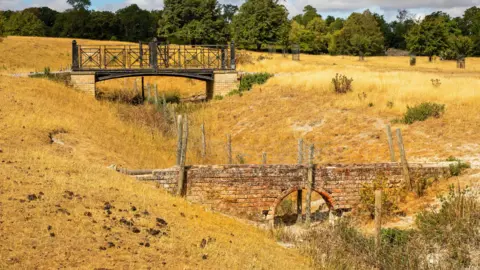
A National Trust estate says it is facing a hay shortage as grass growth has stalled in drought conditions, resulting in livestock being given winter feed.
Meadows which normally produce 150 tonnes of hay at Wimpole Estate in Cambridgeshire have this year yielded nothing, the conservation charity said.
It is the third time in five years that the estate has faced severe drought impacts, with new programmes being implemented including tree planting, increasing rainwater storage and conservation grazing to reduce wildfire risk and support habitat restoration.
Wimpole's farm and countryside manager Dave Hassall said: "We're already using winter feed because summer growth simply hasn't happened."
Hassall added: "Drought affects every part of the system – crops, grassland, livestock, wildlife and costs.
"These pressures are being felt across all farming systems, and they show why adapting to a changing climate is essential for food production, nature and rural communities."
 PA Media
The National Trust said selective breeding had also helped livestock cope better with dry conditions.
It said Wimpole Estate was its largest organic in‑hand farm, with 1,200 hectares (3,000 acres) of land. But grain yields were down by about 25% and straw production reduced from 200 bales to 60.
'Drought-tolerant crops'
Wildlife habitats were also under pressure, with invasive species such as ragwort and thistles spreading rapidly in the dry conditions, and soil health suffering with cracked ground.
Veteran trees were showing signs of stress, and disrupted weather patterns were creating mismatches between flowering plants and pollinating insects – with consequences for both biodiversity and food production.
Efforts were under way to help the estate adapt in the face of climate change, with 125,000 trees planted since 2021 to improve shade, soil health, moisture retention and habitat resilience.
The estate said it had been trialling alternative forage sources - such as willow and aspen - and exploring more drought‑tolerant crop varieties.
Hassall added that Wimpole Estate "has adapted for 2,000 years" and "that spirit continues".
"We welcome recent government support for farmers, but long‑term resilience requires sustained investment in nature and climate adaptation," he said.
"We cannot do this alone."
The government announced in June a further £97m investment in National Resilience assets, including what it described as the largest upgrade linked to wildfire response in almost 20 years.
Do you have a story suggestion for Cambridgeshire? Contact us below.
Follow Cambridgeshire news on BBC Sounds, Facebook, Instagram and X.
