Autumn river levels could move nurdles downstream

 BBC
BBCHigh river flows this autumn could flush 2.2 tonnes of microplastics downstream, scientists have warned.
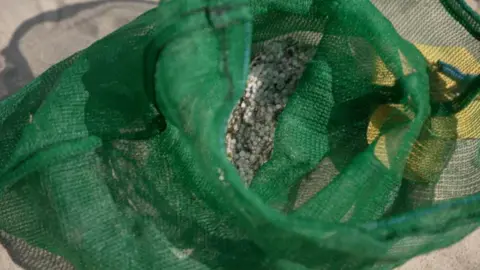
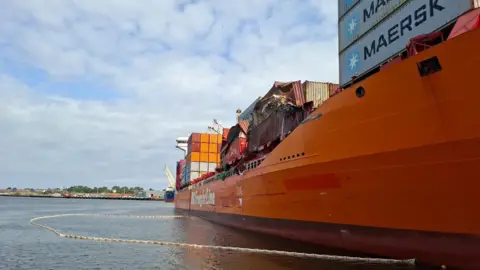
Tonnes of the pellets, known as nurdles, were spilled into the River Tyne after a crash between two vessels at the Port of Tyne damaged two shipping containers.
According to new modelling from Newcastle University, about one in eight of the nurdles remained in the estuary six weeks after the spill.
The scientists have urged the authorities involved in the clean-up operation to use measures to intercept, trap or recover the nurdles before they move towards the North Sea.
Project lead Dr Matt Perks said: "Because river flows have been so low since July, pellets that moved up the estuary and were deposited have had little to move them on.
"When elevated river flows arrive, some of that material is likely to be flushed downstream, so now is the time to consider where it could be intercepted."
 Port of Tyne
A temporary barrier was deployed in the water around the source of the spill three days after the incident in July.
Weeks after the spill, the microplastics were spotted more than 30 miles (48km) south of the source.
A spokesperson for Port of Tyne said recovery work has entered the next phase and they have taken responsibility for daily monitoring and collection.
Ambipar, its environmental response partner, finished its on-water activity on Sunday, but will provide specialist recovery support around the spring tides on 28 October and 9 November.
Director of place strategy at South Tyneside Council Stuart Wright said the multi-agency response group was "preparing" for the "additional movement of nurdles".
"It's important to remember that this is not unexpected and plans are in place to respond where required," he said.

The team at the university built a detailed computer model of the River Tyne and North Sea to track where the pellets have likely gone.
They said while the model provided an uncertain picture out at sea due to changing ocean currents and wind, the estuary findings were "robust".
Senior lecturer in physical geography Dr Seb Pitman said: "Our model reproduces the tide through the Tyne very closely, which gives us real confidence in what it says about the estuary itself."
Further modelling will take place over the coming weeks with the project, called Against the Flow, beginning fieldwork.
Follow BBC North East on X, Facebook, Nextdoor and Instagram and listen to Radio Newcastle on BBC Sounds.
