Who won the local election in Redbridge?

 Getty
GettyWhat happened in Redbridge in the 2026 council election, and who won?
Labour held Redbridge in the election on 7 May 2026.
The results were:
Labour: 43 seats (-15)
Independents and others: 9 seats (+9)
Conservative: 5 seats (0)
Green: 5 seats (+5)
Reform UK: 1 (+1)
When were the 2026 local elections in London?
More than six million Londoners were eligible to vote in the council elections on Thursday 7 May 2026.
All 32 London boroughs were up for election.
There are also elections for the mayor in five boroughs: Croydon, Hackney, Lewisham, Newham and Tower Hamlets.
 Getty
GettyWhere is Redbridge and who lives there?
The London Borough of Redbridge is in north-east London.
It is bordered by Epping Forest District (Essex) to the north, Waltham Forest to the west, Havering to the east, Barking and Dagenham to the south east, and Newham to the south west.
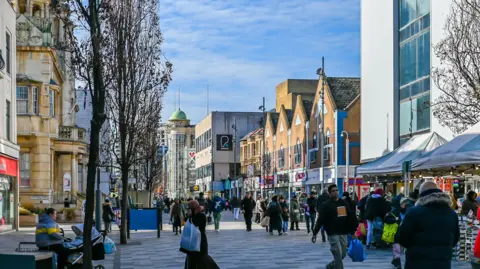
What's it like? Redbridge is a leafy and predominantly residential borough, with Central line connections to the city. Popular with families and commuters, it is known for high-performing schools, affordable housing compared to central London and green spaces like Hainault Forest.
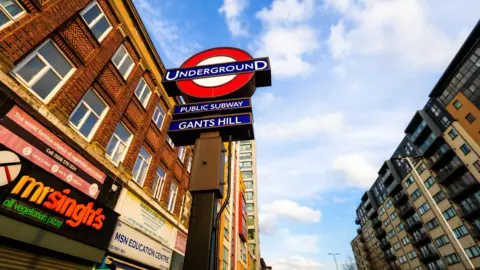
Neighbourhoods: Recognisable areas in Redbridge include Ilford, Wanstead, Woodford, Gants Hill, Newbury Park, South Woodford, Barkingside, Seven Kings, Goodmayes, Fairlop, Hainault, Grange Hill, and Roding Valley.
Places of interest: Valentines Park,Hainault Forest Country Park, Fairlop Waters Country Park, Redbridge Central Library and Museum, Kenneth More Theatre.
Pub quiz fact: Redbridge is named after a literal red brick bridge, a 17th Century crossing over the River Roding in Ilford. It was demolished in the 1920s.
Population: (2024 estimate) 321,231
Demographics: According to the latest Office of National Statistics (ONS) figures, Redbridge's ethnic breakdown is: Asian: 47.3%, white: 34.8%, black: 8.4%, mixed: 4.1% and other ethnic groups: 5.4%.
Average property price: According to the ONS, the average house price in Redbridge in December 2025 was £495,000.
Average monthly rent: ONS data shows the average monthly rent in January 2026 was £1,714.
Council tax: The Band D council tax rate for Redbridge in 2026/27 is £2,294.58.
Transport: According to Transport for London, Redbridge contains 10 Tube stations (all on the Central line), four Elizabeth line stations and around 510 bus stops.
 Getty
GettyWhat is Redbridge's local history?
Redbridge's history stretches back centuries, with its roots in the ancient parish of Barking in Essex, before later becoming part of the civil parish of Ilford in 1888.
The borough as known today was created in 1965 under the London Government Act, merging Ilford with Wanstead and Woodford, along with parts of Dagenham and Chigwell, forming one of London's 32 new boroughs.
Its name derives from a distinctive red‑brick bridge that once crossed the River Roding, demolished in 1921 but influential enough to give the new borough its identity.
The area also has notable heritage links, including Ilford's prehistoric mammoth finds and its role in early photographic manufacturing.
Listen to the best of BBC Radio London on Sounds and follow BBC London on Facebook, X and Instagram. Send your story ideas to hello.bbclondon@bbc.co.uk
