Patient's killer could have been in secure unit, inquest told

 Family photo
A teenager suffering psychotic episodes and hearing voices telling him "to kill" could have been admitted to a secure psychiatric unit before he strangled another patient to death, an inquest heard.
Owen Herbert killed Richard Laversuch on a lower-risk ward at Parklands Hospital, Basingstoke in 2021, despite posing a high risk to others.
Winchester Coroner's Court heard that while the Psychiatric Intensive Care Unit (PICU) was full, a "solution could have been found quickly and simply" with better communication between wards.
Senior nurse manager, Matt Harding, told the ongoing jury inquest that some PICU patients had been well enough to be moved to other wards, to free up a bed for Herbert.
"There were conversations that should have happened, but didn't," Harding told the inquest into Laversuch's death.
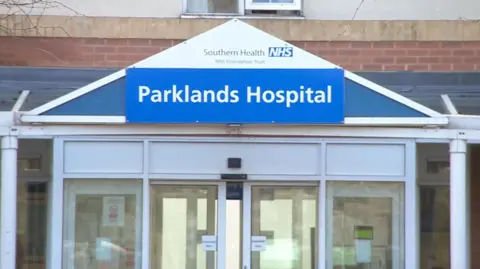
At the time of the killing, Harding ran the PICU, managed the mental health hospital's beds and was one of the senior staff on-call the night Herbert, 19, was sectioned under the Mental Health Act and admitted into care.
He confirmed none of the on-call managers were contacted by night staff about Herbert's "unexpected" arrival and were only called after the attack.
Ward nurses on the lower risk, less restrictive ward told the inquest on Tuesday they had failed to notify managers and had felt compelled to accept Herbert when he turned up because PICU was full, even though they had been told not to.
The court also heard the nurses had raised concerns that staffing levels on their lower-risk ward had been "unsafe" that night, but were told there was greater need on other wards.
When a patient arrived, Harding told the hearing staff sometimes had to make decisions "on the hoof", but he agreed the nurses should have alerted managers and said he "expected there to have been more of an assessment" of patient risk by the admitting nurses.
When the barrister representing the Laversuch family asked Harding why the trust had operated a system that its own nurses considered "unsafe", he said: "I can't answer that one."
When it was suggested there had been a culture at the time "where unsafe practices were brushed under the carpet", he disagreed, while acknowledging there had been "periods of time when safety was compromised by staffing".
 Family photo
The court also heard more about what access staff had at the time to CCTV, as another patient had told staff someone had "tried to strangle him" minutes before Herbert killed Laversuch.
The coroner reminded the jury that staff on the ward where it happened had no view of the corridors or patient bedrooms from their nursing station, nor were they able to monitor or review CCTV feeds when an incident was reported.
He then read a statement by Joanna Perry, of Hampshire and Isle of Wight Healthcare NHS Foundation Trust, which now runs Parklands Hospital.
She confirmed that, in 2021, ward staff had no access to CCTV because "robust controls" were in place to uphold patients' "privacy and dignity", although CCTV could be requested "retrospectively" in the event of serious incidents or crimes.
Following the death and a subsequent review, Perry said the policy had been changed and "some 40 to 50 senior nurses" had been trained in "how to access CCTV footage themselves".
But she stressed access was "not immediate", as nurses had to go to a "hub" elsewhere to find and access the footage.
Summarising Perry's evidence, the coroner said the process remained "cumbersome" and CCTV was "more for investigation in the cold light of day, rather than in the heat of the moment" so staff must use their own "judgement" instead.
Herbert was given an indefinite hospital order in 2023, after pleading guilty to manslaughter on the grounds of diminished responsibility,
The inquest continues.
