How a US fleet helped liberate the Channel Islands

 National PT Boat Museum and Memorial
An untold story of how four US Navy boats ended up in the shores of Jersey and Guernsey has been discovered by an islander.
Invaded in June 1940, the Channel Islands were the only British territories to be occupied by the Germans during World War Two. This year marks the 81st Liberation anniversary.
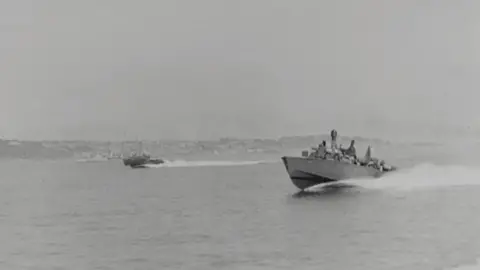
Alexander Fearn, a Jersey history enthusiast, said there were "a lot of untold stories that happened in and around the islands" between 1940 and 1945 - including those of the US Navy patrol torpedo (PT) boats Squadron 30 (RON 30), nicknamed the "mosquito fleet".
Fearn said the nickname was due to their "small, fast and agile nature, acting as an annoying and effective nuisance to enemy ships".
He said during the war, RON 30 escorted invasion and supply vessels, patrolled the English Channel and Channel Islands and conducted anti-submarine patrols.
Fearn said their final "significant enemy engagement" occurred on 11 April 1945, where they exchanged fire with German forces near Alderney.
 National PT Boat Museum and Memorial
Fearn said it was only discovered the vessels were in the Channel Islands because of international collaborations with the USA.
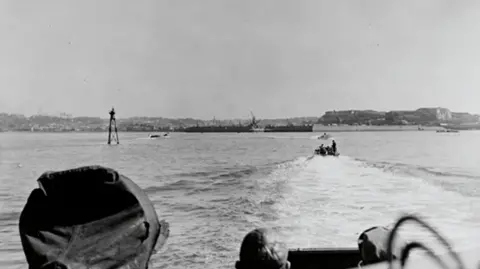
He said the National PT Museum and Memorial based in Fall River, Massachusetts, was "sharing pictures of what they called St Helier, France".
"So I got very interested and I said, well, there's only one St Helier in France and that's in the middle of France, there's no water around it, but that looks like St Helier, Jersey."
Fearn said this led to the research and "uncovering the fact that four of the boats from Squadron 30 actually came to first Guernsey then Jersey Harbours" on 12 May 1945.
 US National Archives and Records Administration
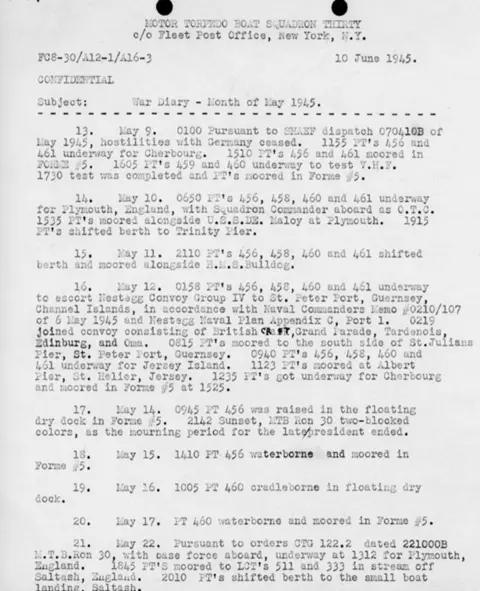
After Germany's surrender, the mosquito fleet took part in a symbolic final task - ensuring the safe passage for forces liberating the Channel Islands.
On 12 May 1945, the four boats joined the convoy leaving Plymouth at about 02:00 BST, arriving in St Peter Port in Guernsey at 08:15, departing for Jersey at 09:40 and mooring in St Helier at about 11:20.
Fearn said the mosquito fleet was there "to help deal with any unexpected German resistance or U-boat attempt to interfere with the main Liberation fleet sailing on that day".
He added that the PT boats were not originally listed in the convoy plan and were added last minute for safety.
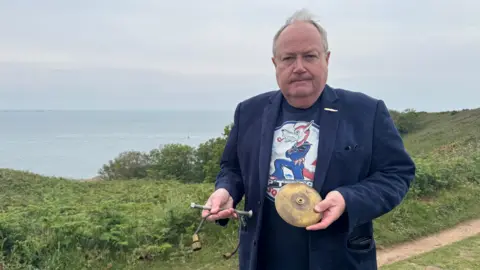
Fearn said when RON 30 left for Cherbourg in France it would have been "very close to passing over the wreck of the PT-509".
The PT-509 was a sister boat to the squadron 30 and was a US Navy PT boat of squadron 34. The vessel was lost during a night operation off Jersey in 1944 in a close-quarters engagement with German forces.
He said the wreck still "lies on the seabed close to the main entrance of St Helier harbour".
"I can't help but think this was a poignant moment, even though the crews would have been unaware."
Follow BBC Guernsey on X and Facebook. Follow BBC Jersey on X and Facebook. Send your story ideas to channel.islands@bbc.co.uk.
