Seven centuries' worth of history made available online

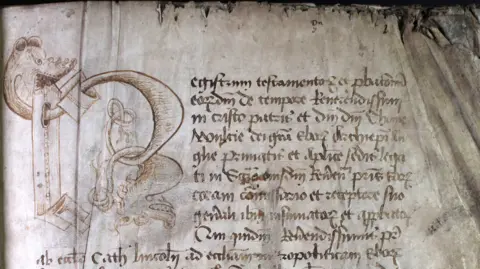 Borthwick Institute for Archives, University of York
A lonely year for a country parish that had no weddings, the testimony of a 17th Century mother who died in childbirth, and a community ravaged by plague.
The University of York has made their stories and 16 million other historic records available online as part of a partnership with the genealogy website Ancestry.
The collection, which includes parish registers as well as the wills of famous literary figures Charlotte Bronte and Anne Lister, covers seven centuries of local history and forms part of the university's Borthwick Institute for Archives.
Gary Brannan, keeper of archives and research collections, said: "Individuals living around the world are always rightly proud to discover they have roots in Yorkshire."
The project has digitised the Bishops' Transcripts and the Wills of the Prerogative and Exchequer Courts of York, both of which are held at the Institute.
The online collection covers from 1389 to 1858, and includes a wealth of information and personal stories.
In one entry from 1736, the compiler for the North Yorkshire parish of Bossall noted there was 'no love amongst us' after a year passed without a single wedding.
The 1604 registers for Hornsea recorded a community ravaged by 'plage tyme', while a 1756 entry from Kilnsea detailed the shipwreck of a London-based vessel.
The poignant will of Ann Stackhouse was written in 1613 when she gave her final wishes to her midwife, knowing she was dying in childbirth.
The archives also reveal the philanthropy of John de Gysburn, who in 1385 left money to support four "houses of lepers" in the York suburbs, and the life of Matthew Chitty St Quintin, who added more than 20 amendments to his will in 1785.
Created as annual copies of parish registers for the Archbishop of York, the Bishops' Transcripts will fill gaps where original records were lost or damaged.
Experts estimate that the transcripts contain more than 20,000 entries that do not exist anywhere else.
Brannan added: "These records are quite unique as they are incredibly well-kept and cover a long time span in a community that is always growing and changing."
The records can be accessed free at the Borthwick Institute for Archives, while Ancestry subscribers can access them on their own devices.
Listen to highlights from North Yorkshire on BBC Sounds, catch up with the latest episode of Look North.
