Dog owners urged to be 'cautious' of adders

 BBC
BBCA man who said his two dogs were bitten by adders in the space of a fortnight has urged other pet owners to be "cautious" and "vigilant" of the reptiles this summer.
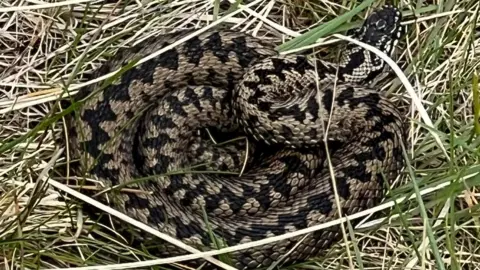
Cornwall Wildlife Trust said dogs were at risk of being bitten by the UK's only native venomous snake - which bask in the sun between March and October.
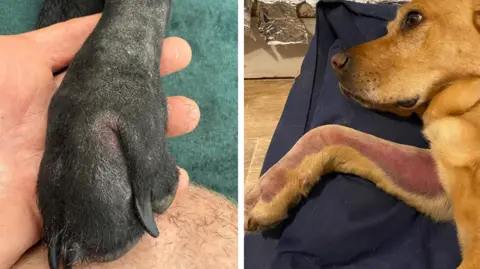
Jock Orton said his dogs were bitten in the sand dunes in Perranporth, Cornwall, in April 2025, and needed antivenom.
Hannah Barnikel, from the wildlife trust, said adders were "very elusive creatures and they don't attack, they defend". She urged people to keep dogs on leads and under control, and to stay away from long grasses.
 Jock Orton
She said adders were "rare" and people would be "lucky to see one".
A 2019 study found adders – protected in the UK under the Wildlife and Countryside Act 1981 – could disappear from the British countryside by 2032.
She said "unfortunately their numbers are declining, so we just need to avoid them as much as we can" to give them a "good chance of reproducing and [so] populations [do] not go extinct".
She recommended dogs have bells on their collars to give a "warning" and a "signal" to snakes to give them a chance to "slither off" as they detect vibrations.

Orton said his dogs were insured otherwise he would have had to pay about £2,500 per dog for antivenom and vet fees.
Both his dogs recovered and survived, but he said he was initially very "cautious" while out walking after the bites.
"Every 10th step I'll stamp my foot and if the dogs are around I'll be making noise, calling them, whistling to them, and if the adders hear you they're going to disappear.
"They're not going to actively go out and try and bite you.
"We need to protect them."
 Jock Orton
Shauna Walsh, PDSA vet nurse, said adder bites were "uncommon", but suspected bites should be treated as an emergency, where symptoms could develop "between a couple of minutes to an hour".
She said mild symptoms included pain and swelling around the bite, limping if bitten on a leg, with more serious symptoms including vomiting and diarrhoea, pale gums, and drooling.
With potentially life-threatening symptoms including weakness and collapse, seizures, difficulty breathing, and abnormal bleeding.
"If you think your dog has been bitten, stay calm and keep them as still as possible to slow the spread of venom," Walsh said.
She said to avoid applying bandages or tourniquets and "if moving your dog to a car, carry them if you can, or bring the car to them".
 Phil Gardiner