Animal sculptures turning town into street safari

 Malcolm Curley
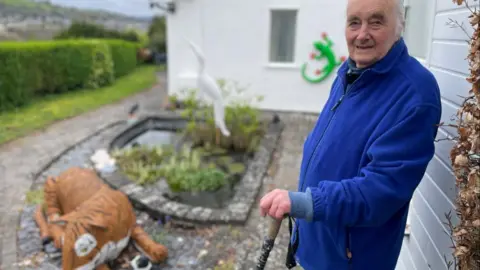
"I don't know what I'm going to be making this time next week and that's the joy of it," Malcolm Curley, who must be one of Devon's most prolific sculptors, said.
What started with making a few animals to brighten up his neighbours' gardens in Bridgetown, Totnes, has spread all over south Devon and beyond.
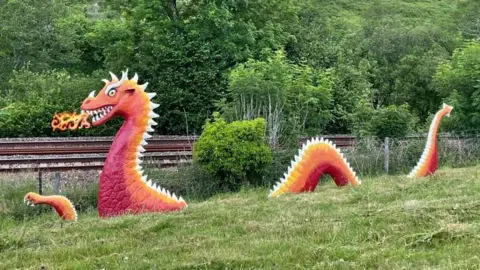
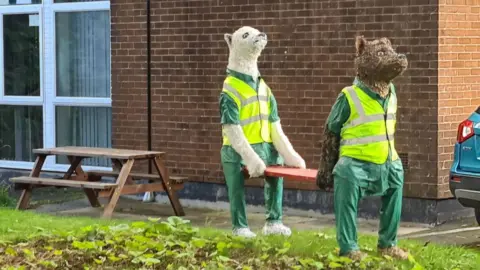
Curley estimates he has created and placed 300 exotic animals and children's book characters in locations that range from the local library and schools to floating on a river.
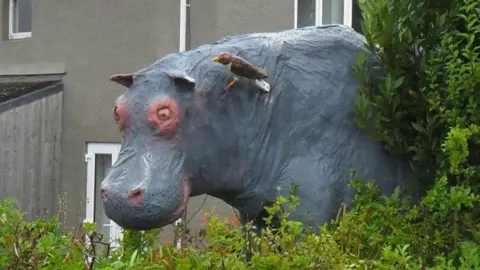
Demand to be part of the Bridgetown safari has quickly spread, with local bus stops marking the locations that children could spot his animals up in trees, hiding in bushes or swinging from window ledges.
 Malcolm Curley
At 87, Curley retired from his Bristol metal fabrication business long ago, but after forty years of making things with his hands, he wanted to continue being creative when he moved to Totnes after heart surgery.
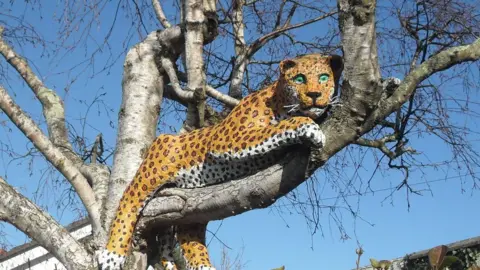
He loves big cats while he has never been on safari himself, his first job was to make himself a leopard, that lies in the tree above his garden.
His creations are largely made from recycled materials.
After spotting a sheet of plastic in a neighbour's skip, he offered to swap it for a sculpture and the Bridgetown safari was born.
"I made them a pony. Since then they've had a zebra. Another neighbour wanted a giraffe as a memorial, because she lost her husband. I think the idea went up the road from there," Curley said.
Totnes quickly became a "zoo".
The popularity of the animals soon spread to the surrounding towns and villages as requests for increasingly exotic creatures came in from home owners in Salcombe, Dartmouth, Stoke Gabriel, and Torquay.
 Malcolm Curley
Everyone has their favourite and some of the most imaginative are located in unusual places.
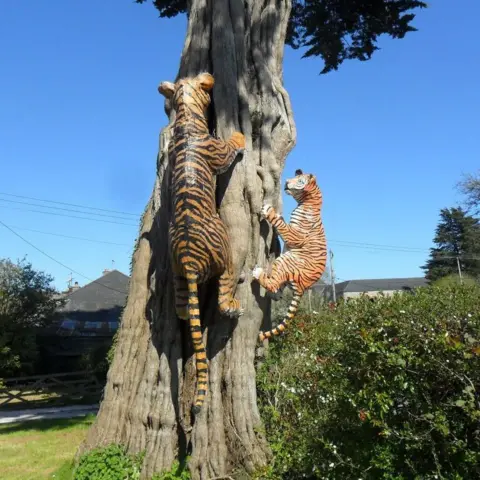
Curley says some are so high up, they are hard for him to maintain: "One of the best ones is the tigers in Berry Pomeroy.
"They are looking a bit jaded now, but I can't get up the tree to touch up the paint work."
Before he gets to work, Curley said he started with considering where the art work would be placed.
"I ask people for the photo of the front of their house and I Photoshop a picture of the animal they want onto it, to show them what it will look like."
Often he positions them peeping out of a hedges or hanging from a tree: "Part of the fun is trying to spot them."
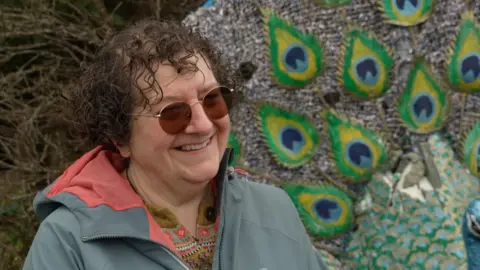
Trudie Headford is one neighbour who has several of Curley's creations in her garden.
He made a peacock for her mum.
She said: "It's lovely because in the summer you get the kids on holiday and they come and stand in front of it and get their pictures taken."
Curley's collection is even mentioned on the Round Robin open top bus tours.
Trudie added: "They come down the hill and you hear them saying on the loud speaker "on your right there's a panda eating some pampas grass" and it's just really funny.
"They have a tour of all the animals around here. It's really great fun. They even list them in the bus stop."
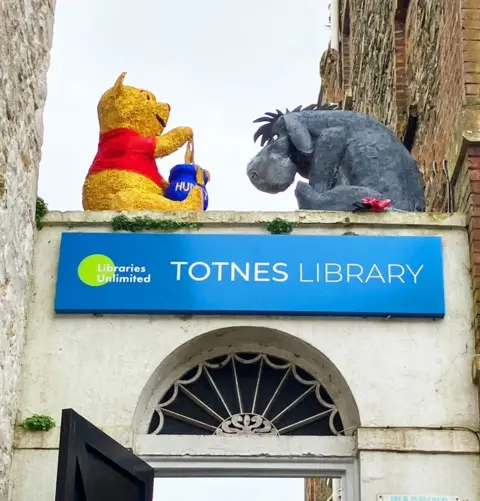
The sculptures are free.
Some donate Curley paint and materials, but all he asks is they make a direct donation to a charity of their choice of whatever they can afford.
Curley could never know how much, but local people believe he has raised thousands over the years.
 Malcolm Curley
Curley's garage studio in Bridgetown is always a hive of activity with several projects on the go at the same time.
Some animals come back for maintenance and repair while new ones are created daily so the sculpture trail is always changing and evolving.
Most recently is has been home to an oyster catcher that was destined for Canada, an Eeyore that needs mending after a mishap during a storm, a life sized leopard, and a Jack Russell dog, all in various stages of creation.
Curley's next big project is for Dartington Hall.
He has been asked to make three animals including a white stag for the estate.
"It's all about where you place them, that makes it the most fun," Curley said.
 Malcolm Curley
Follow BBC Devon on X, Facebook and Instagram. Send your story ideas to spotlight@bbc.co.uk.
