Could £400m scheme make city a global science hub?

 Secchi Smith
Researchers at an institute undergoing a £400m revamp say the improvements will help boost the region's economy and lead to more major scientific breakthroughs.
The John Innes Centre (JIC) and The Sainsbury Laboratory (TSL) at the Norwich Research Park are already world-leading centres for plant and microbial science.
But a scheme aims to transform parts of the site, streamlining operations and creating state-of-the-art facilities. It could take until 2031 to complete.
Dr Chris Whitewoods, a JIC group leader, says the changes will help lead to future discoveries that could improve health and the environment.
What is the Norwich Research Park?
 Secchi Smith
It is one of the largest single-site research centres in Europe, focusing on food, genomics, a branch of science that studies the entire set of genes, and health.
It is in Colney, fewer than four miles from Norwich city centre and next to the Norfolk and Norwich University Hospital and the University of East Anglia.
 John Innes Centre
As it is on the edge of the city, some people may not know about the work that goes on there, but they may have benefited from some of the discoveries.
JIC moved to the site in 1967. It has developed new antibiotics and made breakthroughs that would improve crops and help fight ash dieback disease.
TSL has worked in partnership with the JIC since 1987 and scientists there are working to fight plant diseases and make crops more resistant to pathogens.
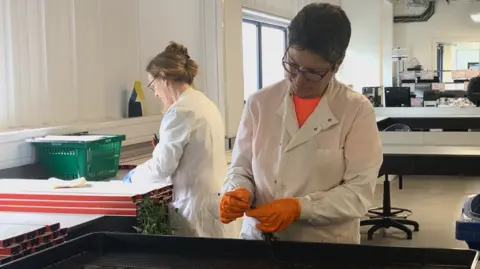
There are more than 40 research groups at the site with staff and students from more than 42 countries.
What are the changes?
 Owen Sennitt/BBC
The project gained £317m in funding from UK Research and Innovation and an additional £51m has been raised from third-party donors, with just over £30m still to go.
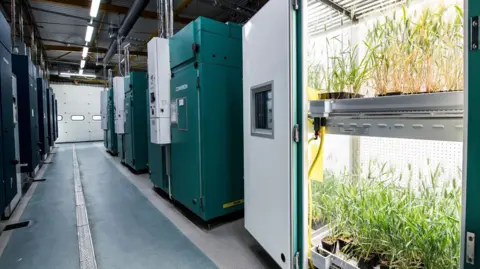
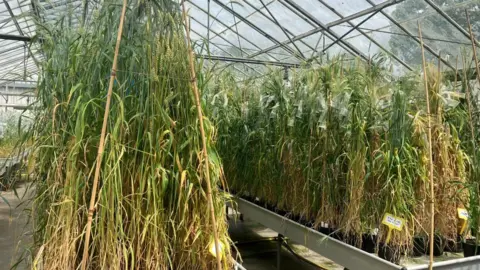
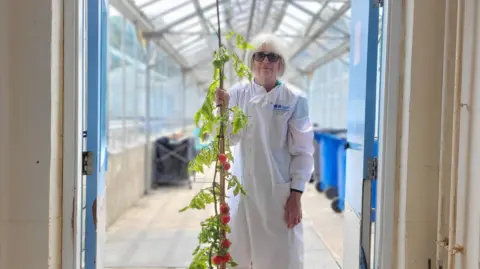
Plans include a new main laboratory building, a 42,000 sq ft (3,900 sq m) glasshouse for growing plants and new rooms with controlled environments.
South Norfolk District Council has already approved the scheme.
JIC and TSL say the upgrades will improve collaboration and help them tackle challenges facing agriculture and other industries.
 Owen Sennitt/BBC
Currently, departments are spread across disconnected buildings.
Chris Shore, construction and project director, said: "We have been here for 60 years so it is time for everything to be upgraded, so it is ready for the next level of research we want to move on to."
Shore added that local suppliers and contractors are involved in some of the work but other elements will require specialists.
The scheme is being done in stages. Some existing buildings will be demolished and some upgrades have already been installed.
 Owen Sennitt/BBC
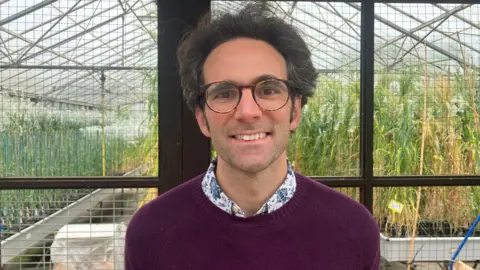
Whitewoods, a specialist in leaf development, said: "At the minute, you're spread between different buildings.
"Bringing people together in one place means all those conversations, and the collaborative work that's so important to everything we do here, happens quicker and more easily.
"The bigger vision of all the institutes here is striving for healthy plants, healthy people and a healthy planet.
"The really exciting thing about the new infrastructure is that it brings together different research so we can pursue all of these three things together, bringing fundamental research towards impact, all in one place."
Whitewoods said he thought improvements at the site would also be good for the region and the city.
"It is always going to be a source of pride to have a place which is really world-leading. Making it better will bring more people to the region," he added.
"People come to work here and they fall in love with Norwich and then want to stay, which is only a good thing."
 John Innes Centre
 Owen Sennitt/BBC
Do you have a story suggestion for Norfolk? Contact us below.
Follow Norfolk news on BBC Sounds, Facebook, Instagram and X.
