The Scottish town that started supporting Norway 86 years ago

 Getty Images
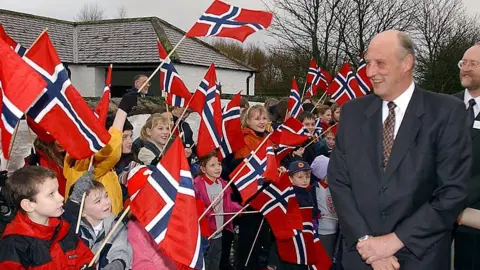
For one Scottish town, it will not simply be a case of "Anyone but England" when the Three Lions face Norway in their World Cup quarter-final.
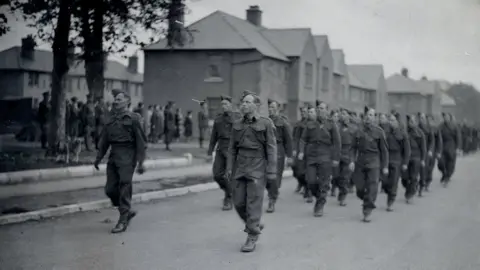
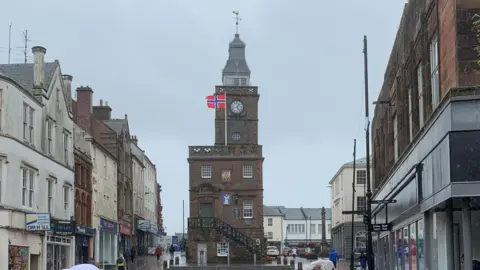
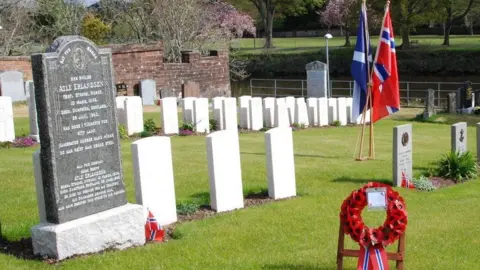
Dumfries has links going back to World War Two when it played host to the exiled Norwegian army.
Their red and blue flag has flown regularly over the town and a number of families can trace their roots back to the Scandinavian country.
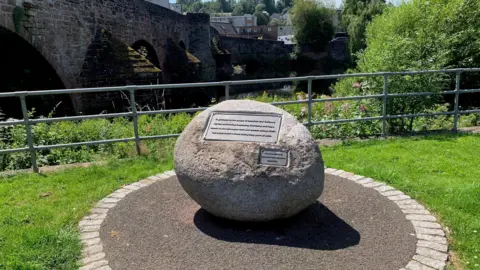
Most recently, a "stone of friendship" was put in place in Dumfries as a permanent reminder of that link by the Scottish Norwegian Connection (SNC) group.
 Heritage Service, Dumfries and Galloway Council
Beverley Thom, who organised those celebrations, said the connections and friendships formed more than 80 years ago continued to grow to this day.
"The SNC has proved the friendship to be very strong between Dumfries and Norway, following thousands of Norwegians who were posted to Dumfries during 1940 to 1945," she explained.
"The connections continue, as has been proved with the 2023 celebrations with the gifting of the Norwegian Stone of Friendship to the burgh of Dumfries.
"The Scottish Norwegian Society, established in 1941 in Dumfries, continues to thrive with its base now in Glasgow as well as the Norwegian Scottish Association based in Edinburgh."

Those links, she said, extended to sport.
"Norwegians are as daft about football as the Scots and I was amazed to discover the number of Doonhamers who are related to or have friends who are Norwegians," she said.
"So it would not surprise me to know that many Scots will support Norway on Saturday."
 Getty Images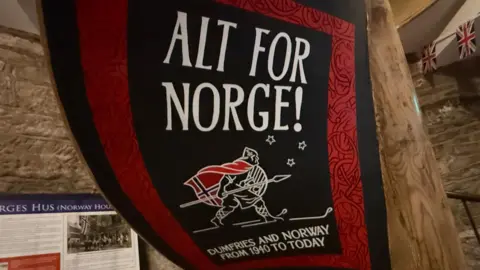
Norway was one of the first countries to be overwhelmed by Germany during World War Two and many of its soldiers and others fled in the hope of regrouping elsewhere.
About 300 of them landed in the Lanarkshire town of Hamilton in June 1940 and were subsequently directed to Dumfries.
They received military training in the town and the Norwegian army command later moved there.
By 1941, their numbers topped 1,000 and work got under way building a barracks at Carronbridge, north of Dumfries.
 SNC
SNCIn the same year, the Scottish Norwegian Society (SNS) was also founded in the town and a permanent base - named Norway House (Norges Hus) - was created.
Town clerk of the time, James Hutcheon, said he had been told that Dumfries reminded many of them of their own towns and countryside back home.
Over time, the soldiers were deployed across Scotland as part of defence forces, including spells at Tain and Callander, but their Dumfries links remained strong with a special farewell party when the war ended.
The connections, though, have continued - especially thanks to the number of Scottish-Norwegian marriages, estimated to have been as many as 200.
Just last year, an exhibition opened celebrating the time when Dumfries became the "unofficial capital city of Norway".
Called "Alt for Norge" - which translates as "All for Norway" - it included a telegram sent from King Haakon VII thanking the people of the town for all they had done to help liberate his country.
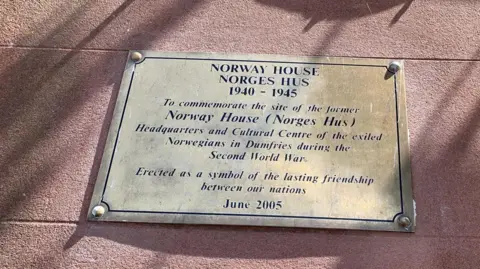
Dumfries, of course, is not the only part of Scotland with links across the North Sea.
The "Shetland Bus" - a convoy of fishing boats - helped the resistance effort while the country was under Nazi occupation.
While Orkney even considered changing its status to potentially becoming a self-governing territory of Norway although that was ultimately dropped.
So, when Norway play England at the World Cup, they can all point to historical reasons - if they wish - for supporting Erling Haaland over Harry Kane.
