'Weak oversight and failures' at hospital's A&E

 PA Media
A health watchdog has said patients have been exposed to "avoidable harm" at an A&E department because of delays, weak oversight and governance failures.
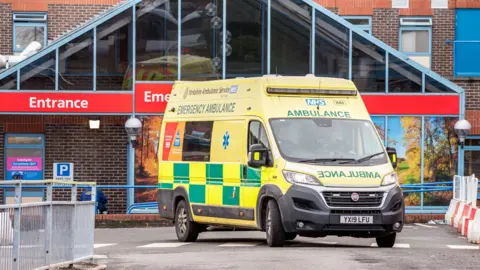
Following inspections at Doncaster Royal Infirmary, the Care Quality Commission (CQC) has rated the hospital's urgent and emergency care as "requires improvement" overall and rated safety in the department as "inadequate".
Inspectors found patients waited hours without pain relief, those with suspected sepsis were not treated quickly enough and areas were unclean with dirt and debris.
A spokesperson for Doncaster and Bassetlaw Teaching Hospitals said the trust had taken the report seriously and was "committed" to giving teams better support.
The CQC issued the trust with a formal improvement notice earlier this month, following the results of an inspection in December.
The trust said it had accepted the findings and had been working to improve its day-to-day practice.
'Lengthy delays'
The full report from the CQC, published following a further inspection in January, gave the department a "good" rating for being caring.
Chris Storton, CQC deputy director of operations in the North East, said: "Staff were kind and working hard to meet people's needs under considerable pressure.
"However, they weren't always able to do so safely due to lengthy delays in people being seen and poor communication between teams."
Inspectors saw five patients with suspected sepsis whose treatment was delayed due to issues with prescribing and administering antibiotics.
Staff said there was no formalised plan for managing people in the waiting area, and healthcare assistants felt they did not have training to monitor people safely.
Storton said: "This, mixed with overcrowding and poor oversight, meant people could deteriorate quickly without being noticed by staff."
'Slow pace of change'
Inspectors saw 10 patients being directed between departments without any record being made, meaning the hospital had "no oversight or ownership" of them.
At one point, 18 patients were waiting in an area designed for 10, which the CQC said risked preventing staff from providing safe care and treatment.
Staff did not always have sufficient time and resources for effective governance and risk management, the report said, and data collection was inconsistent.
There was a "slow pace of change" between the CQC's two inspections in December and January, the report added.
The CQC will continue to monitor the NHS trust to oversee the required "rapid and sustained improvements".
A Section 29A notice issued earlier this month will remain in place until the CQC is assured that all required improvements have been fully embedded.
A spokesperson for the trust said: "We also know there is more to be done to improve, and we are committed to ensuring teams have the right support in place to deliver the standard of care they want to provide.
"We know we can do better, and we will."
Listen to highlights from South Yorkshire on BBC Sounds, catch up with the latest episode of Look North
