Beaver family 'healthy and busy building dams'
A family of beavers is "very healthy" and "enjoying" life in the Midlands, just over a year after they were reintroduced to the area.
The couple, named Beryl and Bertie by local children, were released into Shrewsbury's Old River Bed in February 2025.
Their arrival marked the end of a 400-year absence of beavers in Shropshire - and the birth of the pair's kit that winter was another big milestone.
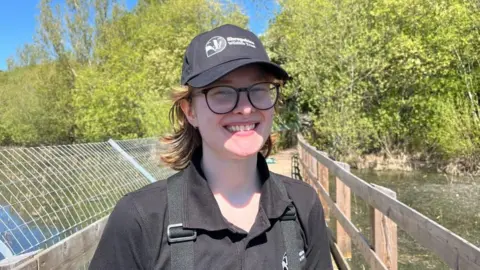
"There is still a lot of management that comes with having beavers," said Mia Clement, from Shropshire Wildlife Trust, but "we're hoping that eventually the site's going to look after itself."
The river bed, a Site of Special Scientific Interest (SSSI), "has always been a fen wetland," Clement said.
"But before the beavers, we had this worry of the fast-growing willow... that was starting to dry it out a bit too much," she explained.
An alternative solution using cattle to graze the site was tried, but "cows hate getting their feet wet, so it wasn't really working," Clement said.
"The obvious solution was to get some ecosystem engineers that love getting wet - which is the beavers."
Possible second pregnancy
Just over a year after the release, Clement and her colleagues have "seen the beginnings of some beaver pools" and "the beginnings of a dam" around the animals' lodge.
The dam "deepens the water" and protects the beavers from predators, "but at the same time they're making sure this old river bed is staying wet."
The kit, whose birth was announced last December, is showing "really positive signs".
"We're always seeing them go back and forth, collecting wood, chewing together as you do with your parents, and they're all very healthy," Clement added.
There is now even the possibility of a second beaver to be born into the family.
"At this time of the year, it's quite likely that [Beryl] might be pregnant again," Clement said.

 Ellen Knight/BBC
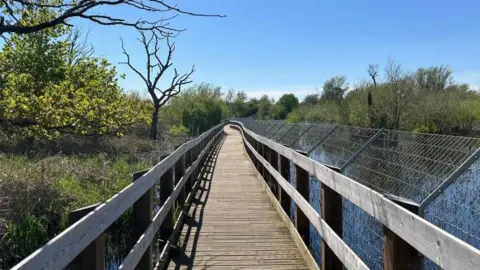
Regular visitors of the site will have noticed footpaths getting boggy - and parts of the boardwalk across the water occasionally submerged.
Clement explained the excess water was primarily due to "a very, very wet winter."
'Birds thriving'
Other visible - and audible - changes can be spotted in the site's wildlife population, which is growing in numbers "because the site is wetter."
"We don't have as much reeds coming through," Clement said, adding that the likes of coots, geese, and ducks were thriving in the water.
"That sensory experience at the Old River Bed I think has changed quite a bit," they noted.
"I feel like I can connect to nature even more ever since Beryl and Bertie have been here."
 Beaver Trust
The Shrewsbury pair are not the only ones in the county, though - a second pair were reintroduced to the River Clun to the south of the county in March 2025.
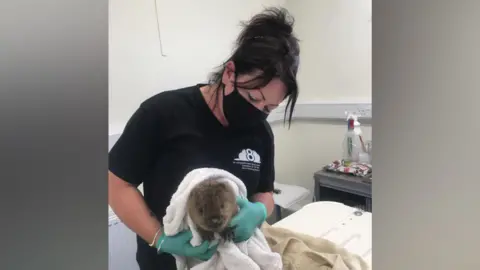
Dr Roisin Campbell-Palmer is the head of restoration at the Beaver Trust - and had the daunting task of transporting the two pairs from Scotland to Shropshire.
"In some circumstances and under certain criteria, we have to trap and relocate animals," she explained.
There are "many layers to beaver restoration, and they can bring a lot of benefits" like boosting biodiversity, she added.
"They act like a keystone species and can really help shape freshwater ecosystems," Campbell-Palmer explained.
 Ellen Knight/BBC
Beavers "create whole series of complex wetlands, which are sometimes lacking in some of landscapes," she said.
"They can deliver what we call nature-based solutions, which can help against flooding," she added, noting that "people think they create dams, so they must create floods."
But some flooding is caused when "water is coming too fast off our landscapes," she explained.
The dams built by beavers can "hold water back" and "leak water out slowly more like a sponge" during flooding.
"This is why we're really keen that they are part of our water management and integral part of our freshwater systems again, because it can actually alleviate floods."
Follow BBC Shropshire on BBC Sounds, Facebook, X and Instagram.
