Women kept in detention despite suicide concerns

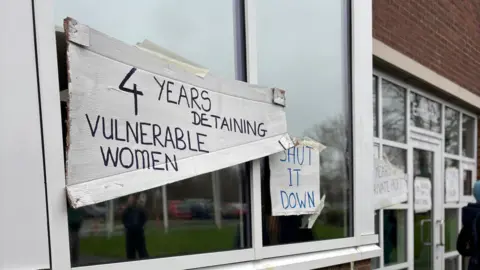 Helen Groom
Women are being kept in an immigration removal centre despite concerns about their suicide risk, new data suggests.
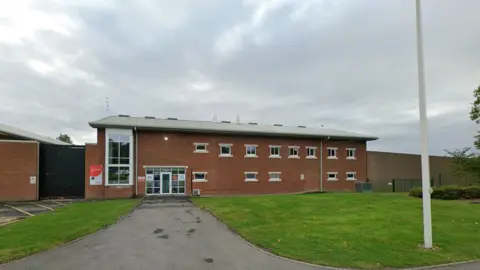
Derwentside Immigration Removal Centre (IRC) in Consett, Durham, is England's sole women-only IRC.
Last year, the Home Office received 160 medical reports about detainees at Derwentside. Known as Rule 35 reports, these are triggered by allegations of previous torture or staff concerns about health or suicide risk.
A freedom of information (FOI) request has uncovered the Home Office only recommended the release of women following 39 of these reports. A government spokesperson says every IRC has dedicated healthcare facilities.
Women are typically held at Derwentside to be removed from the UK.
But recent data suggests the majority of those held at the site are not removed and end up being released back into the community.
Rule 35 reports are meant to act as a safeguard to determine whether detention is appropriate for those considered the most vulnerable.
'Definitely underestimated'
Last year, the Home Office received 10 Rule 35 reports about suicide risk at Derwentside.
Of these - two led to recommendations for release from detention.
In January, HM Inspectorate of Prisons (HMIP) said the number of reports on suicide risk at the site did not reflect the number that "should have been made".
It also highlighted a case where no Rule 35 report was produced despite a woman being considered so high a suicide risk that she was under constant watch for 15 days.
The charity Women for Refugee Women also said the number of suicide risk reports at the centre "definitely underestimated" the issue.
 Google
Most Rule 35 reports - 142 out of 160 - related to allegations of previous torture. Of these - 35 led to recommendations for women to be released.
Dr Helen Groom, from the No To Hassockfield campaign group, which seeks the closure of Derwentside, said the figures were not surprising.
"People seeking sanctuary have often been tortured in their own country [or] sometimes on their journey," she said.
- If you have been affected by issues in this article, help is available at the BBC Action Line.
Women for Refugee Women said the type of torture experienced by women was often sexual or gender-based and might not always leave visible evidence, making it harder to prove to healthcare staff.
The charity also questioned the quality of the medical reports being conducted at the site. It said it had worked with women whose doctors had disbelieved them or minimised their accounts.
It also said Home Office caseworkers, who are not medically trained, ultimately weigh medical evidence alongside immigration factors, such as whether someone is considered a flight risk or not.
The Home Office said it was improving a "previously under-resourced detention estate" while "working to strike a better balance between genuine welfare needs and enforcing decisions".
"Every IRC has dedicated healthcare facilities, staffed by qualified medical professionals, providing round-the-clock care to detained migrants," it said.
