River recovery brings hope for Atlantic salmon

 PA Media
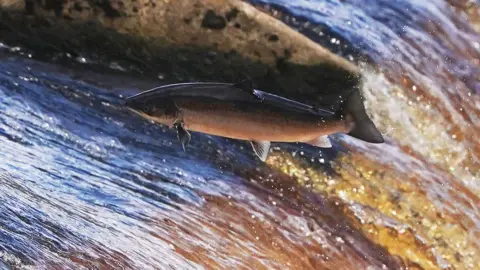
Efforts to improve the quality of Lancashire's rivers are "paying off", conservationists have said, with research suggesting Atlantic salmon are making a comeback in the county.
Every year, the Ribble Rivers Trust surveys more than 300 sites across the Ribble catchment area, including the Rivers Ribble, Hodder, Calder, Darwen and Douglas, along with their tributaries.
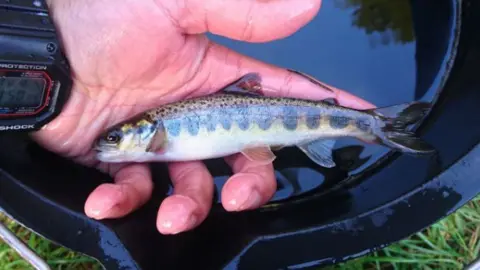
At one site, more than 100 juvenile Atlantic salmon were recorded in a few minutes this year while another location had its first salmon sightings in more than a decade.
The significant improvement reverses several years of disappointing returns. The trust said this "cracking bit of news... gives us real hope for the future".
 Ribble Rivers Trust
The charity said the surveys help build a picture of river health and track the fortunes of fish populations across the region.
Atlantic salmon were once abundant throughout the Ribble and its tributaries, but populations have declined dramatically in recent decades due to water pollution, climate change and habitat loss.
Healthy salmon populations generally rely on clean water, connected rivers, and high-quality habitats.
When salmon thrive other species also benefit.
The Ribble Rivers Trust has spent the last 25 years working to improve rivers.
Recent projects include large-scale habitat restoration work at Langden Brook, where new spawning gravels have been introduced to improve conditions for salmon and trout.
Chief executive officer Jack Spees said: "While there is still a huge amount of work to do, these early results suggest that targeted, science-led river restoration is paying off."
Listen to the best of BBC Radio Lancashire on Sounds and follow BBC Lancashire on Facebook, X and Instagram. You can also send story ideas via Whatsapp to 0808 100 2230.
