Under-16s social media ban: What parents need to know

 Danny Lawson/PA Wire
As the government plans to ban under-16s from some social media platforms by next spring, families are asking how the changes would work – and whether adults could also be affected.
Technology minister Liz Kendall called it a "defining moment for our children", saying it will "give them the freedom to be children again" and "put power back into parents' hands".
But some experts warn its impact will depend on enforcement and what replaces online social spaces.
"We must be careful about over‑promising what a social media ban can do," said Professor Claire Haworth, from the University of Bristol.
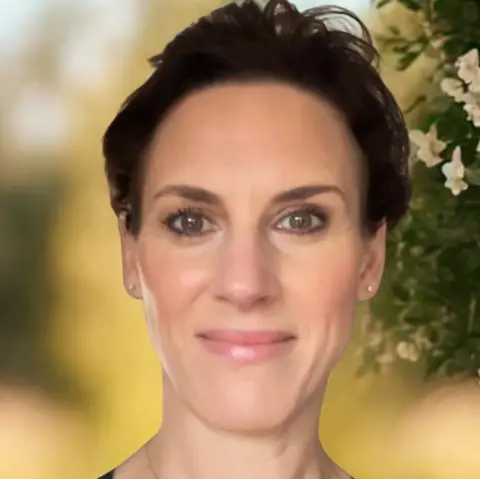
Meanwhile, Claire Honor, a mother of three from Cirencester, said she was relieved: "We're not having to fight trillion‑dollar technology companies on our own."
What is the under-16s social media ban?
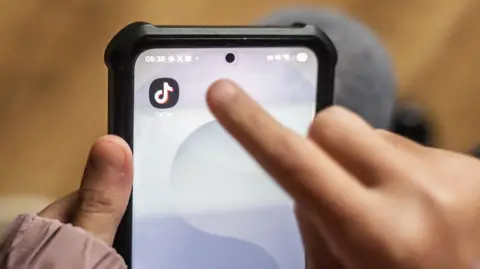
The government plans to ban children under the age of 16 from accessing some social media platforms, including TikTok and YouTube.
Ministers say the aim is to protect children's wellbeing and mental health, and to give parents more support when setting boundaries around screen use.
The changes are expected to come into force by spring 2027, after new regulations are introduced.
 Claire Honor
How would the ban actually work?
There are currently no practical details about how the ban would be enforced.
Questions remain about:
- What would happen if a child already has an account
- Whether accounts would have to be deleted
- Who would be penalised if rules were broken – families or tech companies
- How schools would be expected to manage or enforce the rules
Until the regulations are published, many of these questions remain unanswered.
Do parents need to do anything now?
Experts say the most useful step is talking openly about social media at home.
Professor David Ellis, from the University of Bath, said keeping communication open will help children feel able to ask for help if something goes wrong.
At home, spending time making social media part of regular conversations could be the "most useful thing to do, regardless of any ban," said Ellis, who specialises in behavioural science.
"I think parents are going to be better off keeping channels of communication open rather than relying on this ban to do the work.
"Being able to have open non-judgmental conversations about what children are doing and seeing online and understanding what's happening together, rather than imposing rules silently, will help children know where to go for support if something goes wrong."
And, Ellis said, it's important for parents to bear in mind that: "for many young people, social media is where their friendships live.
"That has to be balanced with what's to happen.
"What we don't want from this is that children then feel that they're breaking the rules and then feel even less able to talk."
What are families in the West already doing?
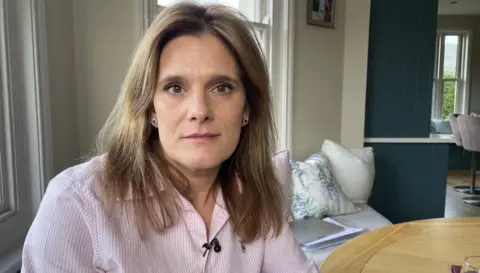
For Honor, who has 14, 13 and 10 year old children, smartphones and social media have been a central topic of conversation.
She started researching what might work best for her growing family and joined a movement called Smartphone Free Childhood.
She said her two eldest children have smartphones but no social media apps.
"They've got iMessage, they've got their homework apps, they've got Google Maps or whatever, but they don't have social media.
"You need to teach them how to use technology and not to be used by technology. And there's a big, big difference."
She described the ban as "a big step in the right direction".
"We're now not having to fight trillion-dollar technology companies on our own.
"If our children ask us to go on social media, we can say, you know we can't do that, it's not allowed, it's the same for everyone.
"We're not having to sort of go 'we're the strict ones and all your friends are allowed to be on it'," she added.
Bereaved mother Ellen Roome, who has campaigned for stronger online safety laws after the death of her son, has also welcomed action on social media use among children.
Campaigners like her argue stricter rules could help protect young people from harmful content and give families more control.
Could a ban change children's daily routines?
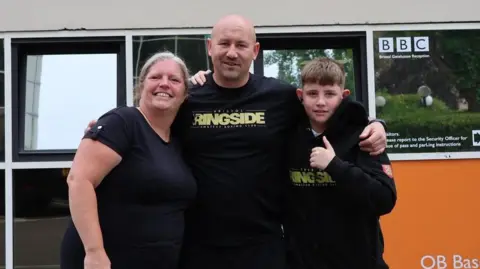
In Bristol, 13-year-old Reece trains at a boxing gym three nights a week.
Reece said he would cope without access to social media apps: "All I really need is messenger.
"I don't really need all them other social medias. I just like to text people."
"There's some people in my school that don't even like, go outside that much, they just go on their computer straight away as they get home, stay on it until like 3am," Reece added, saying: "They'll probably get outside a lot more" under a ban.
His mother Emma said boxing helps reduce screen time naturally.
"You can't train with a phone in your hand," she said, adding it helps him stay active, sleep better and socialise offline.
When will the ban come into effect?
The government says the first set of regulations will be laid out by the end of this year, with further details expected in July.
Technology companies and parents would then have time to prepare, before the ban is implemented next spring.
What about the alternatives?
Haworth works in the School of Psychological Science at University of Bristol.
She said the government would need to be proactive about providing and funding alternative activities.
"What are we ready to offer young people that will support their social spaces and opportunities?
"This is especially important during the winter months, when there can be fewer opportunities to socialise outside," she added.
Sophia from Melksham has children between the ages of 7 and 13 and said she thinks it is valid for young people to now be asking what they are going to do instead of spending time on social media, and looking to adults for some of the answers.
"What we have created is we have given children phones and not given them anything to do. Now we want to take that away. What are we replacing their time with?
"We have a community hub in Melksham, a youth centre, where they're looking for volunteers to try and run the place. We are not even getting volunteers," she added.
Follow BBC Gloucestershire on Facebook, X and Instagram. Send your story ideas to us on email or via WhatsApp on 0800 313 4630.
