Shipwreck thought to be torpedoed US warship Tampa

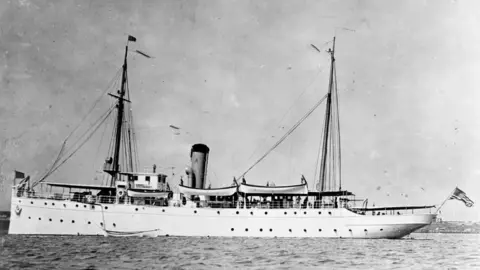 Naval History and Heritage Command
The wreck of what is believed to be a United States Coast Guard cutter sunk by a German submarine in 1918 has been located off the coast of Cornwall.
Members of the Gasperados Dive Team said they spent three years searching for the wreck of USCGC Tampa, which they said was lying at a depth of 100m (328ft) about 50 nautical miles (58 miles, 93km) north of Newquay.
Divers said they had informed the US Coast Guard Historian's Office of the find.
Although missing a ship's stern nameplate, the team said the "weight of evidence" said it was most likely the vessel.
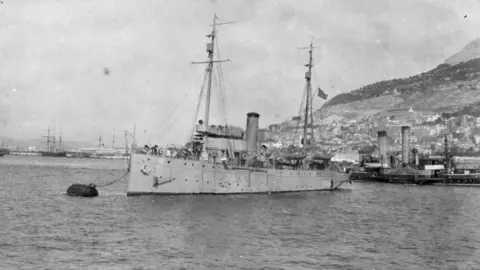
The ship escorted convoys during World War One.
On 26 September 1918, Tampa was hit by a German torpedo while attempting to refuel at a port in Wales.
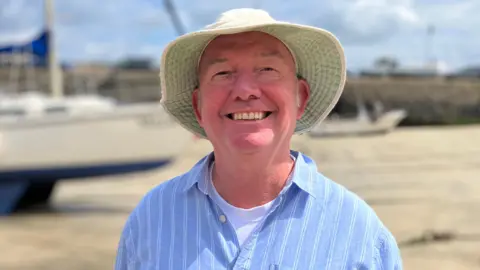
"She was escorting a convoy from Gibraltar," said dive team leader Steven Mortimer, from Devon.
"They were north of the Isles of Scilly and they decided that Tampa was running short of coal, so she was going to go to Millford Haven.
"She went her own way. Four hours later, they [the convoy] heard a big explosion and she was never seen again."
The United States Coast Guard said the vessel sank in less than three minutes, resulting in the death of all 131 people on board, including 111 coast guardsmen, four US Navy personnel, and 16 Royal Navy personnel and civilians.
"For the US Navy, it was the largest single loss of life due to combat in Word War One," said Dr William Thiesen, Atlantic area historian for the US Coast Guard.
The Gasperadoes team worked alongside historians and researchers to determine where the Tampa might be found.
One historian gave them the log from the German U-boat saying where they thought they had attacked.
"We looked on a nautical chart and we saw there were some unknown shipwrecks in that patch. Over the last three years we've tried to dive them one at a time," Mortimer said.
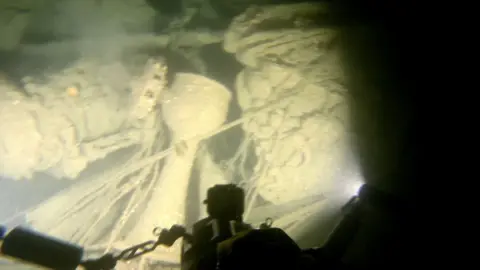 Gasperados Dive Team
 Naval History and Heritage Command
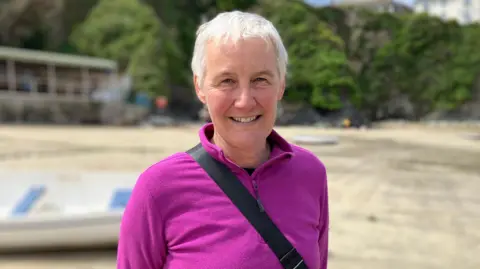
Barbara Mortimer also visited the National Archives in Kew where she read through reports from the Tampa's last convoy mission.
She said: "It included the departure point when Tampa set off independently to re-coal.
"That gave us a position. It also said what direction she set off, and it then gave a time until they heard an explosion."
Dive trips set off from Newquay Harbour with skipper Chris Lowe at the helm of his boat Atlantic Diver.
It took the team about four hours to reach the search area and the depth meant they could only spend about 20 minutes at each wreck.
"We had a list of about 10 possible targets and the Tampa turned out to be number 10," said Lowe.
The Gasperados dive team of volunteers explored a wreck on 26 April which had features they were looking for.
"The first we saw was that it had a steel deck," said Steven Mortimer.
"We immediately thought: 'This looks like a little warship.'
"There was lots of ammunition. We also found some American plates."
Missing nameplate
Using a 200-page specification document from the US Coast Guard Historian's Office, the team was able to tick off certain things spotted on the wreck.
"[The] Weight of evidence says that has to be Tampa," Steven Mortimer said.
However, one feature missing was a nameplate on its stern.
"We think that, as she sank, depth charges went off and just blew the back off the ship," said Mortimer.
"We want to just ensure this is the one," said Dr William Theisen.
"We may be able to bring some automated technology to bear on the wreck site now that they found it.
"We're more than likely going to send down some more assets to 'mow the lawn'... A ROV (remotely operated vehicle) would go back and forth, they could stay down for 24 hours."
Mortimer said he had already received "lovely messages" from descendants of Tampa's lost sailors.
"They're really very moving actually. They're really pleased that she's finally been found," he said.
