Modi spent years building his strong image - why is he making Gen Z reels now?

 Reuters
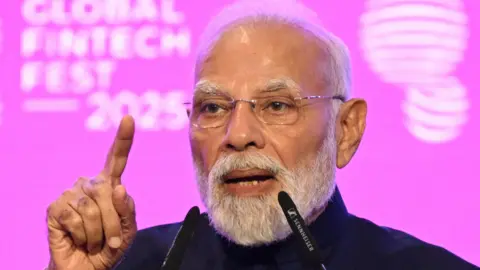
Many among India's Gen Z may not see Narendra Modi as a friend. But the Indian prime minister is trying to talk to them like one.
The 75-year-old leader - who has long cultivated a strongman image through scripted speeches, formal broadcasts and carefully choreographed appearances - has in recent weeks adopted a more casual style on Instagram, the photo and video platform popular with young people.
Modi's timeline, which until a month ago featured carefully curated posts, now also includes more "candid" content, such as a get-ready-with-me reel and several selfie-style addresses to young people, whom he calls "friends".
In one video, he even refers to a phrase popular among Gen Z, saying, "first in my bloodline to build a rocket, a chip and a drone" while addressing students at a graduation ceremony in Delhi.
Modi has more than 106 million followers on Instagram, making him one of the most-followed political leaders on the platform.
But the tone of his communication on the platform was never central to his team or the Bharatiya Janata Party's (BJP) social media strategy, despite the party's reputation for acing the digital playbook that helped it win the 2014 elections.
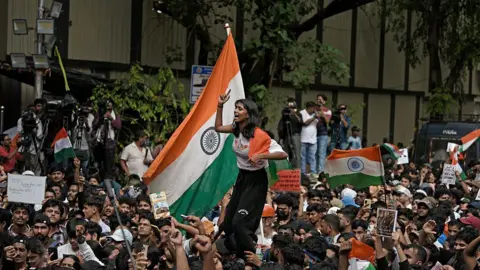
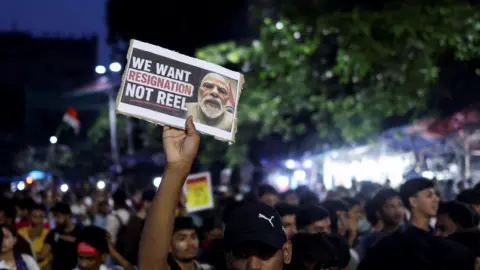
However, things changed after the youth protests in India this year.
Led by the satirical Cockroach Janta Party (CJP), the movement spread through memes, livestreams and Instagram reels before evolving into a force strong enough to make a federal minister resign.
The CJP began as a joke, but its ability to turn online attention into street mobilisation and political pressure appeared to catch the BJP off guard.
For more than a decade, the Hindu nationalist party has built one of India's most formidable political forces online using WhatsApp groups, Facebook pages and X accounts to amplify its message, says author and commentator Anurag Minus Verma.
But young Indians consume content and politics differently.
More than 60% of India's population is under 35 and Gen Z (born between 1997 and 2012) is expected to form one of the country's largest voting blocs by the 2029 general election, experts say.
Winning them over means reaching them on platforms such as Instagram, where personal and unfiltered content can resonate more than traditional political messaging.
That shift was evident when Modi's posts first appeared on Instagram. Young users were quick to respond with sarcasm.
Many people mocked his first selfie-video reel - in which he broke his silence about the youth protests while they were still ongoing. But what really caught their attention was a long pause after Modi said, "friends".
Versions of it soon trended online, with users adding edits and jokes and mocking the lighting and camera angles in his video.
 NurPhoto via Getty Images
In the posts that followed, Modi's team appeared to respond to some of that criticism, experimenting with different camera angles, backdrops and lighting.
While some young users appreciated the outreach, many were still sceptical about its timing.
Ginni Malia, 22, "understands" why the BJP wants to connect with people her age, but says "the timing of this sudden increased engagement is what we really need to look at".
The videos appear to adopt Gen Z language and formats, but fail to address concerns that fuelled the protests, she adds.
It is not just Modi's account. BJP social media pages have also started using memes, slang and pop-culture references to reach younger audiences.
Shortly after the protests ended, the BJP posted a reel set in a gym. It featured young people and an older trainer arguing that young Indians should stay away from the protests. But many comments and shares called the video "cringe".
Another video posted by the BJP had the 90s sitcom Friends title track playing in the background, with the caption, "PM Modi is there for you" - a reference to a show that was a hit with millennials but has little recall value among Gen Z.
Malia says among her peers, these videos are seen as "comic content" rather than taken as political messaging or outreach.
According to reports, the BJP seems to be aware that its attempts to reach younger audiences were not landing as intended.
During the protests, Modi reportedly asked his cabinet ministers to increase their social media engagement and reach out to the youth.
On Wednesday, federal ministers were given a "report card" on their social media performance and told to step up their presence across platforms, the Hindustan Times reported.
Recently, the party also replaced its social media chief Amit Malviya who had held the post since 2015. Some analysts say it could be because of criticism directed at the BJP online during the protests and how they were unable to contain the social media narrative.
The BJP is not alone in trying to connect with younger audiences.
Congress leader Rahul Gandhi - who often posts selfie-style videos and candid pictures on Instagram - also held an Instagram Ask Me Anything after the protests, with playful responses such as "have you seen me and Batman in the same room together?"
 Reuters
However, getting attention on Instagram is one thing and controlling the conversation there is another.
Joyojeet Pal, who teaches the political use of social media at the University of Michigan, says the BJP has long relied on a network of supporters on X and WhatsApp to amplify its messages and shape the narrative - but that does not work on Instagram.
The platform tends to push content that generates more engagement, such as longer watch times, replays, shares and comments.
"It is not too difficult to find a reel which has 10 million views posted from an account that has 200 followers, while some posted by people with a huge base might do only a few thousand," Pal says.
"This is a challenge for the BJP because its strategy was built for a network-centric internet, while today's platforms are far more affect-centric."
Another hurdle for the BJP could be losing control over what happens after a video is posted.
Modi's first reel, which has been viewed more than 400 million times, is a case in point. While it attracted a huge audience, Verma says young people reshared it with sarcastic and mocking edits, giving it a very different tone from what Modi intended. For the BJP, learning to accept that dynamic could be a challenge.
"Instagram is fundamentally a platform built around irony," says Verma. "Serious political messaging, packaged as reels, can still be trolled."
Experts, however, caution against putting too much weight on the BJP's efforts to win over Gen Z. They say the party's electoral success still depends far more on its organisational strength and loyal support base than on how its content performs on Instagram.
"It's important to distinguish between the ability to win an election and to win a social-media narrative," Pal says. "The BJP is absolutely capable of sweeping elections even if every Gen Z person hates it on social media."
For now, the party - like many in India's political space - is learning to operate in unfamiliar territory.
But it would not be surprising if the BJP eventually figures it out it, Pal says.
The party has a history of adapting to new forms of political communication, from being an early adopter of social media for campaigning to embracing newer formats such as podcasts and influencer interviews.
"But it will take time, and the fact that we are seeing this problem now means that they will have to learn a new set of rules," he adds.
