Why are wild beavers released into rivers?

 Getty
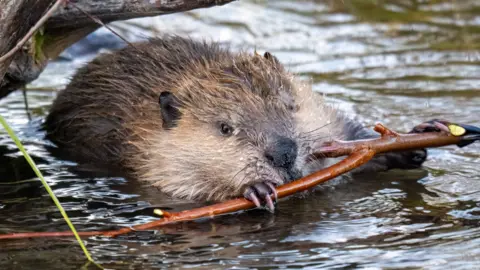
GettyUp to 50 wild beavers could be released into Dorset rivers if a proposed project is approved by the government.
Dorset Wildlife Trust announced the plans for the wild beaver release project in the River Hooke and wider River Frome catchment earlier this month.
Steve Oliver, rivers conservation officers for Dorset Wildlife Trust (DWT), said in order for their "successful return", the charity needed to "raise awareness and an understanding of what it means to have them back in the landscape".
The National Farmer's Union (NFU) has previously expressed concerns about the impact of beavers on farmland.
Why are wild beavers released into rivers?
By the beginning of the 16th Century, beavers were all-but extinct from Britain, having been hunted for their fur and scent glands that produce a substance called castoreum.
Supporters of their reintroduction refer to them as "ecosystem engineers" who act as a nature-based solution to environmental challenges and help meet national recovery targets.
The semiaquatic mammals have the ability to restore wetlands, reduce flood risk, improve water quality and boost biodiversity.
"Nothing can replicate what a beaver can do," said Oliver.
"They're very much known as a keystone species, so relative to their abundance, they can have a really dramatic influence on other wildlife."
Their dam-building activity creates diverse habitats, slows water flow, filters pollutants, and supports other wildlife.
This is said to make landscapes more resilient to impacts of climate change such as drought and flooding.
Oliver added: "We need a healthy, functioning ecosystem around us in order to survive ourselves.
"If the environment's doing well and it's full of a lot of different wildlife and lots of biodiversity, it's good for humans."
 James Beck/PA
Why release beavers in Dorset?
There are wild populations of beaver in many parts of the country.
In Dorset there is a small number living in the River Stour catchment and the Purbeck area.
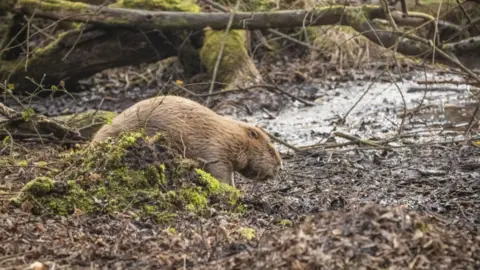
In March 2025, the first ever wild beavers were released in a nature reserve in Purbeck, more than 400 years after their extinction in Britain, which came after the government's decision to allow wild populations return to England's rivers and wetlands.
Oliver said a feasibility study showed that a "really big proportion" of the River Frome catchment "has suitable or highly suitable habitat for beavers".
"We have to look at a good number of release sites, and they will have to be suitable... consultation is a massive part of it."
The River Hooke has hosted the charity's enclosed Beaver Project since February 2021.
DWT said a licensed wild-release beaver reintroduction project in this area was a "unique opportunity to ensure a genetically viable and robust" beaver population is established.
Does living alongside beavers pose a challenge?
The NFU has previously expressed concerns about the "negative impacts beavers can have on productive farmland, as well as the management requirements, costs and risks involved".
DWT said beavers were an "influential species" and that it was important for everyone to learn about the returning mammals and deal with any potential challenges.
The charity said it would enable people to "maximise the multiple benefits" beavers offer while reducing any "potential conflict".
One example of a challenge would be a beaver building a dam in the wrong place - such as on a road culvert where water needs to flow through.
Oliver said that would be the kind of situation when humans "will have to step in".
"As long as we are aware of what these animals can do, and the sort of situations we might have to deal with.
"As for human beings, we are more than capable of dealing with these challenges and living successfully alongside beavers again," he added.
What next?
A public consultation on the trust's proposal has been opened and will run until 31 May.
Following the consultation, a full application will be submitted, which must be approved by Natural England before a wild release beaver licence is granted.
