Parched South East revealed in drone images

 BBC
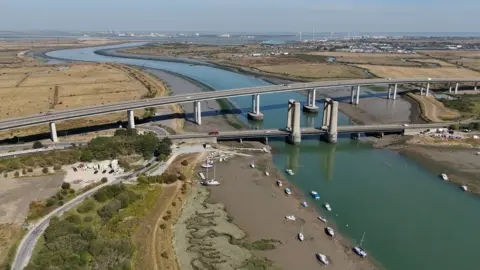
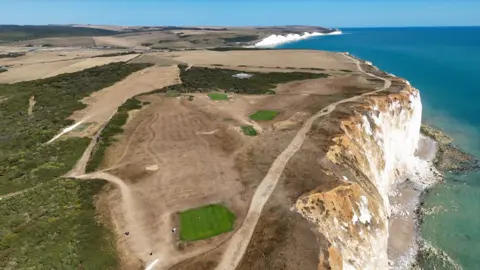
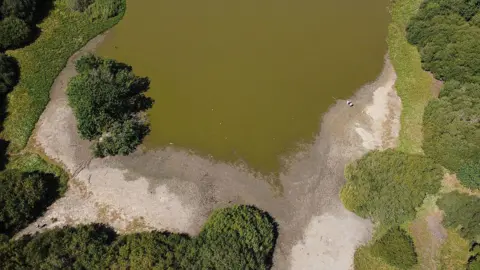
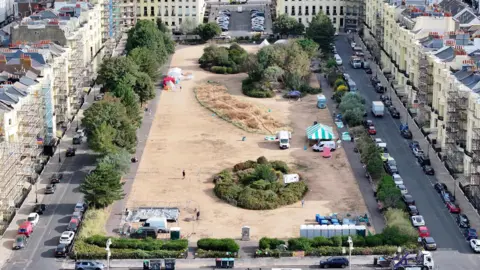
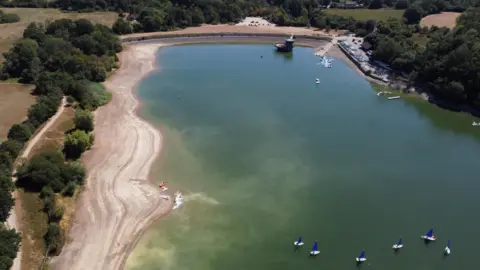
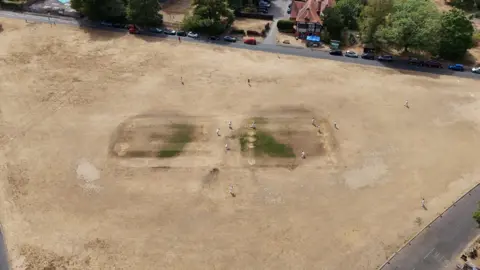
BBCPhotographs taken from drones have revealed the impact that drought conditions have had on the south-east of England.
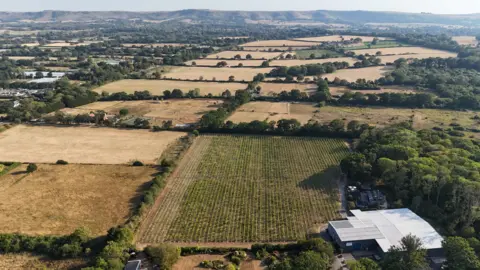
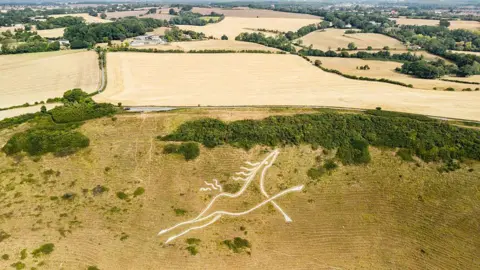
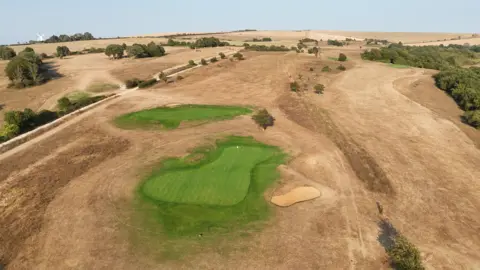
There has been no significant rain in the region for about two months, which has impacted some river levels and led to once-green landscapes turning brown.
The UK has experienced a record-breaking summer of extreme heat and prolonged dry weather.
Kent, Sussex and Surrey are among the counties to have experienced multiple heatwaves, while the Met Office said July 2026 was the driest in England since records began 190 years ago.
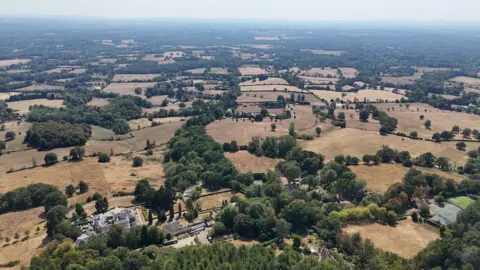
The weather station in Wisley, Surrey, went 60 days without recording rainfall during the summer.
The National Drought Group – made up of regulators, government officials, water companies and agricultural bodies - considers 70% of England to be in drought, including the South East.
Many, but not all, households in the region are subject to a hosepipe ban, as some water companies struggle to cope with the dry weather and high demand for water.
 Anadolu via Getty Images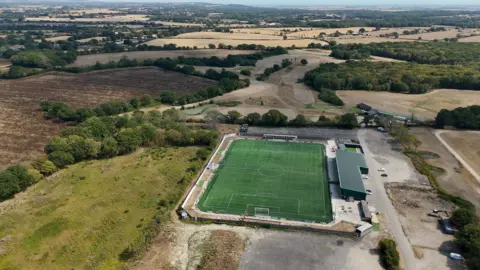
 Eddie Mitchell
Some have raised concerns that wildlife will struggle to cope with the conditions.
This includes dropping river levels, affecting wetland ecosystems in the region.
Some farmers have warned they are feeding winter food supplies to their animals due to the impact of the drought.
Emergency services issued repeated warnings over an increased wildfire risk throughout the summer. This was followed by the government issuing an emergency alert over the risk of starting fires outdoors.
 Reuters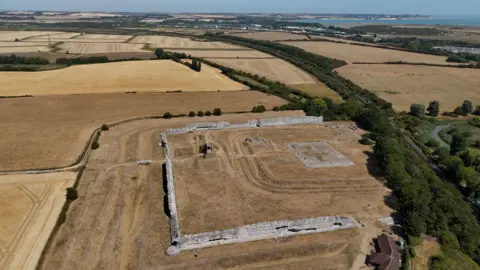
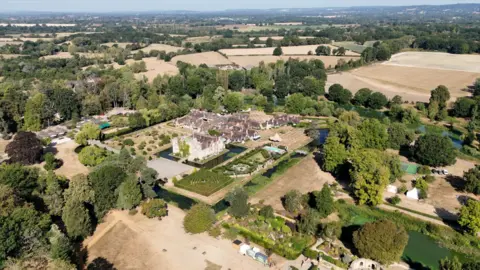
Neil Miller, head gardener at Hever Castle in Kent, said it had been a "very strange year" and his main concern was "keeping the gardens alive".
Mediterranean plants in the garden "have just romped away", he said, succeeding due to the climate, while roses have also been "second to none" in 2026 after the heat wiped out diseases and harmful bugs.
The gardener said the grass was not irrigated as "you can never kill the grass with the hot weather" and that as soon as it rains "the grass will come".
"We have the hot summers and then we have the very wet winters and springs, so it's just trying to get that balance," he told the BBC.
 Getty Images
Climate change, mainly due to the burning of fossil fuels, has been raising average temperatures for decades and making hot spells much more likely and intense.
Experts have warned that climate change means the UK is experiencing more frequent intense winter storms followed by heatwaves and droughts in summers.
The consensus among scientists is that human activities are causing climate change.
The UN's climate body – the Intergovernmental Panel on Climate Change (IPCC) – concluded in 2023 that "human activities, principally through emissions of greenhouse gases, have unequivocally caused global warming".
 PA Media
Follow BBC Surrey on Facebook, on X, and on Instagram and listen to BBC Radio Surrey on Sounds. Send your story ideas to southeasttoday@bbc.co.uk or WhatsApp us on 08081 002250.
