Air ambulance sees fuel costs double amid Iran war

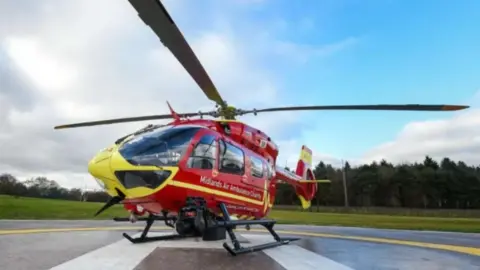 Midlands Air Ambulance
The war in Iran has caused fuel costs for the Midlands Air Ambulance to double, putting more pressure on the charity's finances, officials say.
They said they were already facing increased demands on their budget before the conflict, including rising energy and staffing costs.
The Midlands Air Ambulance Charity said they would "closely monitor fuel prices" and would "adapt where necessary".
But a spokesperson also said they remained "fully committed to keeping our helicopters flying and our critical care teams responding".
The Gulf is a major source of aviation fuel, accounting for about 50% of Europe's imports.
A large part of it comes through the Strait of Hormuz, which Iran effectively closed in response to US and Israeli attacks.
As a result, the price of aviation fuel recently hit an all-time high across Europe.
The Midlands Air Ambulance is an independent charity which receives no NHS or government funding and responds to emergencies across the West Midlands.
A spokesperson said that made it "more important than ever that we use every donated pound carefully, ensuring we can continue to provide our vital front-line service".

Another health service, the Warwickshire and Solihull Blood Bikes group, said they were also feeling the pressure of rising fuel prices.
Matt Menashe, one of the charity's volunteers, said they had to spend £1,500 on fuel last month.
At the same time, he said the charity had seen growing demand for its services, from 200 jobs a month to close to 500 a month over the last two years.
Those included transporting everything from blood to donated breast milk.
"Basically anything the NHS asks us," Menashe said.
Keeping the bikes on the road was a "constant ongoing struggle" he said and it cost the charity about £80,000 a year to continue operating.
While he said the rising fuel prices were "just one of those things", he said it was also something the charity always had in the back of its mind.
Asked if there were concerns about an impact on services, he said: "Everyone's very optimistic and we know our volunteers work incredibly hard.
"We know that if we continue to have the support we currently have and just keep that building, we'll push through it and we'll be alright."
Follow BBC Shropshire on BBC Sounds, Facebook, X and Instagram.
