Dad never talked about the war, that's why I must

 Robin Page
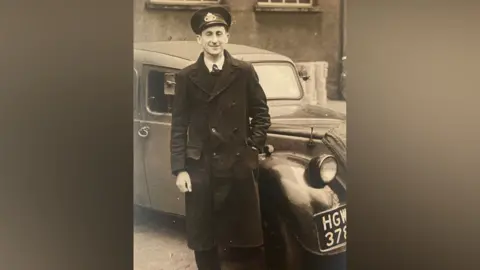
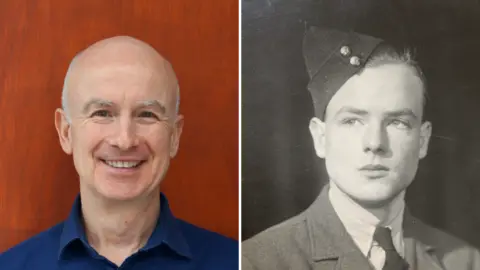
Ron Page rarely talked about his experience as a prisoner during World War Two, but his son Robin is trying to keep his story alive.
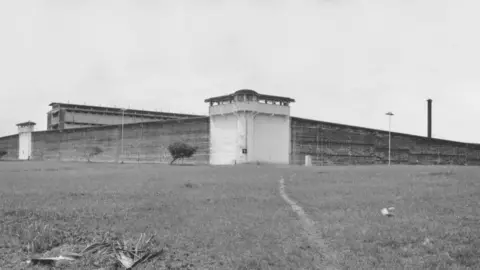
Born and bred in Ipswich, he spent most of his early 20s being held in Changi Prison in Singapore after it was invaded by Japan.
Arriving back home in 1946, Robin said despite having gone through such horrors, his father was never bitter, but he never wanted to talk about it.
Keen to share his story, Robin got in touch with Matthew Collins, who has a podcast about men who fought in the war, with their stories told by their sons.
Both men told the BBC the importance of keeping the memories of these men alive amid numerous modern conflicts.
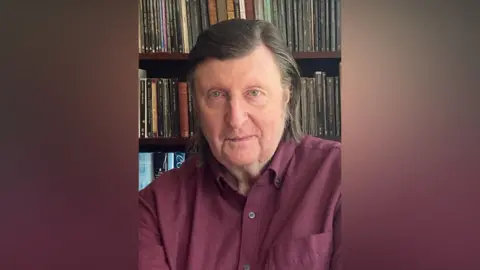
Robin, 72, who lives in Carshalton Beeches near the London/Surrey border, described his dad as an "Ipswich man through and through", complete with a Suffolk accent.
"[He was] the kindest man you'd ever meet," he said.
"A bit shy and he would have hated this publicity, because he was a very private man."
 Robin Page
Brought up on Oxford Road, near Alexandra Park, he left school at 14 and when war was declared in 1939, Ron volunteered, aged 18.
After his training, Ron was shipped to the Far East and during the journey was shipwrecked twice.
In one of those instances, he had been clinging to a piece of wood before being rescued by the French after the ship had been torpedoed.
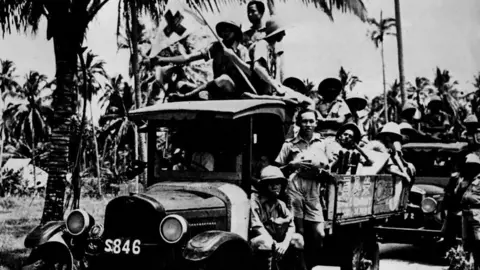
Eventually he arrived in Singapore on the day it fell to the Japanese in 1942 and he was captured.
As a prisoner, Ron, along with thousands of others, witnessed many deaths of his comrades and experienced brutal conditions.
His family presumed him dead until Japan surrendered in September 1945.
 Getty Images
 Getty Images
"I think the great thing about him was he was never bitter," Robin continued.
"He just got on with life cheerfully all the time.
"You wouldn't know of his past at all, and he valued hard work and was very conscientious."
Ron came back to Suffolk, became a postman and even had Ipswich Town manager Sir Alf Ramsey's home on his round.
Over the years, Ron did not want to talk about his war experiences, but Robin got snippets before his father died in 2004.
He had heard about Collins's podcast in a newspaper and thought it would be a good opportunity to share his story.
"If you think about how we look at history, this is a remarkable generation because we can leave our voices.
"[My dad] was born in 1921. It's so different. How do you know what life was like?
"You have to read it and not many people wrote in those days anyway.
"So, to cut a long story short, it's our duty to find out about the past and what better than the voice as well as the writing?"
 Matthew Collins
Collins's own father also fought in WW2 and said that while his father did talk about his experiences, it was mainly light-hearted things that had happened.
He decided to launch his podcast, titled We Sons of World War Two Veterans, to share stories.
"I started wanting to compare notes with other sons to see what the legacy of their fathers' war was on their own psyche," the 65-year-old from London explained.
"But also to give sons of men who fought, and women, to pay tribute to their parents — to tell their parents' story and explore these effects."
The podcast features 12 episodes and was self-funded.
He said many of the episodes were "emotional" and some of his guests had said it had helped them reflect deeply about their relationships with their fathers.
"We need to constantly remind ourselves that peace, freedom — they're not givens," he continued.
"We have to be mindful they have to be maintained at some cost, and the cost of maintaining our freedom during the Second World War was very high.
"I think perhaps baby boomers' post-war culture meant that some of those sacrifices had been forgotten and now, 80 years after the war ended, in addition to sentimentalising the stories of those people, I think we have to be mindful, that ongoing prosperity and peace is not something we can just take for granted."
Do you have a story suggestion for Suffolk? Contact us below.
Follow Suffolk news on BBC Sounds, Facebook, Instagram and X.
