Tree deserts put health at risk, says charity

 Simon Dedman/BBC
People living in areas with a lack of trees are more at risk of ill health, pollution and environmental harm, a charity has warned.
The Woodland Trust has analysed the number of trees in towns and cities, along with population density, air pollution and social factors like health inequalities and deprivation, creating a list of "tree deserts" across the UK.
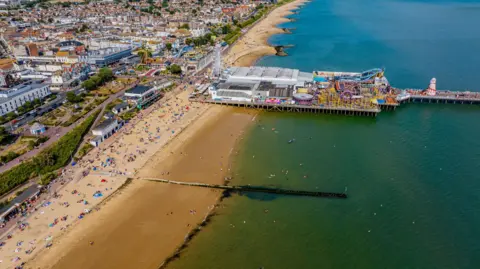
Clacton-on-Sea came out as the worst-performing town in England, with almost all of its population in areas with critically-low "tree equity".
In response, the local council for the Essex town said the "tree desert" label did not "reflect the reality on the ground".
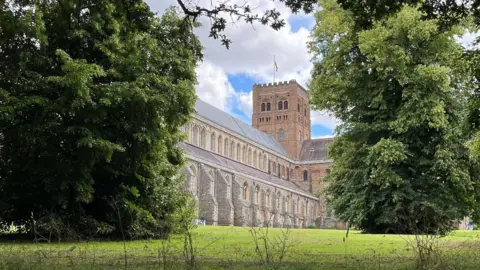
The best-performing towns and cities in the rankings included Winchester, Royal Tunbridge Wells in Kent, and St Albans.
"These new figures reveal an injustice that is silently affecting the health of millions of people," said Caroline Gray, Woodland Trust tree equity programme officer.
"More than a million people in the UK are living in these tree deserts, places of critically low tree equity where communities are missing out on the many benefits trees provide.
"That can mean hotter homes and streets, dirtier air, higher rates of asthma and heart disease, and poorer physical and mental health."
The trust also said Holyhead in North Wales and Omagh in Northern Ireland both had entire populations living with a lack of critical urban tree cover.
 Getty Images
The Woodland Trust wants more trees planted, as well as stronger protection of existing urban trees.
"We need to stop seeing a tree as this nice leafy thing that's a nice thing to have, and we need to start seeing them as critical green infrastructure," in the same way as traffic lights and utilities, Gray explained.
Tendring District Council said it recognised the trust's research, but said the charity's methodology was based "heavily on canopy cover" without "identifying specific locations or fully accounting for the extensive planting and investment" being delivered.
A spokesperson said 40,000 trees had been planted in recent years in Tendring, including 1,500 by the council in "our open spaces".
"Many of these trees are still relatively young, meaning their full canopy and environmental benefits will continue to develop over time," the council said.
Last week, the government announced grant funding worth up to £6.5m to help researchers, nurseries and seed suppliers "strengthen England's tree production".
Do you have a story suggestion for Essex? Contact us below.
Follow Essex news on BBC Sounds, Facebook, Instagram and X.
