'Migration from Skegness' among flood risk options

 Getty Images
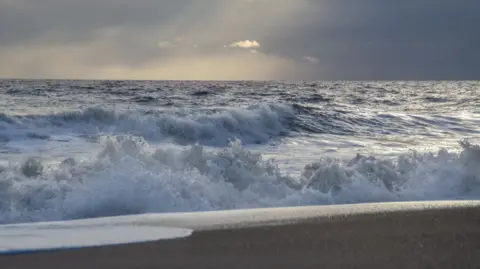
Migrating people from Skegness and other seaside towns is among the options being looked at to protect Lincolnshire's coastal communities from flooding.
More than 60,000 people are at risk of becoming flood victims unless Lincolnshire coastal defences are improved or other action is taken, a council boss has warned.
Chris Miller, Lincolnshire County Council's head of environment, said 85% of defences would be unreliable after 2040.
"We have to evaluate all potential outcomes so that we can provide a credible business case for investment from the government," Miller said.
 Getty Images
Miller said: "I, in no way, want to be an officer who stands here and says 'yes, we're going to have to migrate Skegness'.
"No-one wants to be in that position, but we have to look at what that would look like."
When asked whether the idea would be alarming for people living on the coast, he said "It's possibly scarier to close our eyes to it, to just assume everything's going to be fine. We know it won't."
A report published by Lincolnshire County Council in 2025, said if government funding could not maintain current flood defences there would be a "requirement to consider what a safe and just withdrawal of maintaining the current line of defence will entail".
The report said it needed to consider a "managed retreat" from the coastline.
Miller said existing defences protected about 20,000 homes, 60,000 residents, 35,000 hectares of agricultural land and 29,000 caravans.
If a breach of those defences was to happen floods could spread up to about nine miles (15km) inland, and reach depths of up to 8ft (2.4m), he said.
Miller added that fast-flowing water would make any evacuation and emergency response "very challenging".
On top of the human cost, he said the economic impact of flooding in coastal towns such as Skegness, Mablethorpe and Sutton on Sea could be in the region of £5.5bn, excluding indirect costs such as business disruption and loss of tourism.
 Environment Agency
The county council, Environment Agency and East Lindsey District Council have formed a partnership to consider options to reduce the risk.
The Lincolnshire Coast 2100+ programme is considering far-ranging options, Miller said, including "a potential refortification" of the coastline and "at the other end of the spectrum completely remanaging the coastlines with wetland areas".
Options include a coastline which would no longer have beaches at popular resorts like Mablethorpe and Skegness.
"It's about not ruling anything out at this time," he said, but stressed no decisions had yet been made.
"We are at the start of a journey to look at all the potential futures for the coastline – however unpalatable they may seem – to ensure we have properly costed the outcomes and for it to make a strong business case for investment [in flood defences] by government".
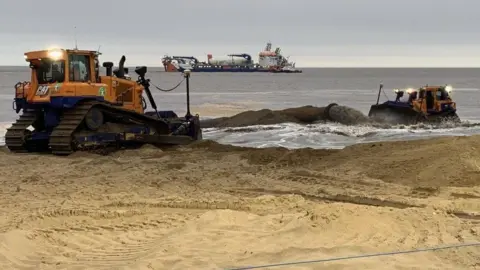
The Environment Agency currently replenishes thousands of tonnes of sand along the Lincolnshire coast annually at a cost of between £10m and £15m to reduce the risk of flooding.
Listen to highlights fromLincolnshire on BBC Sounds, and watch thelatest episode of Look North.
Download the BBC News app from the App Storefor iPhone and iPad orGoogle Play for Android devices
