'Never in a million years did I think the fire would get near us'

 Oli Constable/BBC
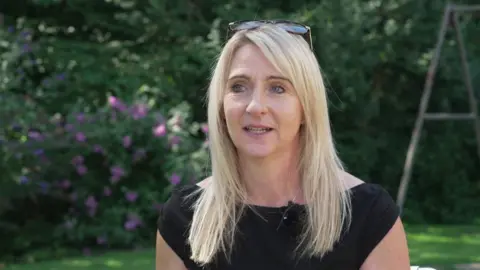
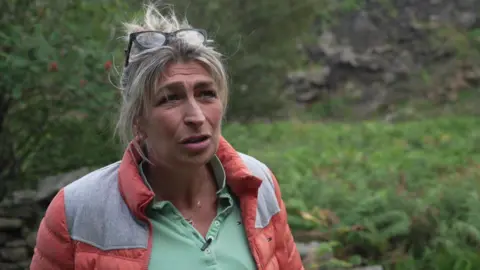
"Thinking back it was a really surreal time. I look at the wildfires going on at the moment and it sends shivers down my spine as I know exactly what they are going through."
Cara Shardlow, from Sneatonthorpe near Whitby, shudders as she looks back exactly 12 months to when a fire broke out on Langdale Moor in the North York Moors National Park which would go on to burn for 40 days.
At its height, it covered nearly 10 sq miles (25 sq km) and brought with it devastation to the moorland and those living in and around the national park.
Cara recalls that when the blaze began it seemed a long way away from her farm.
"Never in a million years did I think it would get near us," she says.
But by the August Bank Holiday Monday, the fire was much closer and her family was put on standby to be evacuated.
"I saw it up on the top road. It just looked like something you would see on the news - just towering flames," she remembers.
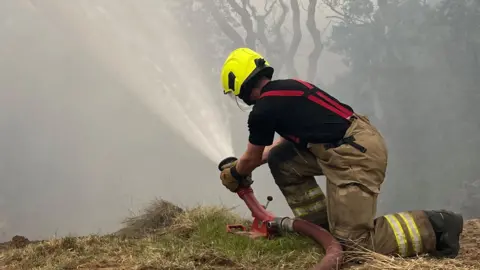
As firefighters continued to battle the blaze, they were supported by farmers and gamekeepers who helped to clear firebreaks and haul tankers of water on to the moors.
Cara says another local resident, Amy Cockrem, even launched an online fundraiser to enable people in the area to buy food and drinks for those tackling the fire.
"It just started escalating, it was crazy. We got up to £70,000 in the end."
The money which was not used at the time has since been used to help farmers pay for repairs to their vehicles, for fuel and purchasing hay and feed for their sheep.
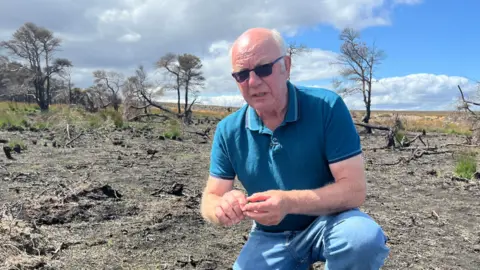
A year later, and the impact of the blaze on the moorland is clear, but efforts to restore the area to health is ongoing.
"We've done an awful lot of work this winter," says Lol Hodgson, chair of the environmental stewardship group, who goes on to explain that members have so far replaced about six miles (9.5km) of fencing.
Before the fire, the moor was home to about 1,700 sheep, but Lol says it could be a decade before they can return to that number.
"At present we've got about 400 sheep back on the moor. We need to get the sheep back out," he explains.
Looking across black and grey moorland, Lol reflects on what has been lost.
"This area was a total heather area and then the fire went through it and within minutes the whole lot was gone."
He says the loss of wildlife was unbelievable.
"How an earth could anything get away?" he asks.
"They are going to come back, but everything is going to be a slow recovery."
Lol believes it could take five to 10 years for the moors in the area to regenerate.
However, he says in areas where the fire did not penetrate too deeply into the peat, there are already signs of recovery with heather roots beginning to flourish.
Phil Turford, who farms near Fylingdales, recalls thinking that early on they had avoided the worst.
He says they had known the fire had broken out, but thought they had been "lucky" as it had not crossed onto the moorland.
Then one morning, he received 60 calls telling him the fire, driven by high winds, had jumped a beck and was on the moors.
"For two weeks we fought, but on Bank Holiday Monday it jumped another road and that's when the total devastation of the moor happened."
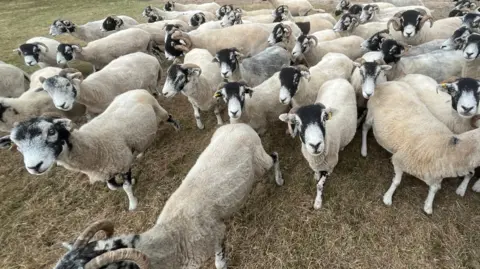
Phil says that a year later his Swaledale sheep are still not back on the moors.
"I am still having to do jobs I shouldn't. I am travelling five miles [8km] a day to feed and look at sheep.
"These sheep usually lamb on the moor and stay on the moor."
Phil says his health has suffered from the stress of the last year and the only thing that would help is the "reinstatement of the moor".
He says he would like to see it "getting back to something like it was before".
Caroline Butterfield, who runs Grouse Hill Caravan Park, near Whitby, says as the fire got nearer to the site it became "frightfully clear" everything could be lost.
"We evacuated and we were then closed for 11 days, working with firefighters and local farmers to try and keep it at bay," she says.
The fire crews and the local community were "second to none" in the help they provided, Caroline adds.
"Some friends of my daughter came and gathered the horses up, no questions asked. My daughter went to a local farmer with the dogs and stayed for three or fours nights."
Caroline says people just dropped what they were doing and brought their tractors with tankers and "relentlessly tipped water down".
"Without their actions I think it might be a totally different position we would be in now."
The fire burned for more than six weeks between August and September last year, with prolonged hot and dry weather together with strong winds contributing to the scale and behaviour of the fire.
Roads were closed in the area and smoke from the fire could be seen up to 80 miles (128km) away.
An investigation by North Yorkshire Fire and Rescue Service found that the wildfire was likely to have been caused by someone cooking with a naked flame.
Since the fire, Cara has campaigned for more support for people affected by wildfires.
The government did provide £3m for moorland restoration, but Cara says she had hoped for more.
"People lost income. They were using their own fuel, tractors were damaged, they were literally risking their lives. It was really dangerous up there," she says.
"We didn't get that funding, but now, with all the fires that are going on this year, I don't know if it will change how they deal with that."
Listen to highlights from North Yorkshire on BBC Sounds, catch up with the latest episode of Look North.
