What it takes to put on a spectacular air display

 Getty Images
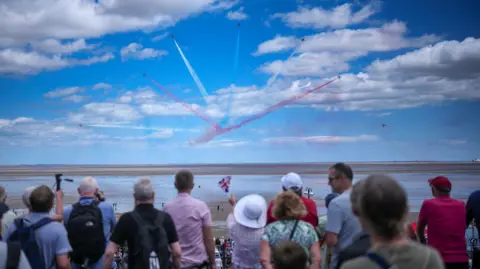
A series of spectacular flying displays will be staged over Cleethorpes beach later after months of planning.
Armed Forces Weekend will feature modern and vintage aircraft, from a Spitfire from the Battle of Britain Memorial Flight, to an RAF Typhoon jet.
Staging the annual event is no mean feat. According to North East Lincolnshire Council, it takes nine months to set up.
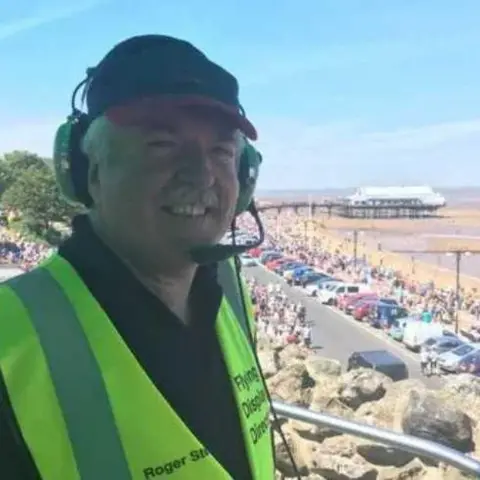
Flying display director Roger Steele says: "Safety is everything in aviation, especially during public displays."
This means monitoring everything from bird activity and drones to enthusiastic spectators trying to get too close to the action.
One major piece of the puzzle is securing restricted airspace so only approved aircraft can enter the area.
Planning for military aircraft also begins early, with applications sent off the previous September.
"Getting these displays secured early is critical – they're in high demand and require significant co-ordination," Steele says.
"As the new year begins, we're already deep into planning."
 North East Lincolnshire Council
Steele, who was born in Cleethorpes, has been involved with flying displays since the early 1990s.
He served in the RAF as an air traffic control officer and now runs a company organising events.
For the Cleethorpes weekend, he works alongside the Armed Forces Major Events Team.
Once the display aircraft are confirmed, he begins the complicated task of scheduling.
"Many teams have multiple shows on the same day, so we co-ordinate carefully to lock in timings that work for everyone," he explains.
This includes liaising with Humberside Airport and local airfields to ensure there are no conflicts around the use of the airspace.
The event also has a dedicated air-ground radio frequency to ensure seamless communication during the show.
Steele, who is accredited by the Civil Aviation Authority (CAA) and Military Aviation Authority (MAA), produces detailed notes to distribute to pilots and also verifies their crew documentation.
 Getty Images
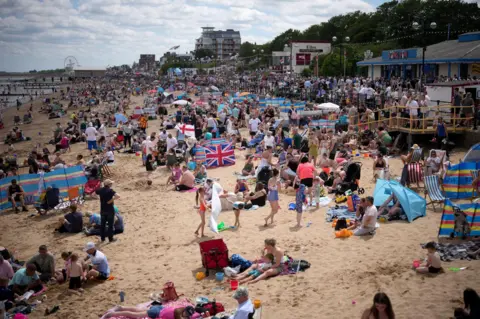
In the week before the show, the Cleethorpes beach safety team helps lay marker buoys.
"These markers are crucial," Steele says. "They give visual reference points to help pilots maintain safe separation distances from the crowd.
"If any enthusiastic spectators get too close, we alert the pilots to fly further away."
Pilots are also quickly alerted of potential hazards in the air, such as birds or drones.
"Even with restricted airspace in place, I use flight-tracking apps to spot any unexpected aircraft nearby and make sure they don't infringe on our display zone," Steele adds.
Before each flight, the pilot is briefed about the weather, timings and other safety aspects over the phone.
"During the display, compliance is key," Steele says. "I monitor every manoeuvre to ensure regulations are met.
"Crews are allowed two safety warnings during the event. If a third is necessary, their display is halted – safety always comes first.
"After the final flypast, I debrief each display team to review separation compliance and gather feedback – what worked well, and what could be done better next time."
The work does not end there. After the event, a detailed report is sent to the MAA and shared with the CAA, designed to ensure displays continue to be safe and spectacular.
What's on when?
This year, the Red Arrows will not be flying at the event because the team is in the US, but there is still an impressive schedule of displays over Cleethorpes beach.
Saturday
12:00 BST - Chinook flypast
12:15 - Typhoon display
13:10 - A400M flypast
15:00 - RAF Tutor display
Sunday
15:30 - RAF Tutor display
16:00 - Typhoon display
16:12 - Spitfire display
Listen to highlights fromLincolnshire on BBC Sounds, watch thelatest episode of Look North.
Download the BBC News app from the App Storefor iPhone and iPad orGoogle Play for Android devices
