The man with the ultimate need for speed

 Getty Images
"This is a man who was fearless and was going to try and break the boundaries."
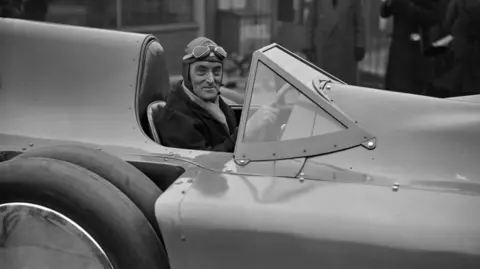
Sir Malcolm Campbell was a champion of speed on both land and water, and his legacy still resonates in the place where his story began, says Joanna Friel, chair of the Chislehurst Society.
Born in 1885 and raised in Chislehurst in the London borough of Bromley, Campbell would go on to raise the land speed record seven times and the water speed record three times.
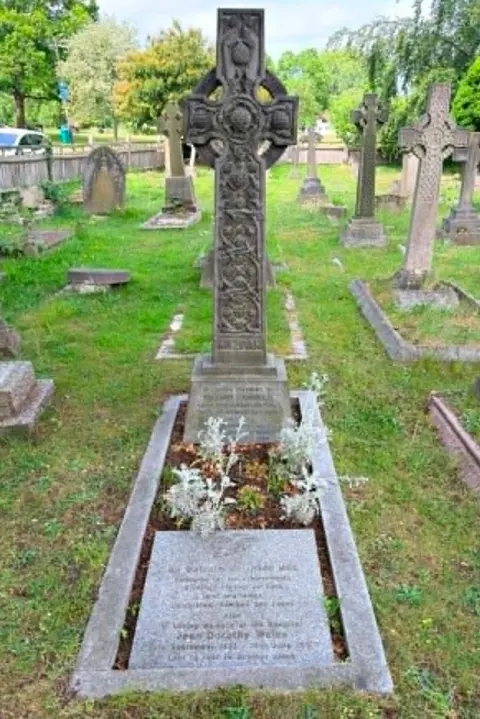
His body rests at St Nicholas Church in the town where he grew up and where he discovered his appetite for racing.
Destined to break limits
As a 12-year-old boy, he raced his bicycle down the steep Summer Hill, alarming a group of women walking nearby.
The stunt landed him in trouble. Stopped by a police officer and brought before a magistrate's court, the young Campbell was fined.
Friel told the BBC: "The judge in passing sentence fined him and said 'young man I never want to see you going at such speed ever again'.
"How ironic was that?"
 Getty
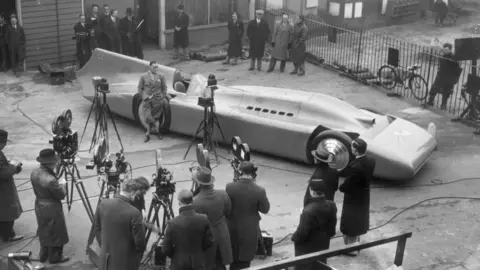
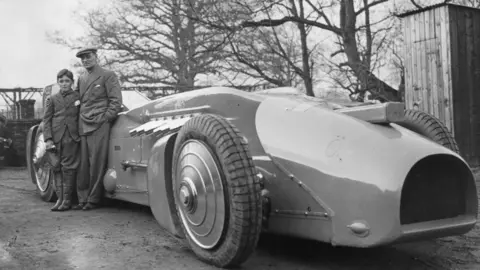
GettyCampbell's fascination with speed grew into a relentless pursuit of world records in his infamous Bluebird vehicles.
In 1935, he made history yet again by becoming the first person to exceed 300mph on land.
The achievement earned him a knighthood, matching the distinction of fellow British speed pioneer Sir Henry Segrave.
He continued to dominate on water as well as land. Between 1937 and 1939, Campbell achieved four water speed records, culminating in a peak speed of 141.74mph.
"Let's remember. This man is breaking world records in speed on land and water wearing a leather helmet and goggles," Friel said.
"We're not talking the safety helmets that people have today."
Despite growing up in Chislehurst and spending his first 10 years in a house called Rossmor, Campbell's relationship with the town became complicated.
At 18, a serious disagreement with his father over a woman he disapproved of led to a decisive break. Campbell was told to leave home and not return.
He moved to Bromley, commuting into London, and although he remained close to his family and continued visiting, he never lived in Chislehurst again.
 Steve Ladner
Despite leaving Chislehurst as a young man, Campbell maintained a strong connection to the area.
"When he was knighted he came and gave lectures in Chislehurst and the young men were adoring and wanting his autographs.
"So he's a popular and still remembered local hero," Friel said.
Away from the racetrack, Campbell also built a successful career in finance, which enabled him to fund his ambitions.
A record breaking legacy
His son Donald followed in his footsteps and began pursuing even greater speeds which would eventually cost him his life.
Donald reached a top land speed of 403.1mph and top water speed of 276.3mph.
He died in a crash during a new water speed record attempt on 4 January 1967, aged 46.
 Getty Images
Campbell died at the age of 63 in 1948 after several years of ill health, but his story continues to inspire.
From a boy racing recklessly down a hill in Chislehurst to a pioneer of global record-breaking, his life was defined by a refusal to accept limits.
Both he and his son had a willingness to be fearless, and to go faster than anyone had gone before.
Listen to the best of BBC Radio London on Sounds and follow BBC London on Facebook, X and Instagram. Send your story ideas to hello.bbclondon@bbc.co.uk
