What is the Fisa law Trump wants extended and why are lawmakers resisting?

 Getty Images
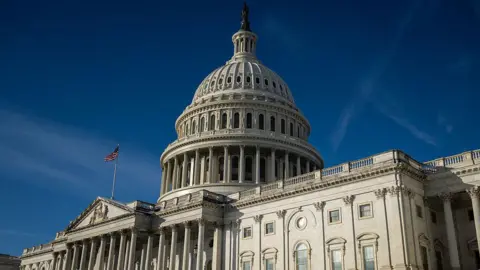
The US Congress has voted to temporarily extend an expiring law that governs how intelligence agencies can gather information from US telecoms companies.
While the Foreign Intelligence Surveillance Act (Fisa) went decades without controversy, the 1978 law in recent years has angered lawmakers of both parties over how it handles digital communications.
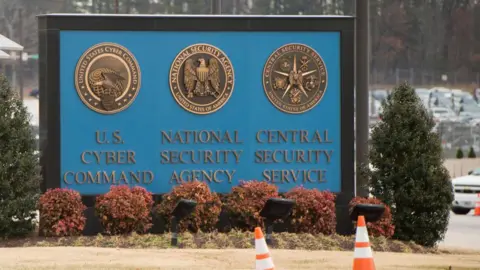
A part of the law known as Section 702 gives the National Security Agency (NSA) authority to spy on foreigners using data drawn from US digital infrastructure. Critics say the section allows the NSA and agencies it works with, such as the FBI, to mine massive amounts of individuals' information without a warrant.
The US House of Representatives and Senate each voted on Friday to extend the law for 10 days, after failing to secure a long-term authorisation - or "clean extension" - that President Donald Trump has demanded.
 AFP via Getty Images
What is Fisa?
The Foreign Intelligence Surveillance Act of 1978 (Fisa) regulates certain types of foreign intelligence collection and compels the assistance of US telecommunications companies.
The Fisa Court established by Congress reviews applications by the US government for approval of electronic surveillance, physical searches and other investigative actions that fall under the law. It ensures the NSA adheres to requirements of both the Fisa law and the US constitution, whose Fourth Amendment protects individuals from unreasonable searches and seizures.
Once it receives authorisations to acquire foreign intelligence information, the NSA often works with law enforcement agencies such as the FBI "to connect the dots between foreign-based actors and their activities in the US", according to to the NSA.
What does the Fisa bill do?
Attempts to re-authorise the law for five years have recently failed in the US House of Representatives.
Section 702, which was added to the law in 2008, allows the government to collect the communications of noncitizens located outside the US without a search warrant, as well as sweep up data of Americans who are in contact with targeted foreigners, according to CBS News, the BBC's US media partner.
"The US government engages in mass, warrantless surveillance of Americans' and foreigners' phone calls, text messages, emails and other electronic communications," the American Civil Liberties Union has said.
"Information collected under the law without a warrant can be used to prosecute and imprison people, even for crimes that have nothing to do with national security."
National security officials say that Section 702 is vital in the disruption of terrorist plots, foreign espionage, international drug trafficking and cyber intrusion.
Having to go to judges for warrants would slow down their operations and make them less efficient, they have said. They also contend that they often run queries to identify potential victims or to prevent crimes - both of which may not be covered by warrants.
The act was due to expire on Monday, but the lower chamber unanimously voted on Friday to extend it through to 30 April and the Senate voted unanimously to pass the the short-term extension hours later - making way for more negotiations.
Those who want to reform the law come from both sides of the aisle and are keen to forbid the "backdoor search" loophole - the ability to draw data from US intercepts without a warrant.
Senate Majority Leader John Thune has signalled the possibility of reforming the bill but stopped short of making any guarantees.
What does Trump want?
The Trump administration has pressured Republicans to accept an 18-month re-authorisation of the law without any changes, but lawmakers on both sides of the aisle oppose it because, they say, it amounts to warrantless surveillance of Americans.
Trump has contended that he was "a victim of the worst and most illegal abuse of Fisa" in US history during his 2016 presidential campaign against former US Secretary of State Hillary Clinton and during his 2020 campaign against President Joe Biden.
However, he has softened his stance this week and called for the bill to be extended without reforms, writing on social media on Tuesday that the US military desperately needed Section 702 to succeed on the battlefield, particularly in the wake of US operations in Venezuela and Iran.
He posted on Wednesday: "I am willing to risk the giving up of my Rights and Privileges as a Citizen for our Great Military and Country!"
