Workers share memories of the drought of 1976

 BBC
BBCWhile heatwaves have become more frequent in the West Midlands in recent years, in the summer of 1976 it was something of a phenomenon.
Temperatures peaked in the mid-30s celsius, similar to this year, but due to the longevity and severe national drought, the Labour government at the time implemented an emergency UK law to help conserve the nation's water.
The UK Met Office said the drought was "remembered for its prolonged heat and lack of rainfall" and remained one of the driest and hottest summers on record.
Thursday marks the 50th anniversary of the Drought Act 1976 which came into force on the 6 August, following severe water shortages and a drought that had begun on 23 June that year.
Water at the time was restricted with public standpipes set up in the streets so people could collect limited supplies of water.
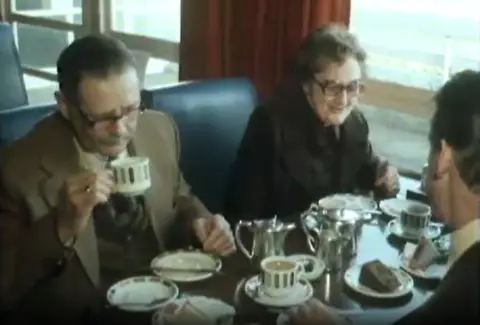
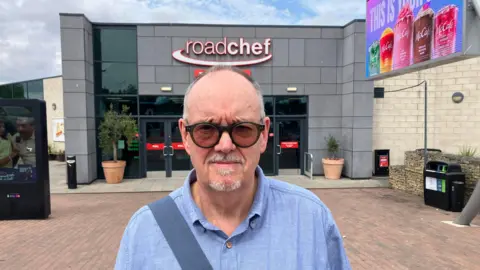
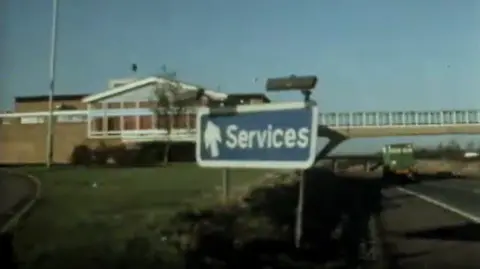
When the springs dried up at Malvern Water, John Birchley was let go and found another summer job as a catering assistant at Strensham service station on the M5 southbound in Worcestershire.
Birchley, who got the job after spotting an advert in the paper, said the service station could be chaotic with coachloads of people coming through.
"The first shift I did, there was a queue over the motorway bridge at that time. It never lessened, it was a queue half over the bridge," he said.
"And drivers in those days had to sign in, because I think they got a free meal and I think we had 150 coaches that day."
Birchley described how some customers at the time were not sure if their cars would get to their holiday destinations due to the heat.
The drought was "unprecedented" in those days, he added.
"It was hot and stuffy, you could go outside on breaks but there was just concrete to go outside to, so it was not the best conditions.
"It was a long shift, eight hours, but we got used to it I suppose."
As the heatwave continued, Denis Howell, a Birmingham MP, was made Minister for Drought after the government brought in emergency legislation to give it and water authorities special powers to manage the severe shortages.
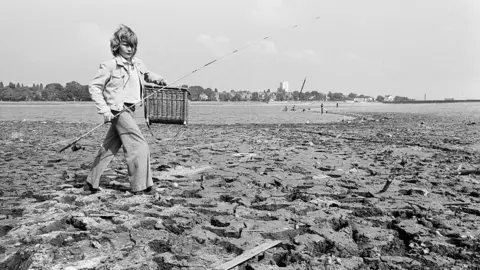
As the reservoirs dried out, gardeners were banned from using hosepipes, with bans enforced by patrols in the streets.
The public could call the "drought enquiry office" to ask for advice and complain about their neighbours.
 Birmingham Post & Mail Archive/Mirrorpix via Getty Images
Water restrictions on industry in the Midlands also forced some companies to shorten their working week, with the hottest day that summer on 3 July, after temperatures reached 35.9C (96.6F) in Cheltenham.
About £500m of crops also failed that summer, as food prices rose.
Karen Woodward was working as a telephone sales assistant for a soft drinks manufacturer, which had a distribution warehouse in Smethwick.
Then aged 17, she said she was told to keep taking orders from catering businesses despite the company running out of stock.
"To story was, to keep ringing customers and selling in the hopes we could get supplies, but that demand was outstripping supplies," she explained.
"Eventually supplies did come back in but for a while there, we were selling nothing other than a hope and a promise that we'd get supplies back in.
"It was a difficult time but to be honest, we loved the weather."

Follow BBC Birmingham on BBC Sounds, Facebook, X and Instagram.
