Ministers push ahead with housing asylum seekers on ex-military sites

 BBC
BBCHome Office minister Anna Turley has said the government is sticking with plans to accommodate asylum-seekers on former military bases despite protests from local residents.
She told the BBC the government's priority was to ensure asylum-seekers were looked after in a "secure" and "appropriate" place.
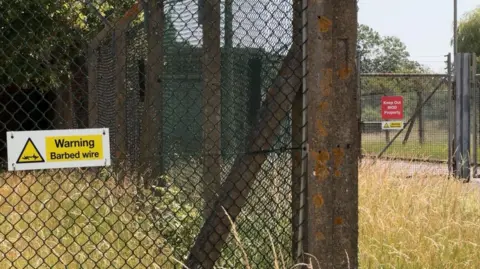
That included disused Ministry of Defence properties because they had on-site facilities and were "more contained," she added.
But campaigners in areas earmarked for asylum centres have said small communities with limited infrastructure would not be able to cope with large numbers of people.
There have been protests in Piddington, Oxfordshire, over plans to house more than 1,000 asylum seekers at a site near the village.
Mike Nixon, the vice-chairman of Piddington Parish Council, said there was a "huge amount of concern and worry" among residents and that an asylum centre would have a "dramatic effect" on the way they lived their lives.
The proposal has prompted Piddington to hold a symbolic independence referendum, asking its 400 or so residents if they want to remain part of the UK.
Nixon said: "We're still very frustrated. Andy Burnham did say that he's willing to listen, but we've had no formal contact. No consultation, nothing from the Home Office.
"We felt that the only way of making our views felt was to say 'well if we're not going to be listened to, what's the point of being a part of the country?'"
The government has promised to end the use of hotels for asylum seekers, announcing on Wednesday that a further 13 across England had been closed.
It plans to use former military sites instead with two already up and running - RAF Wethersfield in Essex, and Crowborough Training Camp in East Sussex.
In June, it announced proposals to open three more, including the site near Piddington.
The two other planned sites are a former RAF base in Barnham in Suffolk where there were protests last week and RAF Linton-on-Ouse in North Yorkshire where the area's Labour mayor said it was "simply the wrong place".
Defending the proposals on BBC Breakfast, Turley said the public wanted the government to end the use of hotels, pointing to how an "iconic" hotel in Blackpool, the Metropole, was no longer being used to accommodate asylum-seekers.
She said it sent "an important message" that the government wanted the hotel to be part of Blackpool's future.
"The priority is to ensure we look after asylum seekers in a secure place that is more appropriate and we limit the impact on communities."
Asked what she meant by secure, she said: "Examples we are looking at is former military bases and we have two up and running and possibly another three.
"They have have facilities on site and are more contained and it limits the impact on on communities.
"We are looking at other sites such as former industrial sites, student accommodation - accommodation that is more more appropriate than hotels."
