Radio presenter treated for prostate cancer

 BBC
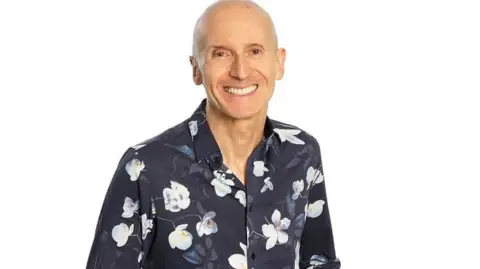
BBC"The nurse, as I was leaving - I was literally opening the door - said 'oh by the way, and you do know you have prostate cancer don't you?'"
BBC radio presenter Bill Buckley has announced that he has been treated for prostate cancer.
The DJ, from Reading, who has presented on BBC Radio Berkshire and BBC Radio Oxford, underwent a new treatment known as High Intensity Focused Ultrasound (HIFU), which uses high frequency sound waves to create heat that destroys cancer cells.
Buckley tells the BBC: "I'm one of the very tiny number of people so far who have had this wonderful treatment... and I couldn't have had it if I had been discovered to have cancer late."
He adds: "So that old message that people keep banging on about cannot be said too often - go for the regular checks."
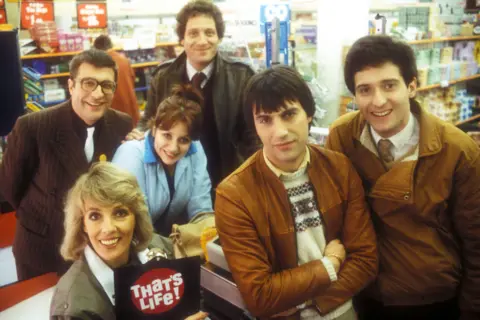
Buckley, who previously co-presented BBC TV's That's Life programme with Esther Ranzen in the 1980s, was treated with HIFU as part of a clinical trial.
His first symptom was a pain in his leg, which led to a trip to A&E and being diagnosed with "one of the biggest blood clots, the biggest deep vein thromboses, that they had ever seen".
At a subsequent appointment the next day he had an ultrasound and was prescribed blood thinners.
"I thought 'I'm out of the woods, this is marvellous'," Buckley remembers.
This is when he says a nurse told him, almost as an afterthought, that he had cancer.
"She was a lovely nurse, and I don't blame her for saying it that way because I think she absolutely assumed 100% that I did know this, but it had been picked up in the various tests.
"Suddenly my world crashed back down again."
Buckley had regular check ups over the following months to monitor the cancer's process, before he was informed that it had grown larger and that it was time for treatment.
The HIFU treatment took place at Wexham Park Hospital, near Slough.
"You come around and you sit there for a few hours and then they let you go home," Buckley recalls.
"You wear a catheter for one week. I felt a bit tired... and a bit sore for two or three days, and if all goes well, that is that, and I've now passed the six-month stage."
The presenter said he felt "blessed" to be living in the "right postcode" to receive the treatment.
He concludes: "I was born in the right age, even the right decade, because only a few years ago I would have had quite a few weeks or months of feeling pretty wretched".
Broadcaster and journalist Edward Stourton recently died aged 68 after being diagnosed with prostate cancer in 2014, while Jeremy Clarkson announced he is in remission from it. And six-time Olympic cycling champion Sir Chris Hoy has described living with his terminal diagnosis.
Buckley says: "I'd never looked into prostate cancer, and I think it's very important people remember this, the majority of men die with, rather than of, prostate cancer.
"It very often just sits there, minds its own business for decades. You don't even know you've got it."
What is prostate cancer?
Tim Dudderidge, a consultant urologist at Southampton General Hospital, and one of the experts behind this trial, said the side effects were much lower with the new treatment.
He said: "It enables us to treat the bits of the prostate which are affected by cancer and leave the healthy buts of prostate alone, and because of that fewer of the structures that are important for maintaining functions, like the nerves that help with erections and the sphincter… these structures are largely left untouched."
Prostate cancer affects the prostate gland under the bladder and usually happens to men more than 50 years old.
There are different treatments and it can often be cured if diagnosed early.
Prostate cancer does not usually have any signs or symptoms at first. Later signs may include back, hip or pelvis pain, or difficulty maintaining an erection. In some cases it is linked to problems peeing.
Source: NHS
