Bitterns heard on land earmarked for development

 Getty Images
Bitterns have been heard making their distinctive booming call at a North Yorkshire nature reserve - something which campaigners hope will prevent a luxury tourism and retirement development being built there.
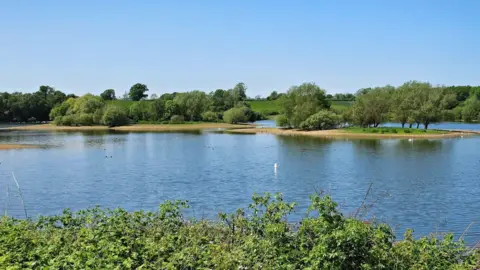
Visitors to Scorton Lakes, between Scorton and Brompton-on-Swale, have heard the rare bird in recent weeks, meaning the bitterns have made the reserve their home.
A planning application to build 170 holiday homes and 60 retirement bungalows at the site is expected to be submitted this year by Tancred Gravel Ltd.
Tom Duffy, from Save Scorton Lakes, said: "Attracting this rare and iconic bird shows what a special and precious habitat the Scorton Lakes nature reserve has become."
Bitterns, which are members of the heron family, live in dense reed beds.
Once declared extinct in the UK in the late 1800s, bittern numbers have recovered with a study finding around 600 wintering birds nationwide. They still have an amber conservation status, however.
 Save Scorton Lakes
During the spring breeding season, males produce a low-frequency "booming" sound that experts liken to someone blowing over the top of an empty milk bottle.
The sound can travel up to three miles (4.8km), making the bittern the loudest UK bird.
According to the Local Democracy Reporting Service (LDRS), Scorton resident Susan Marsh and her husband Alan managed to record the booming during a recent visit.
She said: "Somebody said they'd heard it so we decided to nip along and see if we could too.
"Within a couple of minutes of getting to the lakes we actually heard it, which was amazing - I was so excited.
"We moved a little bit to where the noise sounded like it was coming from, and we started chatting to a chap who was also out listening for it.
"We must have stood there for about 15 or 20 minutes chatting to him and the bittern boomed maybe about eight or nine times. Having never heard it before and then to hear it in abundance was just so thrilling."
'Unique character'
The nature reserve was created after quarrying finished at the site in 2022.
Developer Tancred Gravel Ltd is expected to submit a planning application for its Tancred Waterside scheme this year.
Documents shown to local parish councillors indicate the scheme would include 170 holiday homes and 60 retirement bungalows, as well as a farm shop and spa.
Local residents have formed the Save Scorton Lakes group to contest the plans.
Duffy said the birds living at the reserve was a "fine feather in the cap of North Yorkshire and it's very important that we protect it".
He said: "The proposal to build houses on it is outrageous to say the least."
Marsh added: "With the lakes under threat, to have such a rare bird here should only strengthen our case, we believe.
"We're hoping with our fingers crossed that this male bittern finds himself a passing lady bittern, and that they have babies and make Scorton Lakes their home."
Tancred Gravel has not responded to requests to comment on its plans.
Consultation documents produced by the company's agents state: "The proposals would bring substantial social, environmental and economic benefits to the district. New job creation alongside direct and indirect spend in the local economy would be significant.
"The proposals seek to maximise the opportunity presented by the site's unique character of lakes, undulating countryside, and walkways to create a sustainable and inclusive community of holiday and retirement homes."
The applicants hope construction can start in 2027 if the scheme is approved.
Listen to highlights from North Yorkshire on BBC Sounds, catch up with the latest episode of Look North.
