Former rough sleepers on PM's 'ambitious' plan

 Aisha Iqbal/BBC
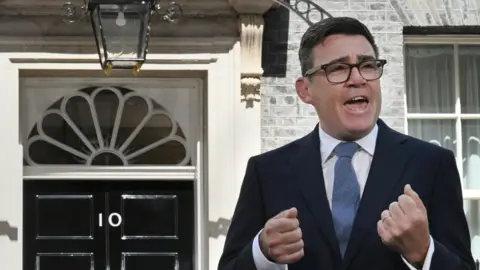
A woman who has slept rough in Yorkshire for many years has welcomed Andy Burnham's commitment to end homelessness across the country.
It was the first promise made by the new prime minister after his appointment on Monday, and he said he wanted the government to be "investing in people's success rather than paying for failure".
The government will put an additional £340m towards the policy, providing 1,200 homes and "intensive support" for at least 3,000 people in five years.
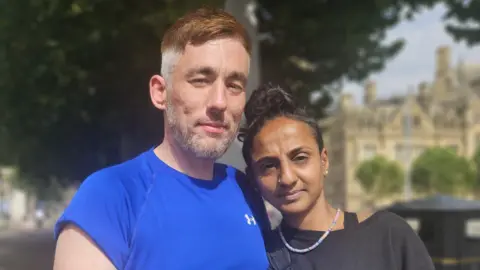
Kiran Ali Karn has been homeless for 10 years and currently lives in hostel accommodation in Bradford.
"For a prime minister to say, 'let's get our streets sorted out' - I think I've got some hope, I'm not going to lie," she said.
"I've got some faith in him."
The 35-year-old said she had suffered from PTSD and become addicted to drugs, but was now in the process of rehabilitation after a stint in prison.
"I'm taking it slow, but I am getting there," she said.
"Some of my friends haven't been so lucky. I've lost a lot of friends on these streets through overdoses."
She said she now wanted to help other people on the streets and would "love for [Burnham] to have a conversation" with her if he visited the area.
 Jeff Overs/BBC
Karn's friend James Hudson also struggled with addiction and homelessness following family issues and trauma, he said.
The 36-year-old was unable to get emergency housing when he came out of prison last year due to a lack of availability.
"In a city like Bradford, where we've got so many empty mills, old buildings, unused spaces, it's really sad to see that we've got a massive problem with homelessness," he added.
He said his view on the government's plan was "slightly more pessimistic, unfortunately".
When Burnham became Greater Manchester mayor in 2017, he pledged to end rough sleeping in the region by 2020.
He assigned teams to help people find permanent housing, addiction support and other types of help.
This led to a drop in the number of rough sleepers from 268 in 2017 to 90 in 2021.
But the number has risen yearly since then, in line with the national trend, and sat at 197 in 2025, according to the Manchester Mill.
Richard Cooper, chief executive of Harrogate Homeless Project, said: "There are always more people coming into rough sleeping at any one point, so ending it completely is very, very ambitious.
"But coming to a place where it is managed and there is effective support immediately, making rough sleeping and homelessness a once-only experience, is entirely achievable."
'It can happen to anybody'
He said expecting a rough sleeper "who may have multiple problems, to go from each of those organisations, one to the other" did not work.
"What we need is organisations like the NHS, the councils, the probation service, mental health support services, the voluntary sector, all working together in the space where the rough sleeper is," he added.
The charity provides 43 rooms across the district and helps people "recover from the issues that brought them to the streets in the first place".
Cooper added: "There's a perception that Harrogate is a very wealthy place, and indeed it is, but that does not mean we don't have areas of deprivation, or we don't have people who end up rough sleeping and homeless.
"It can happen to anybody, whether you live in a wealthy area or a less wealthy area, and Harrogate is no exception to that."
Seven per cent of the country's rough sleepers are based in Yorkshire and the Humber, according to the Office for National Statistics (ONS).
The estimates are a snapshot gathered on a single night each year.
 DAVE EDWARDS/BBC
As of autumn last year, Yorkshire was one of only three regions where the number of rough sleepers had decreased compared to the year before.
The number of individuals was put at 329, a reduction of 56 people from 2024.
Paul Fitzpatrick, service manager at Changing Lives in Doncaster, said offering places to stay was only part of the solution, and new addictive drugs were compounding the issue.
"Things like Spice, tablets that are being created in people's garages…there are people just making it and throwing anything in it," Fitzpatrick said.
"Those sorts of substances make it far more difficult to engage people."
The charity's accommodation, Wharf House, provides 30 single bedrooms with staff available around the clock, shared kitchens, a gym and support with healthcare and education.
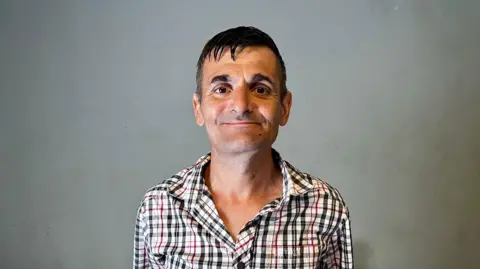
Mark Berry spent several years rough sleeping in Doncaster in his twenties after a divorce led to him struggling with addiction, and now works at the charity after it supported him.
"A lot of people will say, 'get a job, you shouldn't be like this'," the 47-year-old said.
"People have tried setting someone on fire under the bridge near the bus station, people got stabbed, people got trodden on, I got kicked in the back," he added.
"They treat us like we're something else, but we're human, we're the same as them."
 Aisha Iqbal/BBC
As of May this year, long-term rough sleeping in Yorkshire and the Humber was down by 10%, according to ONS data.
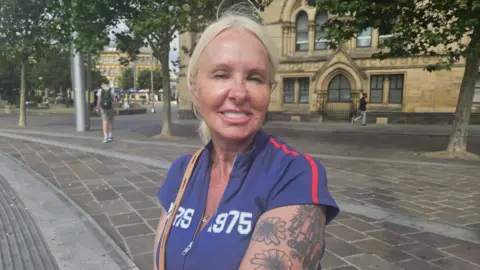
But Jay Willey, who previously owned a business in Bradford, said rough sleeping was still a "real problem" in the city centre.
She said the clubs she ran on Ivegate had been "affected in a lot of ways" by anti-social behaviour associated with rough sleeping.
"People don't want to come into the city centre because they feel vulnerable, they feel threatened, they don't feel safe," she added.
But she said the people on the streets "should come first".
"They need some help. Mental health. It's the bigger picture for all of it."
Willey, who said she was a Reform voter, added: "They [Labour] stand for different things, but let's see what Andy Burnham does.
"We've got to give him a chance. He's only just come in."
Listen to highlights from West Yorkshire on BBC Sounds, catch up with the latest episode of Look North
