Fishermen 'putting lives at risk' over fuel costs

 BBC
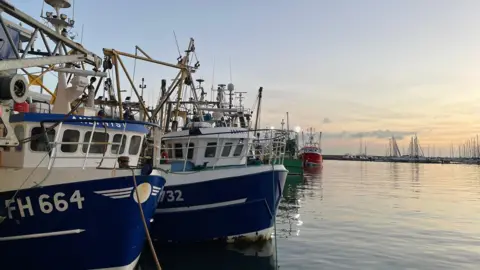
BBCFishermen say they are putting their lives at greater risk as they try to be profitable after the cost of fuel has doubled.
Steve Walker, who fishes out of Plymouth, said his crew were "pushing harder to try and be profitable which puts our lives at risk just trying to earn a wage".
Andrew McLeod fishes out of Brixham and said "six weeks ago it would have been £10,000 to £11,000 to fill the boat for a week at sea whereas now my last fuel bill was £20,500".
The temporary ceasefire in the Middle East war has brought the price of crude oil down from its recent peaks but prices still remained sharply higher than before the war started.
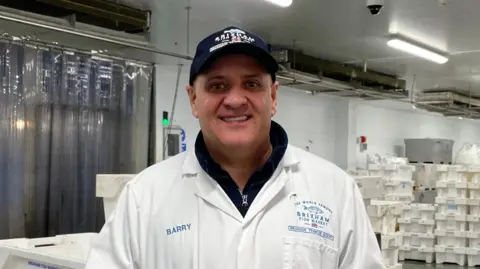
Barry Young from the Brixham Trawler Agents said the cost of fuel was "astronomical" which was leading to some fishermen "not wanting to go to sea because they're not catching enough fish to cover the fuel".
McLeod said: "Six weeks ago it was 55p a litre for red diesel, last week it was £1.05."
"That's an awful lot of fish you have to catch just to tread water and not make a wage," he added.
He said if the cost of diesel continued to rise or remained at the current price "you'll see an awful lot of boats stop fishing and have an early refit".
He said this would have a "huge knock-on affect" to everyone involved in the industry from hauliers to boat suppliers.
Young said some of those who were continuing to fish were trying to find ways they can tow with the tide rather than against the tide to burn less fuel on a daily trip.
Walker said: "Before we leave port we already owe about £5,000 before we've caught a fish.
"So we're trying to explore different places to try and earn as much money as we can to make it profitable."
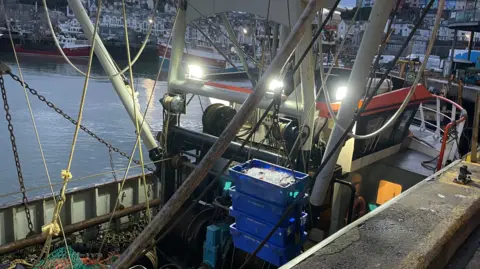
Lib Dem MP for South Devon Caroline Voaden said she had written to the fisheries minister Angela Eagle MP to voice her concern about the impact of the rising fuel costs on the region's fishing industry.
She said she had asked the government to consider a time-limited fuel stabilisation scheme.
She said: "I'm doing everything to show the government the cost of intervening now would be a lot less than the cost of letting an industry fail."
The Department for Environment, Food and Rural Affairs (Defra) has said it was taking the situation "very seriously" and it was undertaking detailed work to assess the food sector's exposure to rising fuel prices.
Follow BBC Devon on X, Facebook and Instagram. Send your story ideas to spotlight@bbc.co.uk.
