Banned swimmer's daughters to realise family's Commonwealth Games dream

 Nel family
Annette Cowley Nel's dreams of winning a swimming gold at the 1986 Commonwealth Games were dashed by a political storm.
On the eve of her race at the competition in Edinburgh, she was banned from competing and escorted from the athletes' village by police.
But now, 40 years later, things will come an emotional full circle when she watches her daughters compete at the Games.
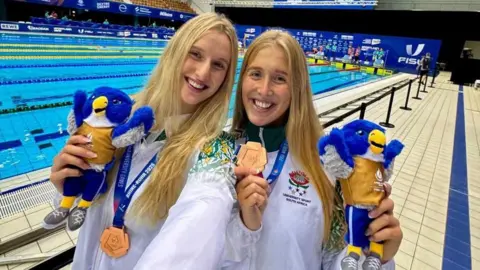
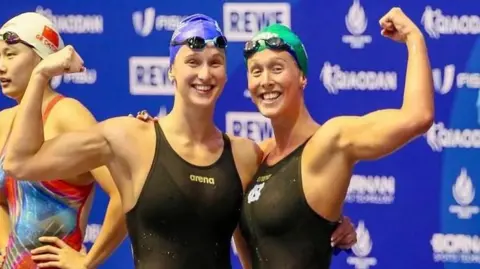
Twins Georgia and Olivia Nel have both been named in South Africa's swimming team for the Games, which get under way in Glasgow next month.
"It is incredibly special that they have both made the Commonwealth Games," said Cowley Nel.
"It will be quite an emotional moment."
 Nel family
The 1986 Games in Edinburgh had many sporting triumphs - including Liz McColgan's 10,000m gold medal.
But they are also remembered for being boycotted by 32 nations from Africa, Asia and the Caribbean.
They took a stance against UK Prime Minister Margaret Thatcher's policy on South Africa.
Thatcher refused to impose economic sanctions on a regime committed to racial segregation.
South Africa's sports stars were banned from competing internationally because of the country's policy of apartheid.
Cowley Nel describes apartheid as a "terrible time" for South Africa, and says she had wanted equality for all.
She believes the changes in the country since then have been "extremely positive" - but remains frustrated that all South African athletes at that time were treated the same, regardless of their personal views.
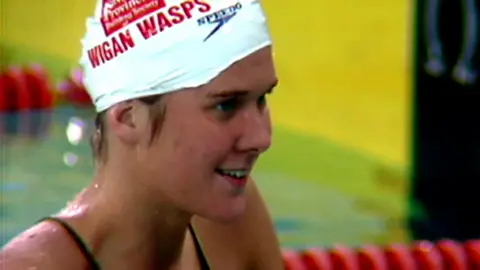
Aged 19 at the time, Annette Cowley took up the opportunity to race for the country of her mother - England.
She qualified for the Commonwealth Games and, as British champion, was a favourite for the 100m freestyle.
But as the Games approached, nation after nation boycotted and the event faced financial abyss.
 Nel family
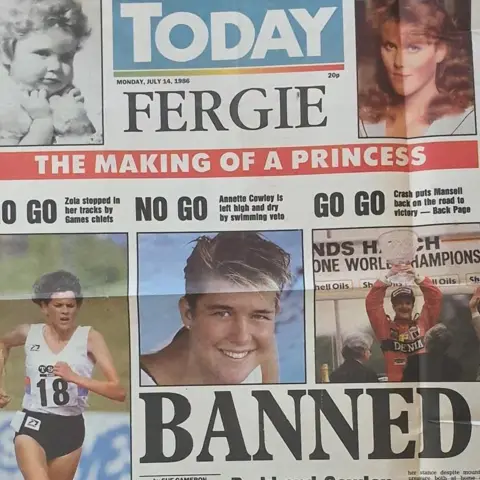
A bizarre chapter unfolded when media tycoon Robert Maxwell stepped in and proclaimed he would save the Games.
Focus turned to Cowley and her fellow white South African, the runner Zola Budd.
She was also ready to race for England after her controversial appearance for Great Britain at the 1984 Olympic Games.
Amid the growing discontent, Games officials banned them both over residency rules.
At the time, Cowley - a British citizen - says she lived in both the UK and US, studying in Texas and racing in the UK during the summer.
Administrators denied the ban was political, but it was seen as a move by officials to placate nations that were boycotting the Games.
On the eve of her race, Cowley was taken from the athletes' village with her dream over.
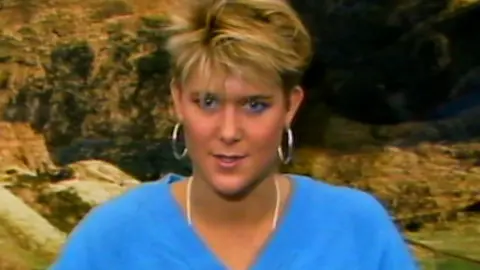
She ended up watching her race from the stands of Edinburgh's Commonwealth pool.
Canadian Jane Kerr won with a slower time than Cowley had qualified with.
Afterwards she became disillusioned with swimming.
When the 1992 Olympics came around, Cowley hoped to compete for South Africa - but after racing for England, she wasn't selected.
"It was a difficult time in my life," she recalled.
"I was young and didn't realise what was going on behind the scenes.
"I had a lot to deal with at a young age, and that stood me in good stead for life."
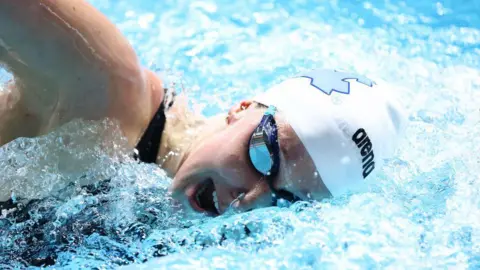 Getty Images
Forty years on from those dramatic scenes in Edinburgh, the Commonwealth Games are once again being held in Scotland.
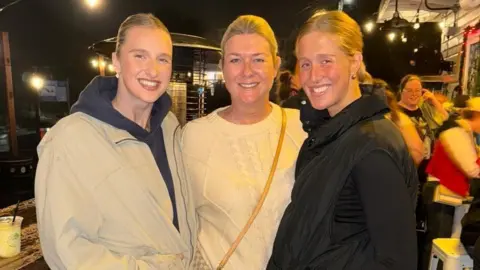
Cowley Nel will be joined by her husband Jeremy in the stands to support their daughters Georgia and Olivia, who turn 24 on the day the Games begin.
Olivia competed in Birmingham in 2022, but this will be a debut for Georgia.
"I do it for myself, I do it for my family, but having that history really makes me so much more inclined to want to do it and represent my country and to do well," said Olivia.
She added that the Games being staged in Scotland made it "quite special" and "a full circle moment".
 Nel family
There is a chance that Olivia and Georgia could swim together in the 4x100m freestyle relay.
Georgia said it was "a really unique opportunity" for both sisters to compete and - to have the opportunity their mother never did.
She said she got emotional thinking about how hard her mother had worked to qualify for the Games, only to have it all taken away.
"I'm very grateful not only to represent South Africa, but to represent her at these Commonwealth Games," she added.
