Dating can be hard in South Korea - so the monks stepped in

 BBC/ Hosu Lee
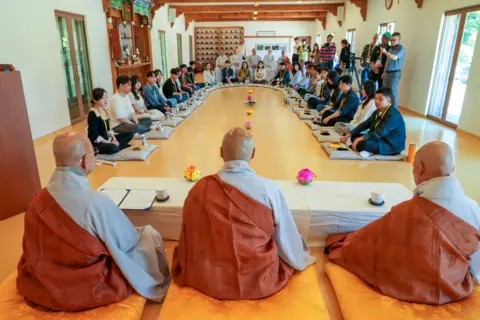
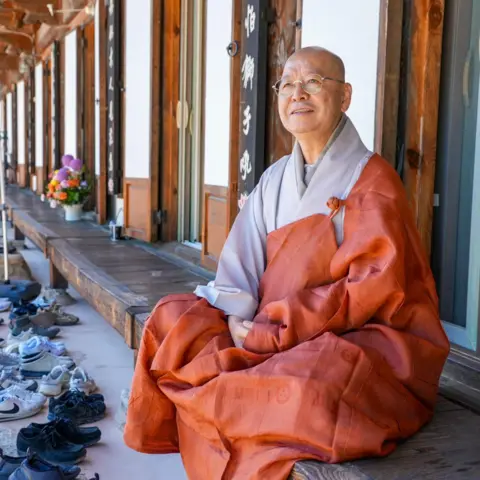
A monk draped in burnt-orange robes faces a row of young men and women and tells them they're here on a mission to save their country. By finding a partner and one day having babies.
The participants giggle, nervously stealing glances from their prospective matches.
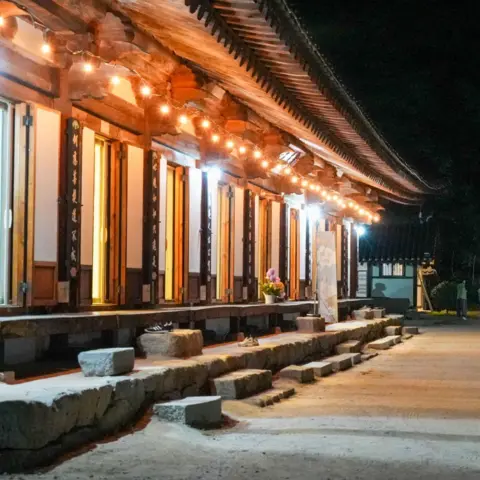
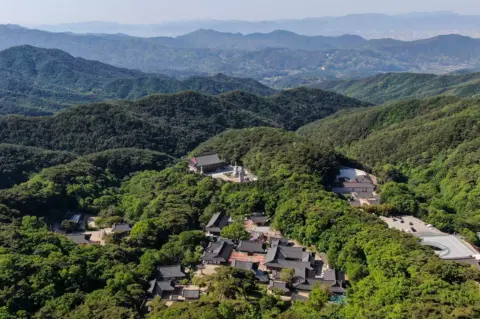
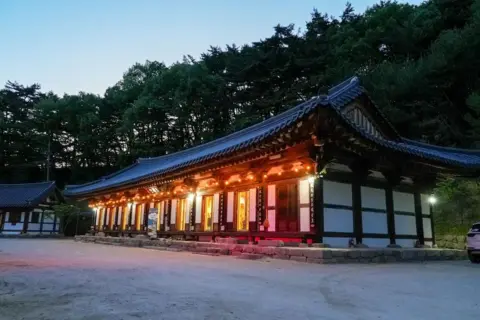
This isn't the start of a new hit reality show. It's a real-life dating retreat held at an 8th Century Buddhist temple nestled in the lush greenery of South Korea's Palgongsan mountain.
It's a 30-hour affair which will feature back-to-back activities and a steady stream of awkward moments, all in the pursuit of breaking the ice and finding love.
"Buddhists have always been the first to take action when our country is in trouble," says host Yoo Cheol-ju, referring to when Donghwasa Temple served as a camp for monk militias defending Korea against Japanese invaders in the 1500s.
But this time the threat isn't from abroad.
"Low births are a national crisis. We had to do something about it," Yoo says.
Like elsewhere in the world, births have plummeted in South Korea as the country has grown wealthier.
In 2023, the average number of children a South Korean woman has over her lifetime, or total fertility rate, dropped to a historic low of 0.72, well below the replacement rate of 2.1.
Some blame soaring housing costs and the lack of financial support for childcare. Others say women are prioritising careers, or simply exercising what is now a choice.
But young South Koreans are also going out less and dating less than before, studies show. While some are choosing to be single, many are struggling to meet partners, pulling marriage rates down.
The government has begun offering longer parental leave, cash bonuses for babies and subsidised apartments for newlyweds.
Local governments and civic groups have taken things one step further, putting on state-backed matchmaking events like this one at Donghwasa Temple.
And they're a lot more fun than you might imagine.
 BBC/ Hosu Lee
 BBC/ Hosu Lee
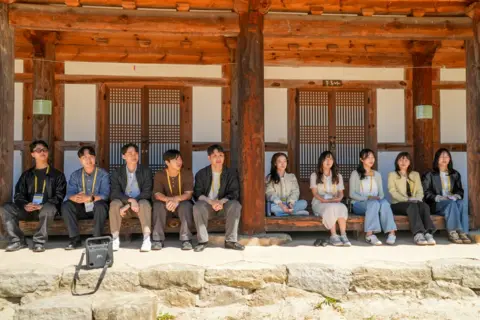
Kim Ah-kyung, who goes by her Buddhist name, Sunhyeji, is one of the first to arrive.
The bubbly 28-year-old sits on the porch of a bungalow at the temple complex and says hello to the other women, who start trickling into the room.
They have all made it through an incredibly competitive selection process, involving questionnaires and selfie videos to assess how serious they are about marriage and kids. They beat more than 1,580 others to be at this retreat, which was open to everyone, irrespective of faith.
Sunhyeji struggled to meet a suitable partner after leaving the Seoul region for an office job in the south-eastern provinces.
"There's really no chance to meet men," she says. "I only go between work and home. I don't have a hobby. I tried to get one but they were all one-on-one activities." At her office, she adds, everyone is much older.
Dating can be hard in South Korea.
People typically meet romantic partners through school, work or sogaeting: blind dates set up by friends or family. Failing that, small talk in big cities is rare. Drinking is down. Dating apps never really took off. In 2015, after years of stagnant growth, Tinder started marketing itself as a friend-finding app to better appeal to young people.
Kwon Seung-oh, 30, who goes by Enyo, has always been put off by the idea of meeting a stranger online.
His friends put him on blind dates about 10 times, but he found them all to be shallow interactions that never went anywhere. And 97% of his co-workers at a big dairy factory outside Daegu city are men.
So now, he too finds himself at Donghwasa.
 BBC/ Hosu Lee
Chivalry is on show before the day has even begun.
As the women arrive at the complex, their potential male suitors rush to meet them, offering to help them carry their luggage to their rooms.
Enyo is determined to find a match. During the day's first activity - the introduction round - he hands out French pastries he has baked himself, earning him wows from the crowd.
Then it's time for the first date. Sunhyeji is paired with Minho, a 32-year-old mild-mannered civil servant. The two take a stroll through the wooded path surrounding the temple, managing to have a private conversation.
Later on, the men are asked to hand a plastic rose to the woman they want to get to know over a lunch date. Minho picks Ruby, a 28-year-old designer whose gentle demeanour matches his.
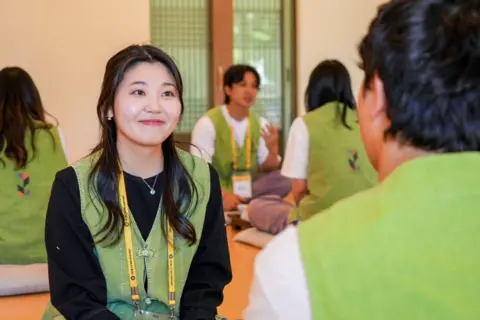
There are polite smiles and giggles throughout the meal. The couples learn about each other's hobbies, jobs and favourite shows. Conversation is flowing and everyone seems to be opening up.
When they're done you see them standing closer together than before, as they gather at the sinks to clean the dishes together.
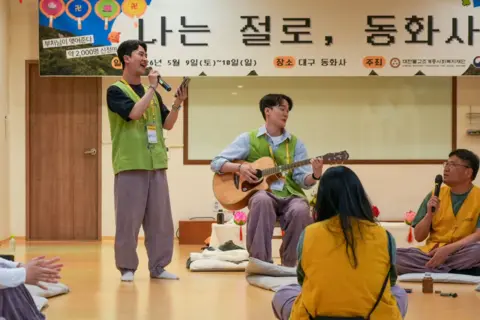
But that's all turned on its head as we reach the awkward, clumsy crescendo of the day: the talent show.
 BBC/ Hosu Lee
 BBC / Hosu Lee
Minho goes first, moving carefully as he recollects the steps to 2Pm's viral track My House, with its famous chorus: "I wanna take you to my house."
Sunhyeji effortlessly grooves to brand new pop hit Catch Catch, while Enyo belts out a ballad. Ruby shows off her Spanish language skills, with a halting introduction that charms Minho. One woman whips out a flute to play a song from KPop Demon Hunters.
The non-stop activities are exhausting the participants.
There are only a couple of minutes to grab a break before a speed-dating round kicks off over green tea (which no-one actually drinks).
After that, it's the women's turn to pick the man for their dinner date.
Sunhyeji gives her rose to Minho, much to the irritation of Ruby. Enyo isn't chosen by any of the women, and ends up having dinner with the others who aren't matched up.
Finally, to bring the day to a close, a senior monk gives a rousing speech, reminding the participants of their duty to procreate, before breaking into the national anthem.
The singles, more concerned about their romantic fate than patriotic duty, mumble through the lyrics.
 BBC/ Hosu Lee
Korean authorities have been setting up matchmaking events since the early 2000s - everything from woodworking dates to riverside DJ nights.
Despite these efforts, which were implemented alongside the government's baby-boosting programmes that have cost about $250 billion since 2006, birth rates continued to fall for years.
That is, until 2024, when the numbers began to edge upwards. This year, women on average are expected to have 1.0 child each, up from 0.8 in 2025.
It's not clear if this is a direct result of government initiatives. Officials have been careful to attribute it to the pandemic delaying weddings and births, and a large generation of people born to baby boomers reaching the age when they have children of their own.
But there might be a change in attitudes too. A survey from March showed unmarried people were nearly 10% more favourable to marriage and having children compared to just two years ago.
 BBC/ Hosu Leee
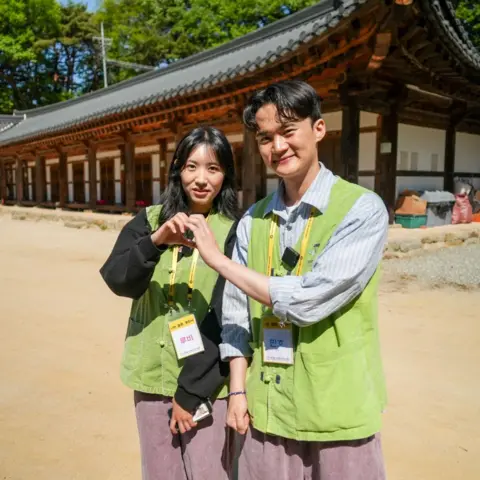
This chimes with some of the women at the temple, who say they have been seeing more and more social media posts of friends tying the knot and having babies.
At this point in the evening, with one final round of dating left, the group's social battery is running out.
Yoo, the host, insists there is plenty of time left to find a match.
The 22:00 bedtime is only a suggestion, he adds. The night can be "full of surprises".
As if to prove him right, an event steward takes her chances with a participant. She admits to having a boyfriend, but says that relationship is doomed anyway.
Ruby eventually leaves with Minho for a walk. Sunhyeji looks tired.
Enyo and the others, who didn't find partners, file out one by one.
 BBC/ Hosu Lee
The next morning, everyone is joking and chatting as they submit their final choices to Yoo by text.
By the end of the retreat, eight couples have formed, including two matches between event staff and participants. The group gathers for a final photo.
Enyo looks on, disappointed he doesn't have a match. But he hasn't given up. He says he'd be up for another shot at the retreat "if they let me in again".
Sunhyeji has cheered up. She stayed up until 03:00 gossiping with other women in her room. "I made many friends!" she exclaims, adding that a plan to get brunch together is already in the works.
For her, the experience was like a fun sleepover, which made her feel like a teenager again - unafraid to be spontaneous and make bold choices.
The single men agree. They've continued hanging out, only now there will be alcohol and meat on the table.
Not everyone leaves the temple with a partner.
But nearly everyone leaves with something they didn't have before: new friends and fresh confidence.
