Doctors not 'fixated' on weight-loss drug, coroner

 Family handout
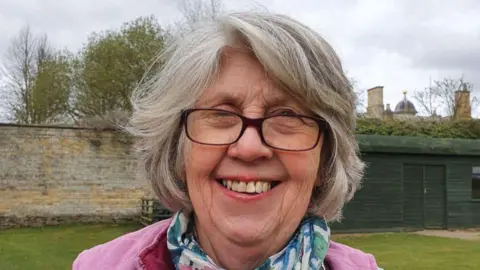
Doctors did not fixate on a grandmother's use of Mounjaro weight-loss medication before her death, an inquest heard.
The family of 73-year-old Caroline Savage voiced concerns that clinicians too readily attributed her symptoms to side effects of the drug before her death in 2024.
But Norfolk area coroner Yvonne Blake said medics had considered other possibilities too, including pancreatitis or an aortic aneurysm.
Blake added: "It's not clear to me from the evidence that the doctors were fixated with Mounjaro."
She noted that the mother-of-three "had an increasing dose [of Mounjaro], but hadn't yet given herself the increasing dose".
"I don't think there was an overshadowing by doctors," Blake said.
Mounjaro was not mentioned in the coroner's narrative conclusion, which found Savage died near Harleston of faecal peritonitis due to perforated sigmoid diverticular disease.
This is where faecal matter leaks into the abdominal cavity due to a perforation of the intestines.
 Family handout
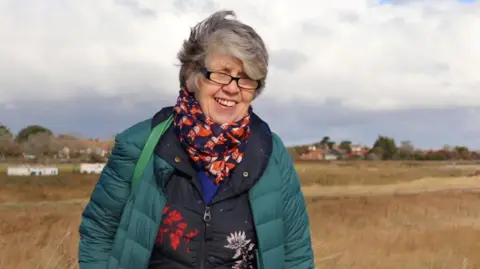
Savage was taken to the Norfolk and Norwich University Hospital by ambulance on 18 October 2024 and "her main presenting complaint was severe pain", the coroner told the inquest.
She had remained in the ambulance for the entirety of her time at the hospital and was looked after by two paramedics and two doctors, and a nurse went out to see her while she was in the ambulance.
Blake said the paramedics examined Savage "and wrote in their notes that she had peritonism", but neither doctor found that she had this.
The coroner said Savage had an ultrasound and her blood tests came back as "essentially normal".
She had three doses of morphine, and intravenous paracetamol was also given and it was decided she could go home.
But the court heard that about six hours later, Savage had to be helped into bed by her husband before she later collapsed and went into cardiac arrest.
 Family handout
Blake said she would write to the Norfolk and Norwich University Hospital and the East of England Ambulance Service with concerns about record keeping and communication between paramedics and staff.
But she said she did not find "any evidence of a systemic defect operating in the emergency department".
She said Savage had been "sent home undiagnosed" and added this was "often the case in A&E".
Jasmine Leng, who represented family members at the hearing in Norwich, raised concerns about "diagnostic overshadowing and Mounjaro".
One of Savage's daughters, Susannah Savage, told the hearing that Mounjaro "was mentioned on the discharge letter".
The coroner said clinicians "clearly thought about pancreatitis, they thought about other things like an aortic aneurysm".
"I don't think the doctors were only concentrating on Mounjaro," Blake said.
 Family handout
Susannah Savage said after the hearing that Mounjaro use "was one of the first things the hospital recorded" and on the discharge note it was listed "as the only potential diagnosis that they came up with".
She added that they had also inquired into pancreatitis, a rare side effect of Mounjaro, but she felt doctors "too readily grab at weight drugs as an explanation".
She said it was "not clear" if doctors were aware that Savage "had just been administered intravenous morphine when they observed her".
She said her mother had been "very excited about the future" having been prescribed Mounjaro after having been diagnosed with lipedema, which she described as a "painful build-up of fat cells in the limbs and it doesn't respond to diet or exercise".
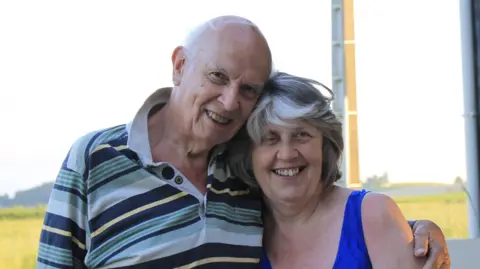
Emily Ansell, also a daughter of Savage, said she was the "centre of our family, had lots of friends, she was very sociable".
Following the inquest, the Norwich hospital's chief operating officer, Chris Cobb, said "our sincere condolences remain with Caroline Savage's family and loved ones".
He said the coroner's Preventing Future Deaths report will be reviewed and added: "We are committed to learning from every inquest and welcome any opportunity to strengthen our processes further."
Do you have a story suggestion for Norfolk? Contact us below.
Follow Norfolk news on BBC Sounds, Facebook, Instagram and X.
