Reform UK pledges to cut welfare to keep pensions triple lock

 PA Media
Reform UK has said it would cut the benefits bill by billions of pounds to offset the cost of keeping the triple lock on state pensions if the party was in power.
The triple lock, which was introduced in 2011, means the state pension rises each year in line with either inflation, wage increases or 2.5% - whichever is the highest.
The triple lock is a major pressure on the UK's public finances, with the annual cost estimated to reach £15.5bn by 2030.
Reform UK was considering whether to scrap the triple lock and last year party leader Nigel Farage said he shared "the concern with pensions being unaffordable on a national level".
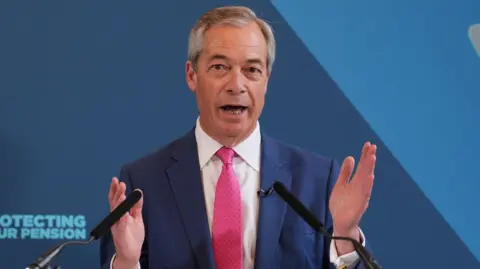
But at a news conference on Thursday, Farage said the party had debated the matter and decided to commit to keeping the triple lock.
He said the most "decisive reason" for making that decision was a plan the party had drawn up to "announce the biggest cuts to the benefits bill ever seen in the history of this country". He said the detail of those cuts would be revealed soon.
The pensions policy decision was announced by the party's Treasury spokesman, Robert Jenrick, who defected to Reform UK from the Conservatives earlier this year.
While he promised to protect pensioners, Jenrick acknowledged "how big of a commitment" retaining the triple lock would be in government.
He said he was confident the savings he had found would be "more than sufficient to cover the increase in public spending" from the triple lock.
Jenrick said the party had already identified ways to save £40bn, without giving precise costings, and would shortly unveil plans to cut billions in welfare payments, which he suggested would target people who "recently arrived here or have come here illegally".
Reform UK claims to have cut spending at the local authorities it controls in England but the evidence for substantial savings is highly disputed.
In November, Farage ditched Reform UK's previous promise to deliver tax cuts worth £90bn a year, as he sought to strengthen the party's credibility on economic policy.
'Electoral bribe'
The triple lock was introduced by former Prime Minister David Cameron's 2010 coalition government and has been retained by successive administrations, despite becoming steadily more expensive as the population ages.
It is seen as popular with older people, who tend to vote in greater numbers, but has been criticised for being unfair on younger generations.
The IEA think tank said Reform UK's commitment to the pensions triple lock was "hugely disappointing".
"It confirms that no major party is willing to be honest with voters about the cost of Britain's growing pension obligations," said Dr Kristian Niemietz, editorial director of the IEA said.
"The triple lock is one of the most expensive commitments in British public policy, it is an electoral bribe with a compound interest rate."
The Centre for Policy Studies think tank said it was sceptical of Reform UK's promise of "radical change".
"Spending on pensions, along with spending on the NHS and working age and child welfare, is on an unsustainable trajectory and no party is willing to tell the truth about how much this will cost the country," said CPS's head of economic and fiscal policy, Daniel Herring.
The UK state pension is set to rise by 4.7% from 6 April 6, driven by average earnings growth.
The Conservatives have ruled out scrapping the triple lock.
Labour and the Liberal Democrats are also committed to keeping the triple lock.
But ahead of the 2024 general election, the Green Party proposed changing the triple lock to a double lock, ensuring pensions rise by the higher of inflation or earnings.
