Forget Peaky Blinders - welcome to Yorkshire's Little Chicago

 Supplied
Savage beatings, cut-throat razor attacks, messages delivered in bruises rather than words and protection rackets that bled residents dry: it might sound like the plot of a gangland film, but this was 1920s Sheffield.
Life in the soot-blackened city was unforgiving. What little work was available often consisted of hard manual labour and long hours.
With a population of more than half a million, many families lived in crowded, insanitary back-to-back housing, often sharing one outside toilet.
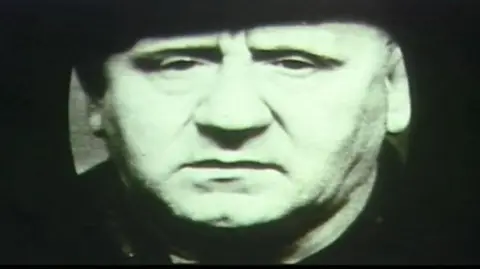
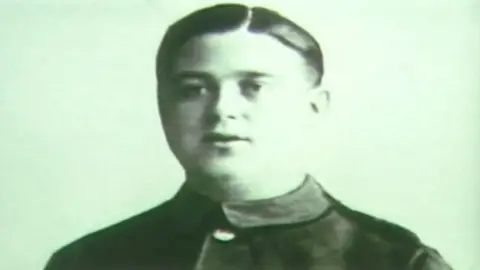
Yet while ordinary people fought to keep their heads above the water in the uneasy years after World War One, business was thriving for Sheffield's most notorious gangsters - George Mooney and Sam Garvin.
Gang members terrorised the streets, preyed on their own neighbours and used intimidation and sabotage to bend others to their will.
On pay day, they would wait outside factory gates to demand a cut of people's wages for protection money, says John Stocks, author of Sheffield 1925 - Gang Wars and Wembley Glory.
"If you were, for example, the owner of a chip shop, then you would be at risk if you didn't pay protection money to the gang, that they would come round and throw coal in the fire, which would effectively disable your business," he says.
 Supplied
As well as extorting hard-working citizens, illegal gambling provided a steady source of income for these gangs.
Many workers were actively betting on horse races and the coin-throwing game, known as pitch and toss, in the hope of escaping poverty.
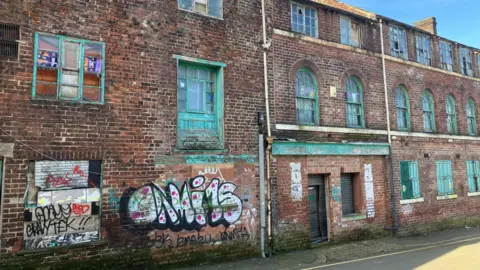
It was this business opportunity that sparked a violent dispute that would turn much of West Bar's cobbled streets into battlegrounds and earned the area the nickname "Little Chicago".
At the time, the most lucrative pitch and toss ring was at Sky Edge, a ridge of wasteland overlooking the Park slums, where the Park Hill flats stand today.
By 1919 it was controlled by Army deserter, convicted brawler and gang leader George Mooney, who had allied with career criminal Sam Garvin.
When wartime work ended and unemployment rose, gambling profits fell and in 1923 Mooney cut Garvin out of the business to claim a larger share.
 BBC/Victoria Scheer
In retaliation, Garvin formed a rival gang called the Park Brigade and started a battle for territory that would continue almost uninterrupted from 1923 to 1925.
This period was marked by a series of tit-for-tat attacks on rival gang members and their homes, involving beatings, razor slashings and the use of guns, knives and bricks.
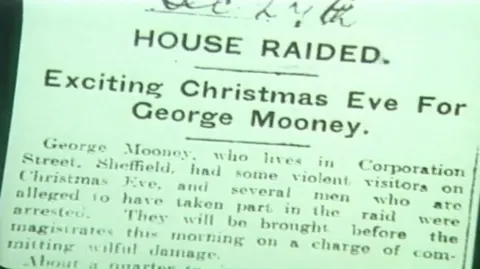
"The most significant attack was on Christmas Eve 1923 when there was a sort of Sturm und Drang (storm and stress) raid on George Mooney's house on Corporation Street," says Stocks, who also organises history walking tours in Sheffield.
"After that the Park Brigade were very much in charge of the city and the Mooney gang were on the defensive for a number of years."
While reminiscent of the Peaky Blinders TV series, which centres on the street gang's ambitious leader Tommy Shelby, Stocks says the show "glamorised" the world gangs were living in.
"They weren't heroic, they were people that were attacking their neighbours and their friends and stealing from the poor to give to themselves," he says.
 Supplied
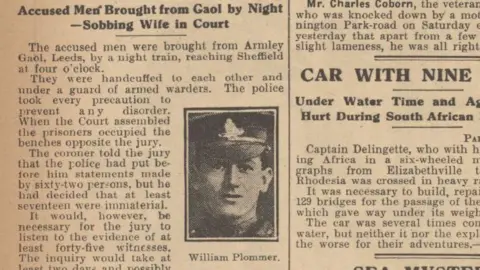
The lack of police response, says Stocks, became an increasing source of frustration for residents, reaching a breaking point in 1925 with the murder of William Plommer.
Plommer, a former Army PE teacher and boxer, was ambushed by members of the Park Brigade following a dispute at a pub.
According to news reports from the time, Plommer "stood like a hero" and refused to run. Instead he challenged them to come one by one.
The 32-year-old was fatally stabbed just yards from his home in Princess Street, Attercliffe.
Wilfred Fowler and his brother Lawrence were found guilty of his murder and were hanged at Armley Prison in Leeds. Three others were given penal servitude.
Plommer's death had a profound impact on Sheffield, leading to tougher policing, and left his family, who moved away, unable to speak of it for years because the loss remained too painful.
His granddaughter Betty Lambie said it was not until she was 14 that she learned of her grandfather's murder after stumbling across a newspaper article that had been hidden in a drawer.
"We just assumed he'd died in the war," says Lambie, 84.
"I remember I was absolutely horrified because it was a terrible article. It almost went into detail about how he died, it was dreadful.
"I can remember being absolutely shocked."
Sheffield-based blacksmith and sculptor Sam Sherbourne created a plaque to remember Plommer, which was unveiled during a ceremony last year.
Lambie says the recognition had lifted "a very dark cloud" for the family.
"It was emotional and quite humbling actually and we were very thankful for the people in Sheffield who were involved," says Lambie.
"I can speak to my grandkids about it now, because we're not just saying he was murdered, we're saying he was a brave man and through his death, better things happened."
 Supplied
Some 8,000 people attended Plommer's funeral in an act of protest, demanding stronger policing.
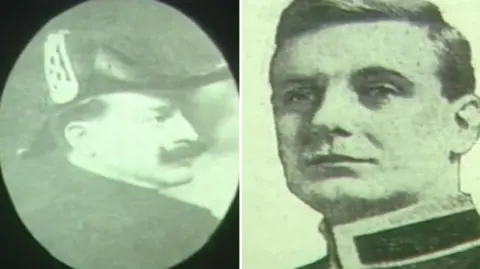
A few days after his death, John Hall-Dalwood, the Chief Constable of Sheffield Police, decided to form a Special Duty Squad consisting of four officers.
Their goal was simple: to drive the gangs out of the city - if necessary, by force.
Their tactics later earned them the name Flying Squad.
Dr Mark Roodhouse, Reader in Modern History at the University of York, says the idea was first pioneered in London just after World War One.
 Supplied
Instead of officers being tied to a particular neighbourhood, these were mobile teams who could move freely across the city and target organised crime more directly.
He says forces often selected physically imposing, "rough and tough" officers for these roles, reflecting a more aggressive style of policing.
"Intimidate the intimidators is really the kind of message here," says Roodhouse.
The success of such tactics in Sheffield was later widely credited to Percy Sillitoe, who earned himself the nickname "Gang Buster" and later became head of MI5.
But Roodhouse suggests his reputation was partly self-made as much of the groundwork had already been laid by others.
 BBC/Victoria Scheer
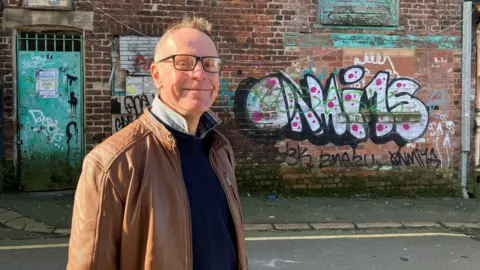
When the Flying Squad was disbanded in 1928, it was widely claimed that this marked the end of the gangs; however both Roodhouse and Stocks argue this was a misconception.
Rather than truly disappearing, the gangs simply laid low for a while before re-emerging.
As Roodhouse explains, they soon adapted by avoiding overt violence and public disturbance, recognising that as long as their activities remained controlled and discreet, the police were more likely to overlook them in favour of more pressing concerns.
"So all that means is the lasting legacy is illegal bookmaking, illegal pitch and toss - all of that continues in Sheffield," he says.
Sheffield's gangs had a lasting influence - with widows of gang members interviewed in the 1960s refusing to give their names, still too intimidated to speak openly.
Listen to highlights from South Yorkshire on BBC Sounds, catch up with the latest episode of Look North
