After decades risking arrest, South Korea's tattoo artists step into the limelight
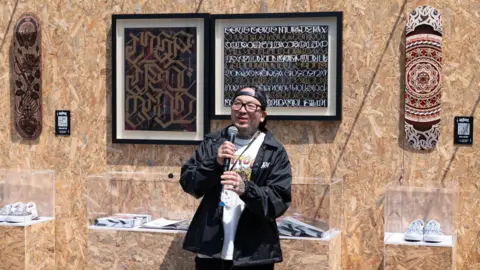
When Kim Tae-nam took the stage last Saturday in Seoul, it was a moment he had long been waiting for - the career he had chosen was no longer illegal.
He couldn't stop smiling, the relief spilling into his voice: "This was only possible because of our effort, all your sweat and tears. Let's hear it from everyone: Tattoos are art!"
The crowd hollered in agreement. They had gathered on a rooftop in Seongsu, a hip Seoul neighbourhood, for Ink Bomb: more than 90 local tattooists and artists openly celebrating body art, which had thrived in the shadows for decades.
Just days before, South Korea's top court had overturned its 1992 ruling that defined tattooing as a medical act - bringing to an end Korean tattooists' decades-long fight for legitimacy.
In September lawmakers had legalised tattooing by non-medical professionals following a sustained artists' campaign against the fear and harassment they faced.

 Hwang Jiho
For 34 years, only licensed doctors were allowed to ink tattoos in Korea and breaking the law could lead to heavy fines or jail.
It was meant to address concerns about hygiene and safety, but the law also played into social norms in a conservative country where body art is still deeply frowned upon. And it didn't help that public perception continued to associate tattoos with gangsters and organised crime.
"We've come a long way," says Kim. When he started tattooing in 2004, he used the pseudonym Sunrat Tattoo, and ran his first studio out of a basement. There was no sign and it was strictly invite-only.
When he launched Ink Bomb in 2008, he says every event was shut down by police: "We had to stop because they threatened to arrest or charge us. We're back this year for the first time since 2014, and it's incredible that we can now gather without any fear."
 BBC/ Hosu Lee
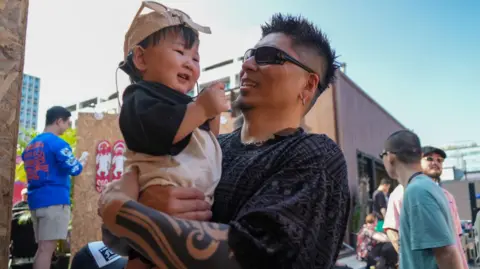
It was an eclectic crowd, from tattoo artists to punk rockers to parents with their teen children. There were no actual tattoos on offer, given inking one requires time and space, but visitors could get stickers by artists for free.
For many of those who were there, this was simply a long-overdue celebration.
"It makes no sense that tattooing should be seen as a medical act. Nobody is going to medical school to become a tattooist," says Jay Hur, a 48-year-old who counts a turtle on his forearm among his tattoos.
"Korean tattooists had to take risks to do their job to sustain this beautiful underground culture."
It's hard to know how many tattooists have been prosecuted, but South Korea's Tattoo Union has said it provided legal support to at least 50 of them every year, and estimated that many more were fined.
And yet, the profession grew to about 350,000, according to government figures from 2021.
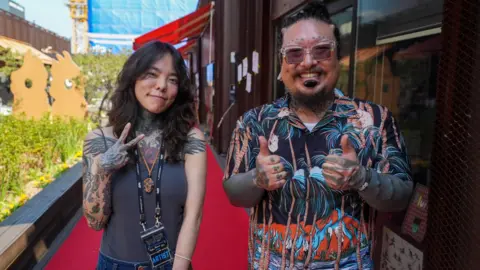
Tattooist Kali says she was "ecstatic" when she learned of the court's decision last week. While she herself was never reported, seeing people in her community being charged and tried made her hypervigilant.
"I was constantly working with anxiety. It still feels surreal to me that I no longer have to worry about this."
 BBC/ Hosu Lee
The ban also put artists in vulnerable positions, exposing them to blackmailing, sexual harassment or violence from disgruntled clients who threatened to report their business.
According to the Tattoo Union, the vast majority of victims were young women tattooists who feared reporting it to police because they could incriminate themselves in the process.
Kim Do-yoon, who founded the Tattoo Union and goes by his pseudonym Doy, says that because of "such horrible [legal] struggles" some of the women killed themselves.
"The shock from these losses is what moved me to found the union and fight for our right to work safely and legally in Korea."
Public attitudes began to shift with time as younger Koreans accepted and even explored tattoos.
 Instagram - Doy (left) and Kali (right)
Starting in the 2010s, more tattooists began operating studios openly - with glass windows and visible signage.
Although banned at home, Korean tattooing took off globally.
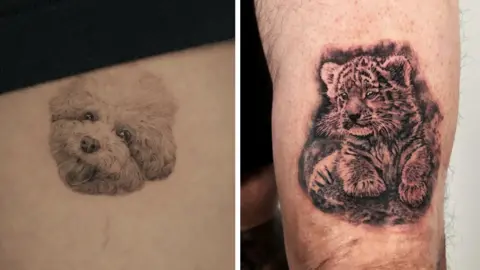
These delicately drawn, soft, and sometimes colourful, Korean illustrations grabbed the spotlight in the mid-2010s as artists increasingly shared their work on social media. Fine-line tattoos can now be found everywhere, but Korean artists are still known for them.
The new range of tattoos that emerged over the past decade helped lower the barrier, tattooists say.
And celebrities, from sportspeople to actors to pop stars, began to normalise it as they showed off their body art more publicly: Girl's Generation's Taeyeon, Big Bang's Taeyang, rapper Jay Park, soloist HyunA, diver Woo Ha-ram, actress Han Ye-seul and BTS member Jungkook.
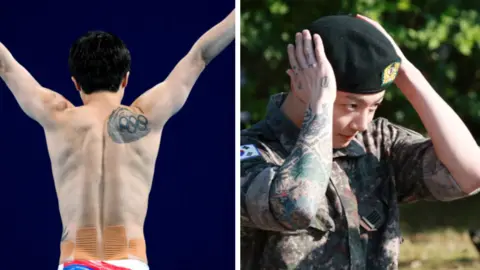 Getty Images
The stigma persists though.
A tattoo can hurt the impression you make at a job interview, or in a formal gathering. Some gyms and saunas still maintain "no tattoo zones" on the grounds that certain tattoos "are too intimidating and may offend other guests".
"Korean society is very conformist," Kim says. "There's such a strong pressure to follow a given standard. When you look different or live your life differently, you're exposed to constant criticism. But the younger generation is breaking these norms."
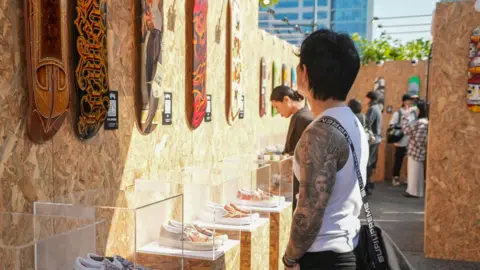 BBC/Hosu Lee
There is still some uncertainty as the health ministry has said it will introduce a new testing system next year to license tattooists and standardise the profession. And there are trials pending, too.
Doy, for instance, was charged with violating the Medical Act when he inked a tattoo for actress Han Ye-seul in 2019. He has also tattooed Brad Pitt, Steven Yeun and a member of the band EXO. Given the recent court ruling, he and dozens of other tattooists expect to be absolved of their charges.
"Things are finally back where they should be," Doy says. "But I can't help but think of the fellow artists who aren't here with us."
