Ancient pottery dug up at bottleneck bridge works

 Emily Coady-Stemp/BBC
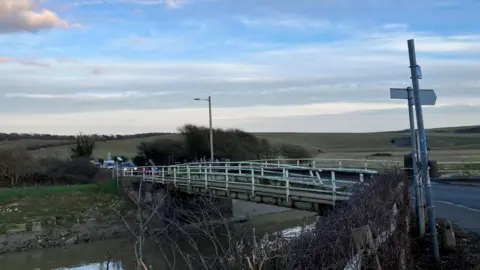
Ancient fragments of pottery have been discovered as work to build a new bridge at a bottleneck begins, a council has said.
The pieces - believed to be Bronze Age, Iron Age and Roman - were unearthed in trenches as part of the project to widen the Exceat Bridge near Seaford, East Sussex County Council (ESCC) said.
The new £19.8m two-lane bridge aims to improve the traffic flow between Eastbourne and Brighton.
Before work to replace the bridge on the A259 begins, archaeologists have been working at the site to record and preserve any historical items, ESCC said.
The council said the finds were discovered at the contractor's base, and experts believe they may be evidence of an Iron Age field system or settlement.
It said further digs were needed across the site to establish whether there were any additional remains, and teams would also be digging at the new bridge site.
While archaeological work continues, ESCC said the contractor was working with it to ensure construction can begin as soon as the site is ready.
Councillor Peter Griffiths, lead member for transport and environment, said: "We're keen to see construction work on the new bridge begin as soon as possible but the archaeological work is extremely important, and we need to ensure every effort is made to record and preserve the history of this site."
He said the bridge over Cuckmere River would remove the "pinch point on an important route" and "make a huge difference to the public".
The existing bridge will remain open to traffic while the new bridge is being built.
The project is being fund by the UK government and money from the county council's capital budget.
