Scientist researching her mum's incurable cancer

 Lucy Goudswaard
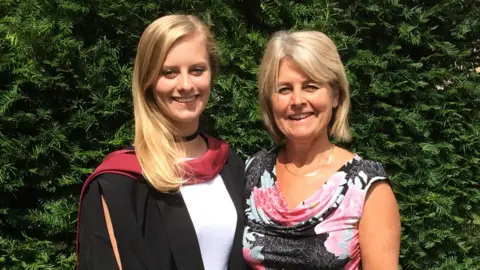
A university scientist said it was a "great feeling" to be awarded funding to research a form of blood cancer that her mother has been diagnosed with.
Dr Lucy Goudswaard had been researching cardiovascular disease at the University of Bristol, but when her mum Joy Goudswaard was told she had incurable myeloma in 2021, she was inspired to alter the subject of her work.
Lucy decided to apply for a fellowship, focusing her work on understanding and preventing myeloma, which affects bones and other parts of the body.
"It is wonderful to be able to work at a job that is so meaningful," she said.
"Doing this research is the silver lining and a positive in what is an unpleasant situation," she added.
Joy Goudswaard, who lives near Stroud in Gloucestershire, had previously been fit and active, but persistent pain led to an X-ray which revealed holes in a number of her bones, including her spine, pelvis and hip.
She said: "I really couldn't understand it, especially as there was no cancer in my family. I've got three siblings, and not that I want them to have it, obviously, but why have I got it?"
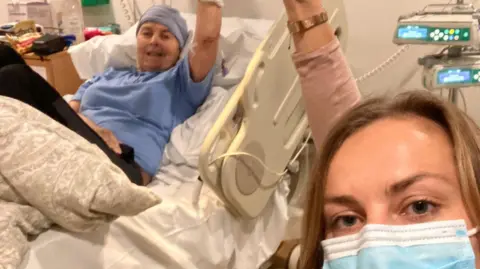
Joy described the first 12 months of treatment as a "year of hell". Lucy said it was "really difficult" to see how ill her mother had become.
"She had very intensive chemotherapy, a stem cell transplant, lost her hair, lost lots of weight and that took a toll."
 Lucy Goudswaard
Now, as Joy lives in partial remission, Lucy said she feels more hopeful.
"She was put on a therapy which did make a difference and lowered the cancer levels quite a lot.
"The NHS [is] constantly putting out new drugs for myeloma, so when she's not responding to her current therapy there are more options."
The work which will be done by Lucy, who is a research fellow, is being funded by Blood Cancer UK.
Starting in August 2026, it will analyse data from people with monoclonal gammopathy of undetermined significance (MGUS), a plasma cell disorder which leads to bone barrow white blood cells producing abnormal monoclonal proteins instead of infection-fighting antibodies.
'Research is key'
MGUS can lead to cancer and the research will look at why it develops in some people and not others, as well as whether lifestyle factors such as a lack of sleep or obesity can be a factor.
"When I am working long hours or navigating challenges in my research it is a big motivation knowing my research could help people like mum," Lucy said.
"If we know the causes then that might offer an avenue to prevent myeloma altogether," she added.
Fiona Gebbie, a nurse with Blood Cancer UK said: "Despite significant advances in treatment in recent years, it [myeloma] remains incurable - but it is treatable.
"Research is the only way we'll beat blood cancer. That's why we need to continue funding vital research like Lucy's, so we can better understand why blood cancers develop, find new and better treatments, and ultimately bring us closer to a cure."
Follow BBC Bristol on Facebook, X and Instagram. Send your story ideas to us on email or via WhatsApp on 0800 313 4630.
