Red Barn murder evidence could fetch £6k at auction

 Reeman Dansie
A scrapbook of evidence linked to an infamous Suffolk murder mystery that has captivated armchair detectives for almost 200 years is set to go under the hammer.
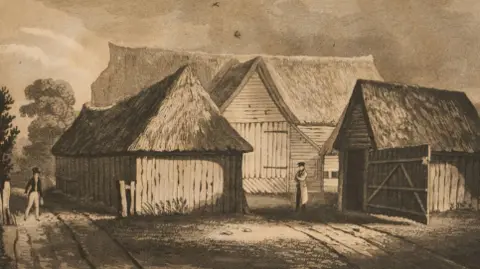
William Corder shot his lover Maria Marten at the Red Barn in Polstead in 1827, before being convicted and hanged a year later, despite his proclamations of innocence.
At the time, the grisly 19th Century tale of a murdered mistress piqued the interest of both the media and the public – a fascination that continues to this day.
Artefacts such as Corder's letters and defence speech are now expected to sell for up to £6,000 when they are auctioned by Reeman Dansie in Colchester, Essex on Thursday.
"The Red Barn murder had all the traits of intrigue, sex and gothic horror, which made it the biggest murder story of the era," a spokesperson for the auction house said.
 Reeman Dansie
The Red Barn murder, as it notoriously came to be known, centred on the relationship of Marten and Corder, with whom she planned to elope in 1827.
The couple, aged 24 and 22, arranged to meet at the Red Barn, on the Corders' family farm between Ipswich and Sudbury, before running off to Ipswich to marry.
But they never made it to the county town, and neither was seen for months, although Corder would send word to Marten's family that she was OK.
In reality, the so-called ladies' man was holed up just outside London and Marten was buried at the lovers' rendezvous, having been shot in the neck.
 Getty Images
She was only found after her stepmother reportedly had a premonition in a dream that she had been murdered in the barn and hidden under the dirt floor.
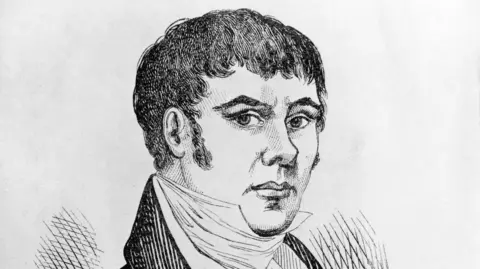
Corder, who by this point had placed a notice in a newspaper advertising for a wife, was eventually arrested and jailed in Bury St Edmund's pending trial.
While detained, he received letters from his mother and sister, items included in the lot set to go under the hammer.
 Getty Images
He also penned a lengthy defence speech from the confines of prison, which he delivered in vain in court during the trial, which will also be put up for sale at auction.
Despite Corder's eventual conviction, much doubt has been cast over his guilt and involvement in the death of Marten, further adding to people's interest in the case.
"This significant lot of first-hand evidence is sure to get the armchair detectives interested," said the auction house's spokesperson.
Do you have a story suggestion for Suffolk? Contact us below.
Follow Suffolk news on BBC Sounds, Facebook, Instagram and X.
