The people making the case for the economic benefits of HS2

 BBC
BBCFor more than 15 years, HS2 has divided opinion over one simple question: Is it worth the money?
Back in 2012, the cost estimate for first phase of the high speed line between Birmingham and London was £20.5bn. In June 2024, HS2 Ltd estimated the maximum cost to be £61.8bn, and that figure, they say, is expected to rise still further.
HS2 bosses argue that, despite delays and overspends, the project is still pouring billions of pounds into the West Midlands economy, creating jobs and boosting investment.
But when high speed trains finally start running sometime after 2033, will the benefits ever outweigh the spiralling costs?
HS2 was originally envisaged as connecting London with Leeds and Manchester but the sections north of Birmingham were subsequently cancelled.
The Public Accounts Committee in Parliament has previously described it as a casebook example of how not to run a major project.
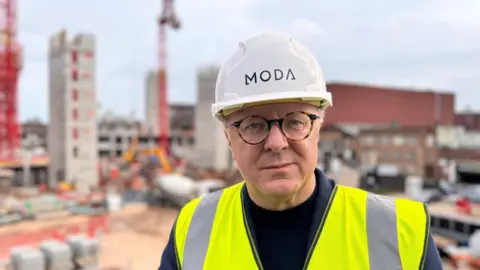
But James Blakey, planning director at developers MODA Living, said HS2 is "part of a package of infrastructure investment... that gives us a great deal of confidence".
The firm is investing more than £200m in nearly 1,000 new homes at its Stone Yard development in Digbeth, close to HS2's Curzon Street Station. It is due to be finished in 2028, at least five years before high speed rail arrives.
Mr Blakey added: "We develop next to infrastructure, so here we are next to the tram which feeds into HS2. It's a component part of a much wider story about Birmingham and the West Midlands."
An HS2 Ltd spokesperson claimed the project and associated development would add £10bn to the West Midlands economy over the next decade.

The company added it had employed more than 2,000 people in the region who were out of work, started 833 apprenticeships and awarded 623 supply chain contracts worth £2.9bn to West Midlands businesses.
Social enterprise organisation Nuneaton Signs has won £2m of contracts from HS2 since 2021, making 195,000 signs for the project.
Those agreements have allowed the firm to take on 20 extra staff.
More than two-thirds of its workforce has a disability and its head of social value, Holly Hunter, said the company's ethos had helped it win HS2 contracts.
"Their work with us has allowed us to employ more people with disabilities. We get to see the difference it makes in their lives and their families' lives. It means so much," she said.
Beth, who is registered blind, was able to buy her own home after training as a business administrator through the work.
She brings her guide dog Jenny to work and said adjustments to her screen had made her job "a lot easier, I can do it on my own independently. It's like a proper big family, it's really positive."
 HS2
HS2So, does HS2 represent value for money, and will the benefits to the local economy outweigh the costs?
The 2020 Full Business Case estimated that phase one between Birmingham and London would deliver £1.20 of economic benefits for every £1 spent, described as "low" value for money.
However, that was based on a median target cost of £40bn. As of February 2026, £43.6bn had already been spent on the project.
In June 2024, HS2 Ltd's estimate of the maximum cost of phase one was £61.8bn, excluding Euston station as the line will initially terminate at Old Oak Common in west London instead.
But a spokesperson said there had been "significant additional financial pressure" since then.
Its chief executive Mark Wild is expected to say in the coming months that the total cost could exceed £100bn in today's prices - and confirm another delay to the opening of the line beyond 2033.
Economic benefits 'underestimated'
The former chair of the National Infrastructure Commission, Sir John Armitt, admitted "there's a lot to be learnt" from the planning and construction of HS2, including starting the work too soon and a lack of government oversight.
The former chief executive of Network Rail added that scrapping the line north of Birmingham and initially terminating in London at Old Oak Common rather than Euston meant "we've got the bit in the middle but frankly the two ends are vital to the overall viability and benefit of the project".
But the civil engineer claimed calculations often underestimated economic benefits and new commercial office space and housing in Birmingham was "probably on the back of the arrival of HS2".
The HS2 Ltd spokesperson said: "The narrow focus on journey times fails to capture the huge range of wider economic benefits being delivered by the UK's biggest infrastructure project.
"HS2 is now undergoing a comprehensive reset to ensure that these benefits are delivered as quickly as possible and for the lowest reasonable cost to the taxpayer."
Last month, transport secretary Heidi Alexander said the government was looking at "every opportunity" to reduce costs and delays, including reducing the top speeds of HS2 trains.
The debate over the viability of the project shows no sign of slowing down.
Follow BBC Birmingham on BBC Sounds, Facebook, X and Instagram.
