How the London 2012 Olympics changed Stratford

 Getty Images
 Getty Images
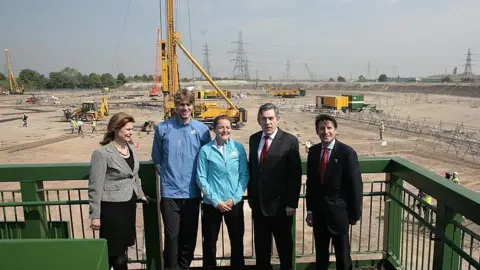
Once dubbed "London's scrapyard", the opening of the V&A East Museum on Saturday marks another milestone moment in east London's regeneration.
The museum, situated in the Queen Elizabeth Olympic Park, is the latest cultural centre to open as part of the decades-long investment in this part of Stratford, in the borough of Newham.
The once neglected area, scarred by deprivation, industrial pollution and a lack of infrastructure, has seen billions of pounds of investment in housing, leisure and cultural facilities,much of it prompted by the work needed to host the 2012 London Olympics.
Residents told BBC London that the increased amenities in the area were positive, but there was still room for improvement.
The area was previously dubbed "London's scrapyard" by Sowmya Parthasarathy, urban designer at Arup who worked on the Olympic Park for more than a decade.
The site was home to light industry, dominated by overhead powerlines, and was broken up by rivers, roads and railways.
Some areas had been used as a dumping ground for industrial and domestic waste, and was polluted with contaminants including oil, tar and lead.
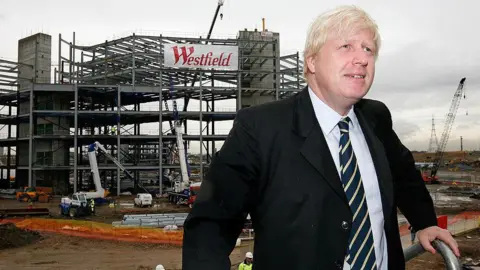
Work to transform the park began in 2007. Disused buildings were demolished and 2m tonnes of soil were cleaned, with 80% reused to form the new landscape.
The main venues and infrastructure were built in less than three years at a cost estimated to have been about £9bn.
Following the London 2012 Olympics, The University of Arts London opened a new campus in the area, and Sadler's Wells opened a theatre.
In Chobham Manor, a new residential district was created, along with East Wick, along the Hackney canal.
The park has also gone on to host live music events including Sam Fender, The Red Hot Chili Peppers and The Rolling Stones.
The Olympic Stadium itself was renamed The London Stadium, and is now the home to West Ham.
The Copper Box arena, now host to a variety of gigs, sporting events and conferences, was built to house handball and fencing during the Olympics, and goalball during the London Paralympics.
The V&A East Museum is one of the final cultural sites to open, as part of the regeneration.
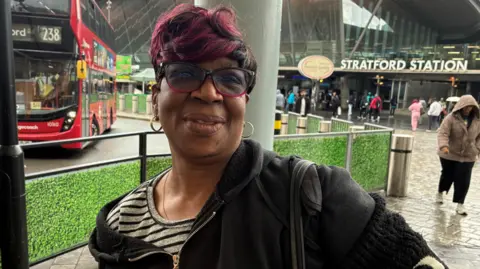
Pat Marcell, who has lived in the area for 40 years, said the way it had changed was a "good thing" and that the presence of education facilities was "for the better".
She added that she planned to take her grandchildren to the V&A East Museum.
Denyse Anyogu, who has lived in east London for more than 20 years, said: "I've seen this all change. It's positive, it has a lot more to offer in general.
"I think it's amazing, more opportunities and you can just go out and enjoy the area.
"You know you can go by the river, you can go by the cafes."
"You're not used to having so much stuff here. Instead of taking myself off to the South Bank, it's all kind of starting to happen on my doorstep."
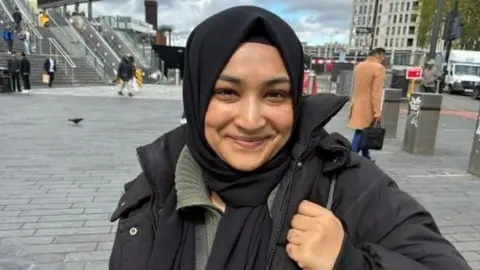
Forida Khanom, who said she had lived in east London for 30 years, said there were now lots of things for families to do in the area.
YolanDa Brown, co-founder of live music venue Soul Mama, said Stratford was "unrecognisable from the Stratford I knew growing up".
"Stratford has had such an amazing journey," she said. "A big pinpoint was the Olympics.
"And yet the legacy of that amazing focal point on Stratford has continued. It really has become a hub of culture, a hub of places for dining and new experiences.
"We've had this sizzle of culture growing in Stratford. We've got Sadler's Wells, we've got universities, you've got the ABBA voyage - so many things are happening here."
But not all areas have seen the investment they were promised. For many, this "placemaking" work in east London left people in social housing in limbo, after leaving their homes.
The neighbouring Carpenter's Estate has been subject to multiple regeneration plans and protests for years, after people were moved from their homes and plans stalled.
Last year, Newham councillors raised financial concerns for the estate regeneration project after the estimated borrowing costs jumped from £845m to £1.4bn in two years.
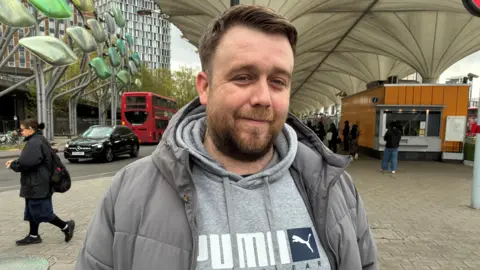
George Woolston, who has lived in the area for 34 years, said he felt the area still faced issues.
"You're still not safe to walk wherever you want to go," he said. "I would prefer if it was safer for people to walk around."
Listen to the best of BBC Radio London on Sounds and follow BBC London on Facebook, X and Instagram. Send your story ideas to hello.bbclondon@bbc.co.uk
