Cancer trial hopes to reduce risks for rare condition

 BBC
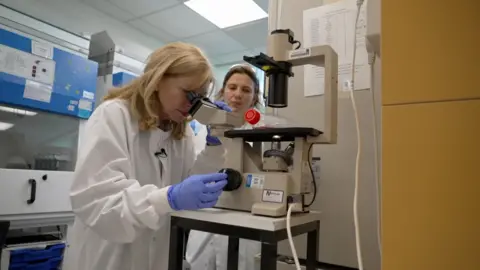
BBCResearchers are hoping a new clinical trial could delay or reduce the risk of cancer for people with a rare condition.
Li-Fraumeni syndrome (LFS) can increase an individuals likelihood of developing cancer during their lifetime by about 90%.
It is known to affect about 700 people in the UK - but scientists believe as many as one in 20,000 may have it.
The team behind the trial at the University of Oxford hope to gain a better understanding of the condition and are aiming to create a vaccine to protect people from cancer.
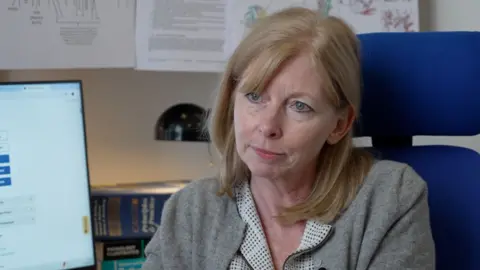
Sarah Blagden, Professor of Experimental Oncology at the university, is leading the trial.
She said many people with LFS develop multiple forms of cancer in succession.
"It's more than just a risk of cancer, it's like a biological guarantee," she said.
The study has been funded by Cancer Research UK, the National Institute for Health and Care Research, the Medical Research Council and The George Pantziarka TP53 Trust.
It is considering the use of Metformin, a drug routinely used to treat diabetes, after successful lab studies in the US.
Blagden said: "We have in our cells 'organelles', little structures called mitochondria, and they help convert our food into energy.
"We know with somebody with LFS that their mitochondria are overactive and so Metformin tunes that down, preventing the damage to the cell."
Blagden hopes focusing on the specific cell mutations in LFS - known as P53 mutations - will help in the bigger picture of tackling cancer.
She said: "P53 mutations are commonly seen in all types of cancers and when they occur, they often signify that the cancer is more aggressive.
"So for us it's really important to understand why that mutation not only starts LFS, but makes other cancers more aggressive."
The team hopes to develop a vaccine that can be used to protect people once they get a LFS diagnosis.
Blagden said: "The plan would be to use the samples that we've collected to really help us engineer the perfect off-the-shelf vaccine that we can give to protect people from cancer."
