Here is why seaside arcades could be lost forever

 Getty Images
"You can have such a good time in the United Kingdom at the seaside," David Cain, who runs Playtime Amusements in Leysdown-on-Sea, said.
"You don't need to go and spend lots of money elsewhere. Whatever's in your pocket - it will last most of the day," he continued.
However, the fifth-generation arcade owner from Kent told the BBC that the industry was "struggling".
Urging the public to take a trip to the seaside, he said that one of the biggest problems was footfall.
"I would love nothing more than to keep the business going," he said.
"The combination of arcades, ice cream, fish and chips by the seaside is quite rare - it's very special."
Seaside arcades generated £804m in turnover and supported more than 14,000 jobs in 2024, according to the Centre for Economics and Business Research.
But the sector has been under sustained pressure, with real-terms turnover falling by 25% since 2015, the centre added.
Jeremy Godden, a fellow arcade owner in Leysdown-on-Sea, said that Kent had lost 15 amusement arcades in the last two decades.
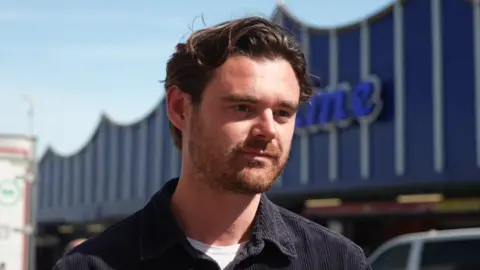
Alan Meades, professor of game design at Canterbury Christ Church University, said that people had been "enthralled and amazed" by arcades since the late 1800s.
They are an "essential part" of British cultural life, he added.
"We would definitely lose something if we lost the amusement arcade from the British seaside," he said.
"None of us really know what we have until it no longer exists."
However, Meades said that amusement arcades were "no longer pre-eminent in our lives" partly because of changes to technology.
"When I was a boy, the amusement arcade was the place to go to in order to see brand new video games," he said.
"Of course, a lot of that has now been replaced by games consoles and mobile phones."
 Getty Images
Another reason the amusement arcade had "slipped a little bit in modern British culture" was financial pressure, Meades said.
"It's become less and less easy for them to make a profit or even to kind of keep running," he added.
Meades cited increasing electricity costs and recent national insurance rises as "pressures" but added that regulations were also making it difficult to adapt.
He called on the government to review rules around stakes and prizes so arcade owners could "better respond to inflationary costs".
"They're in a really difficult place right now," Meades added.
Anne Ackord, Brighton Palace Pier executive officer, said that the wider issue was not that arcades had declined, but underinvestment in seaside towns.
"We need to focus very much on the tourism economy - our seasides are an integral part of that," she said.
"I remember as a child many years ago going to a seaside arcade and carrying my pennies.
"It's good family fun. It keeps families together."
The Department for Digital, Culture, Media and Sport said: "We recognise the importance of amusement arcades to local communities, particularly in seaside towns.
"They are beloved heritage assets central to the coastal visitor economy and, in many cases, are small, family-run businesses."
A spokesperson added that the government was exploring ways to support sustainable growth in the sector, including a consultation on changes to stakes and prizes.
Follow BBC Sussex on Facebook, X, and Instagram. Send your story ideas to southeasttoday@bbc.co.uk or WhatsApp us on 08081 002250.
