Authorities missed chances to protect 'beastie house' abuse victims, review says

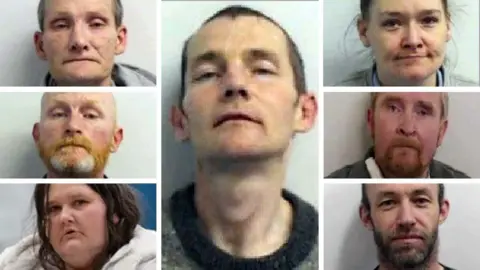 Police Scotland/Spindrift
Social services failed to step in and protect three children from a child abuse ring, a review has found.
Services missed evidence about the youngsters' welfare, including one child having 12 rotten teeth removed before the age of five.
The children also repeatedly missed medical appointments, were frequently in homeless accommodation and begged neighbours for food during their decade-long ordeal, according to a review commissioned by Glasgow's child protection committee.
The review followed the conviction in 2023 of seven people involved in the abuse at a property that became known as the "beastie house" between 2012 and 2019.
The agencies involved accepted that opportunities to intervene had been missed and promised to implement the findings.
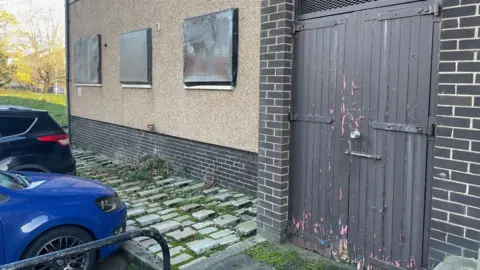
Three victims under the age of 13 were subjected to horrific sexual abuse and violence in the Glasgow drug den.
Police said the children had suffered "unimaginable abuse", with the offences including rape, attempted murder and assault.
Iain Owens, 46; Elaine Lannery, 40; Lesley Williams, 43; Paul Brannan, 42; Scott Forbes, 51; Barry Watson, 48, and John Clark, 49, were found guilty of the abuse.
In January last year they were jailed for between eight and 20 years and handed orders for lifelong restriction (OLRs), with a warning that they may never be released from prison.
The learning review was carried out by a panel of experts and supported by Professor Alexis Jay, known for work on a grooming gangs report in England.
Experts reviewed written records and files regarding the children – who went on to be abused by the group – and their interactions with social work and other agencies.
The findings highlight a series of failings across more than a decade, including:
- A four-month-old child being removed from the child protection register despite a health visitor warning of "significant" ongoing risks
- Decisions to not add children to the register despite the years-long addiction issues of adults in the home.
- Frequent references to poor oral hygiene and rotting teeth, with one child having 12 teeth removed by the age of five
- Children regularly missed appointments with cardiologists and other specialists
- Multiple instances of homelessness and adults using heroin and other drugs
- Information was often not shared between various agencies
The review also notes that "staff had a poor or partial understanding of the whole picture".
"Some information about the children's health needs was available and known to some partners," it says.
"It was used to address a particular problem at a point in time, but not retained as something relevant for a later time when it recurred, or for subsequent children.
"Other information was not shared, as there was no trigger to do so, or decision by the person holding the information to act.
"The area of greatest significance for these children was the failure to access and make use of information sitting across health recording systems, and the lack of recognition and response to what this information meant for the children's wellbeing and safety."
The report covers a period spanning the birth of the children in the 2000s up until they were involved in the 2023 criminal trial.
Key information – including education staff being "aware of 'talk' within the community about what local people knew/thought was happened within the house" – was not included in risk assessments, the review says.
It continues: "It is difficult to comprehend that the physical impact and damage caused by the abuse was not observed through professionals' routine contact with the children.
"Staff who engaged with the review, who had reflected on this after the children's disclosures emerged, also struggled to understand this."
The review says that services were unaware "of the extent of the [adults'] capacity to manipulate and deceive". However, assessments did not take account of the youngsters' experiences or evidence that their needs were not being met.
And it adds: "The review acknowledges the extreme nature of this case… Professionals need to be equipped and supported to consider what is still considered as unthinkable.
"Services were very aware that these children were vulnerable, but the challenge for professionals working within child protection is to consider what they are vulnerable to, and at risk of."
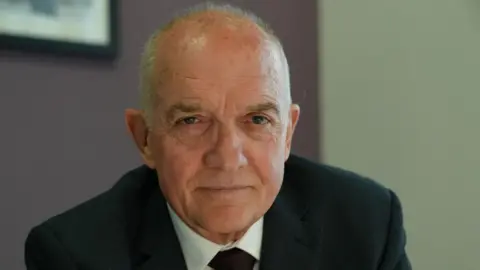
Colin Anderson, the independent chair of Glasgow's child protection committee, said a "rigorous and ongoing audit" of child protection cases had been carried out after the case came to light.
"There is no doubt however that instances are highlighted where a range of professional agencies missed opportunities to intervene and protect the children who are at the centre of this report," he said.
Anderson spoke to the media on behalf of the child protection committee and all the agencies, including Glasgow City Council.
He said they fully accepted all the review's findings and its recommendations for improvements.
"We can give a categoric assurance that we will implement all the findings with the necessary rigour, oversight and transparency that is essential to demonstrate continuous improvement," he said.
"The review has fully explored muti-agency professional practice and the factors that influenced that practice, both enablers and barriers.
"It has shone a light on the areas for organisational improvement, that when implemented will strengthen practice and help to protect children now and in the future and better support and look after those working within child protection systems."
Children 'failed by the system'
Mary Glasgow, chief executive of the charity Children First, said the needs and rights of children were too often overlooked.
"It is heartbreaking that the true horror of what was happening to these children was missed over many years," she said.
"They were failed by a system that should have protected them."
She said similar issues had been flagged in similar reviews over the course of decades.
"We have to ask ourselves if we have a child protection system that is fit for purpose and if we are prepared to invest properly in what it takes to keep children safe?" she added.
If you are affected by any of the issues raised in this story, support and advice is available via the BBC Action Line.
